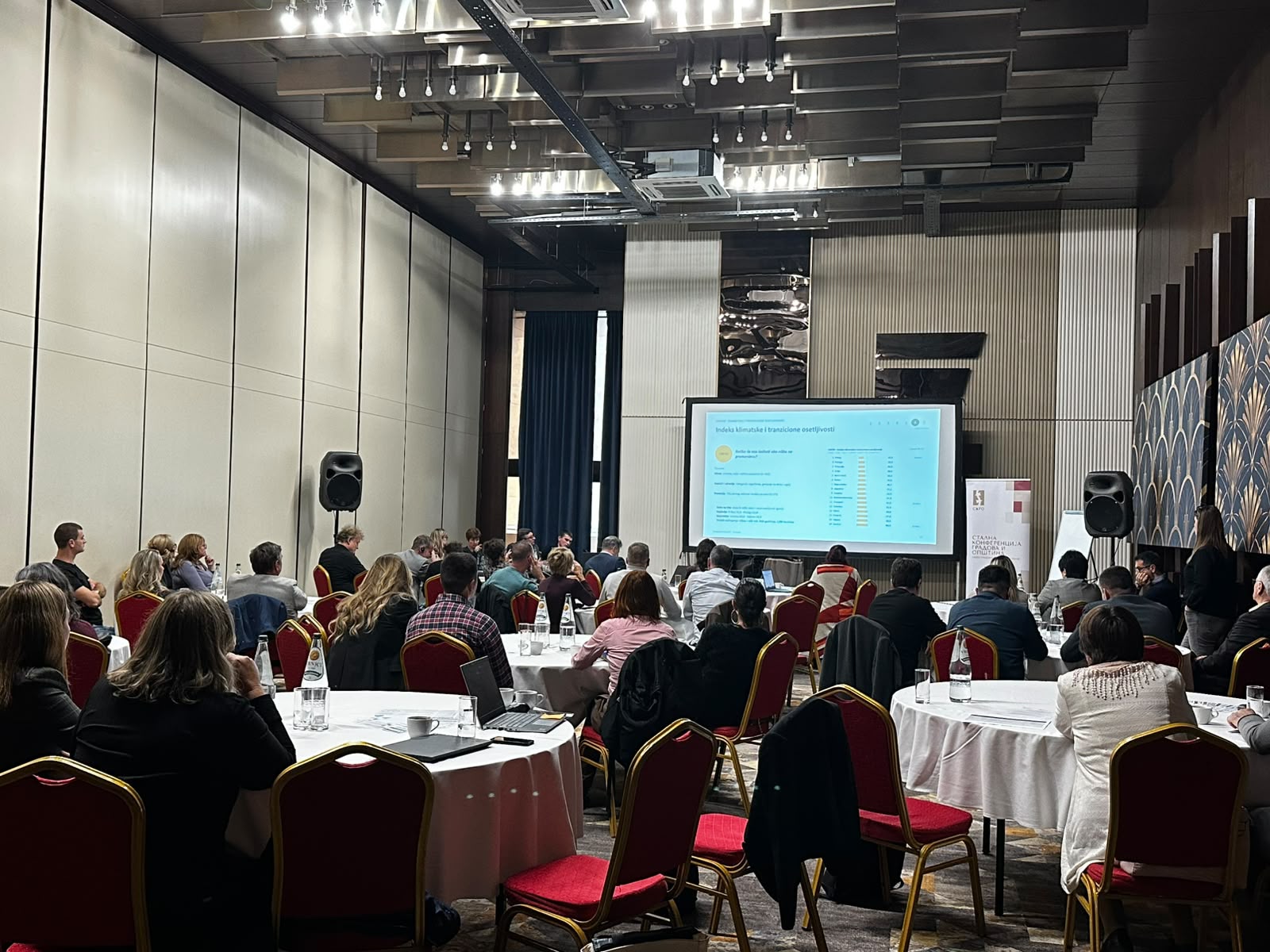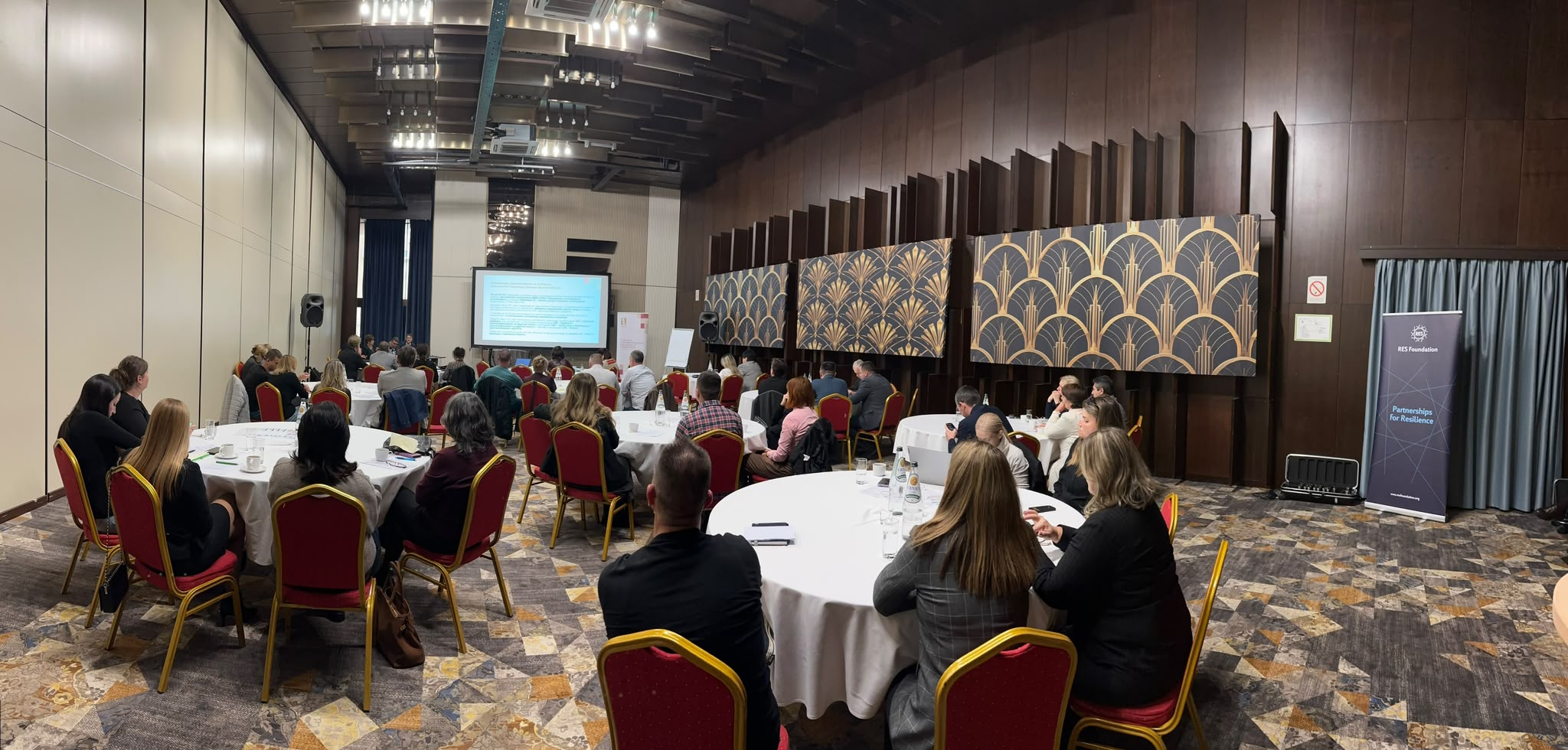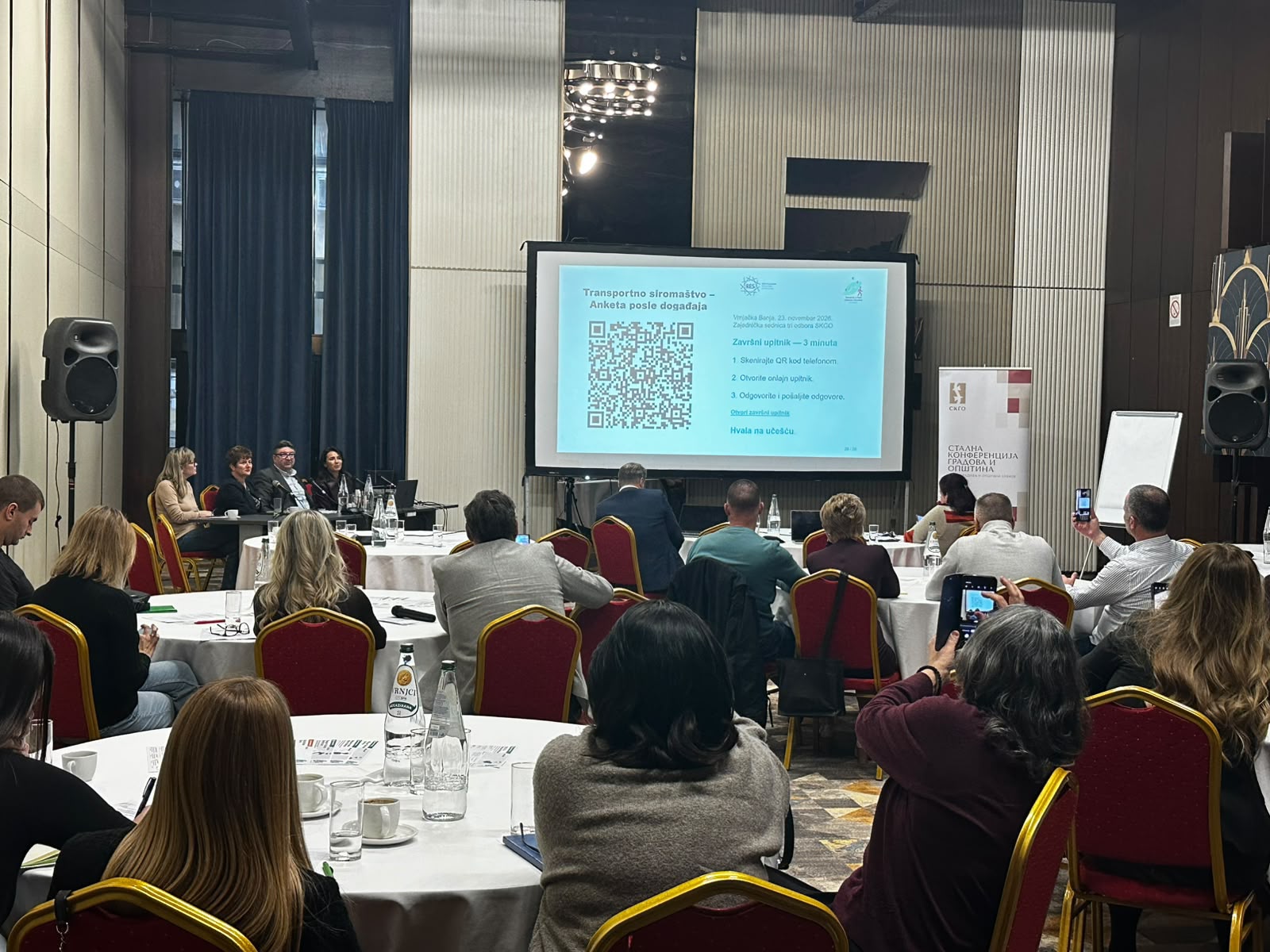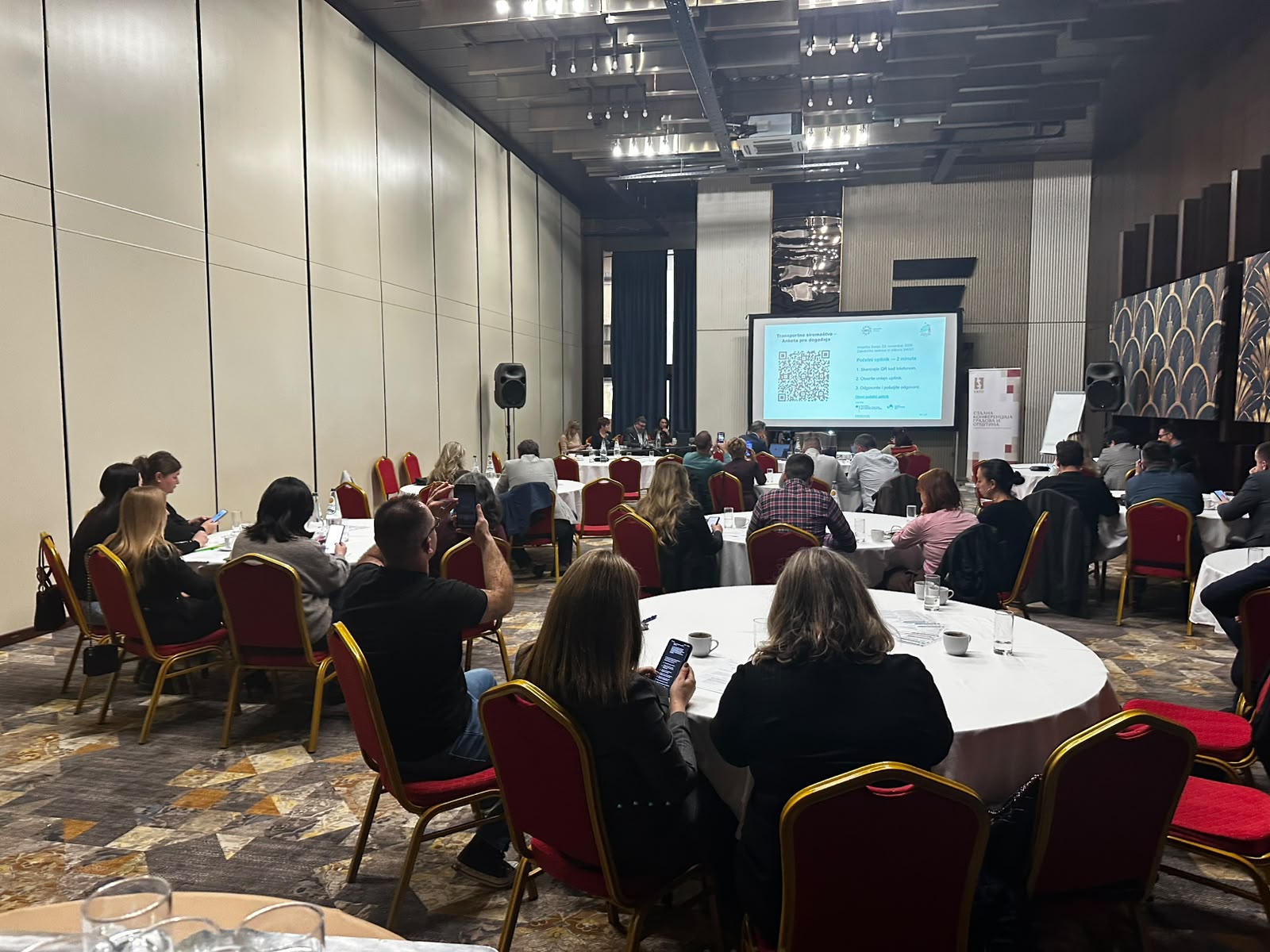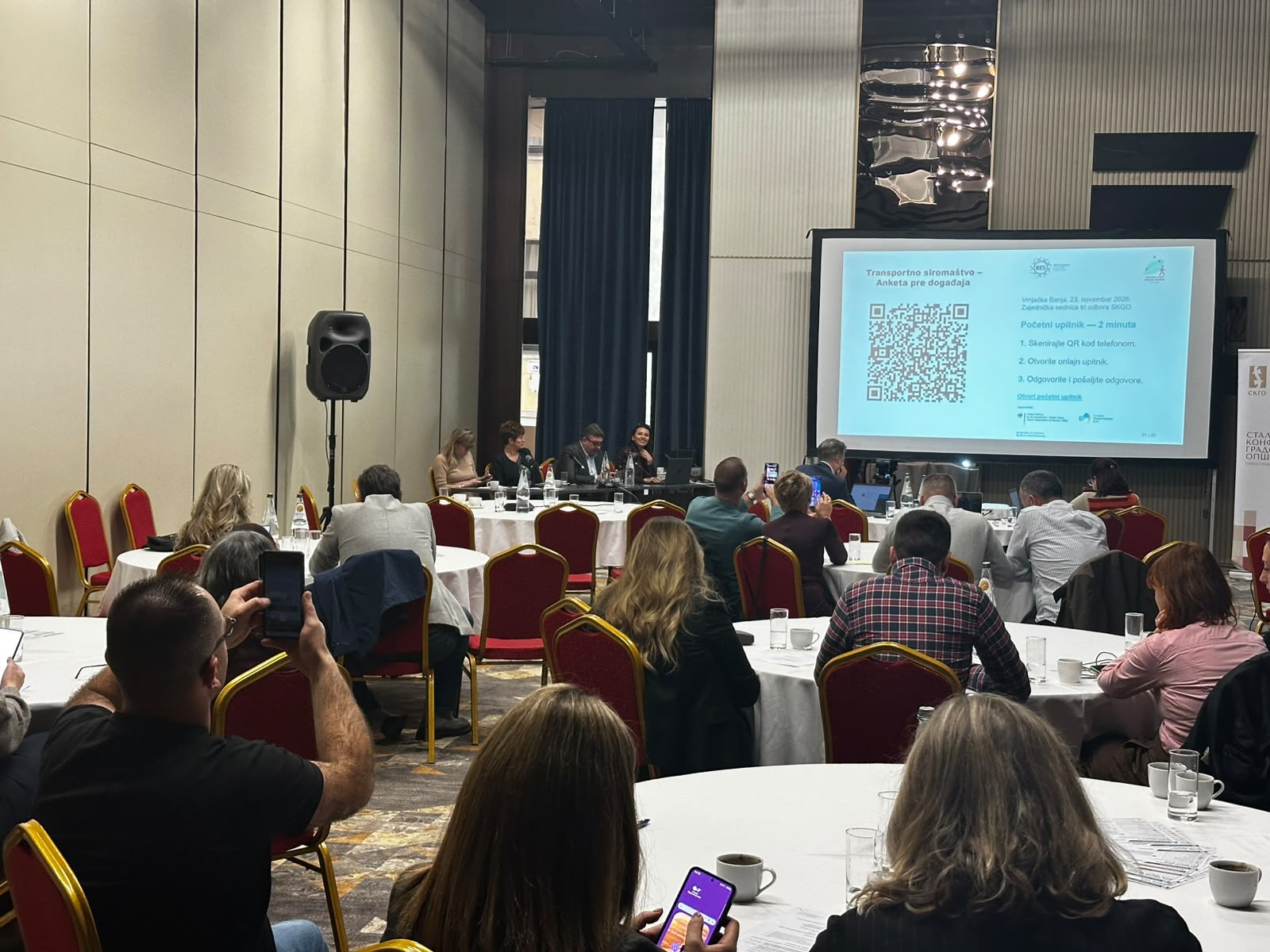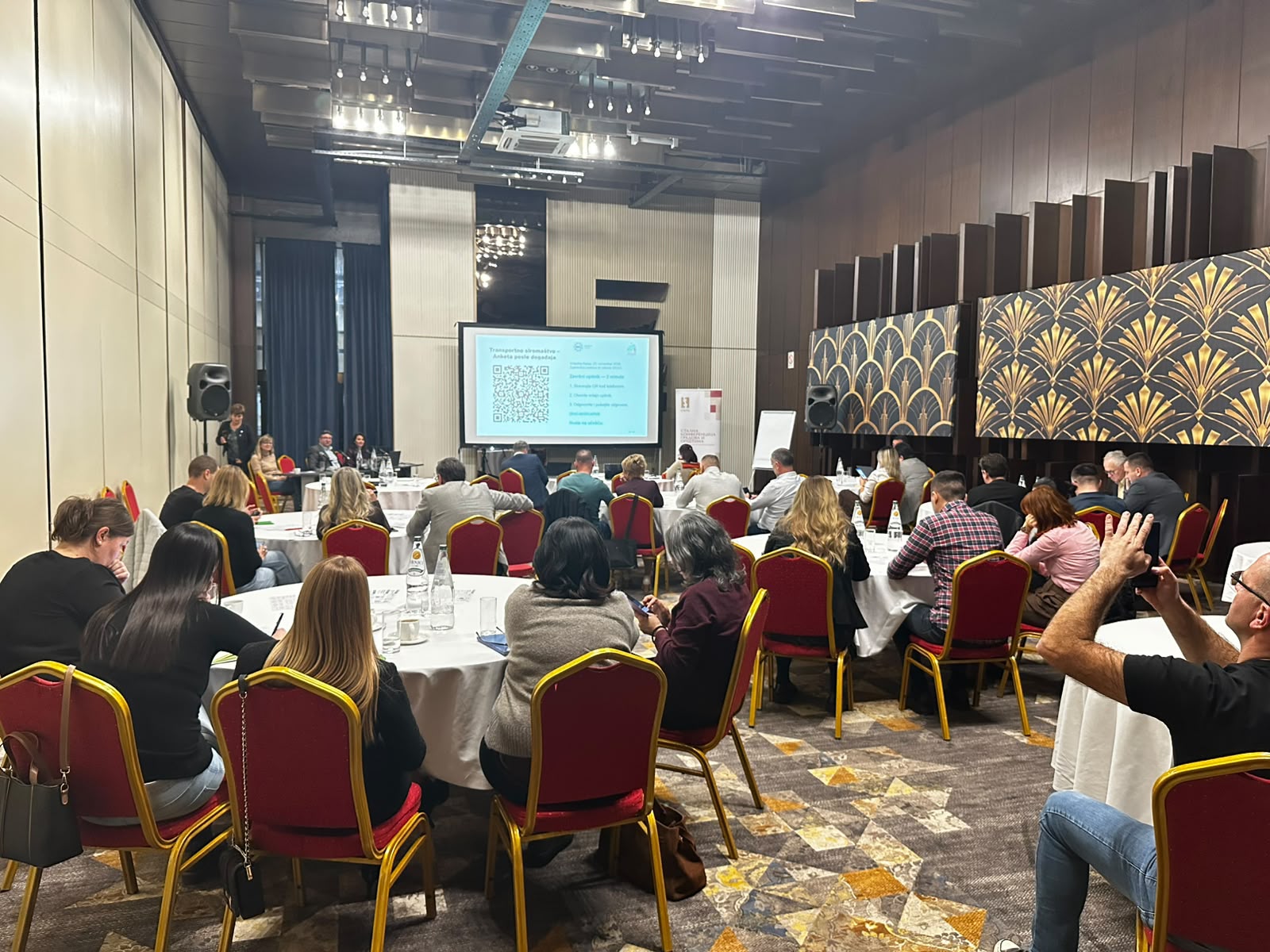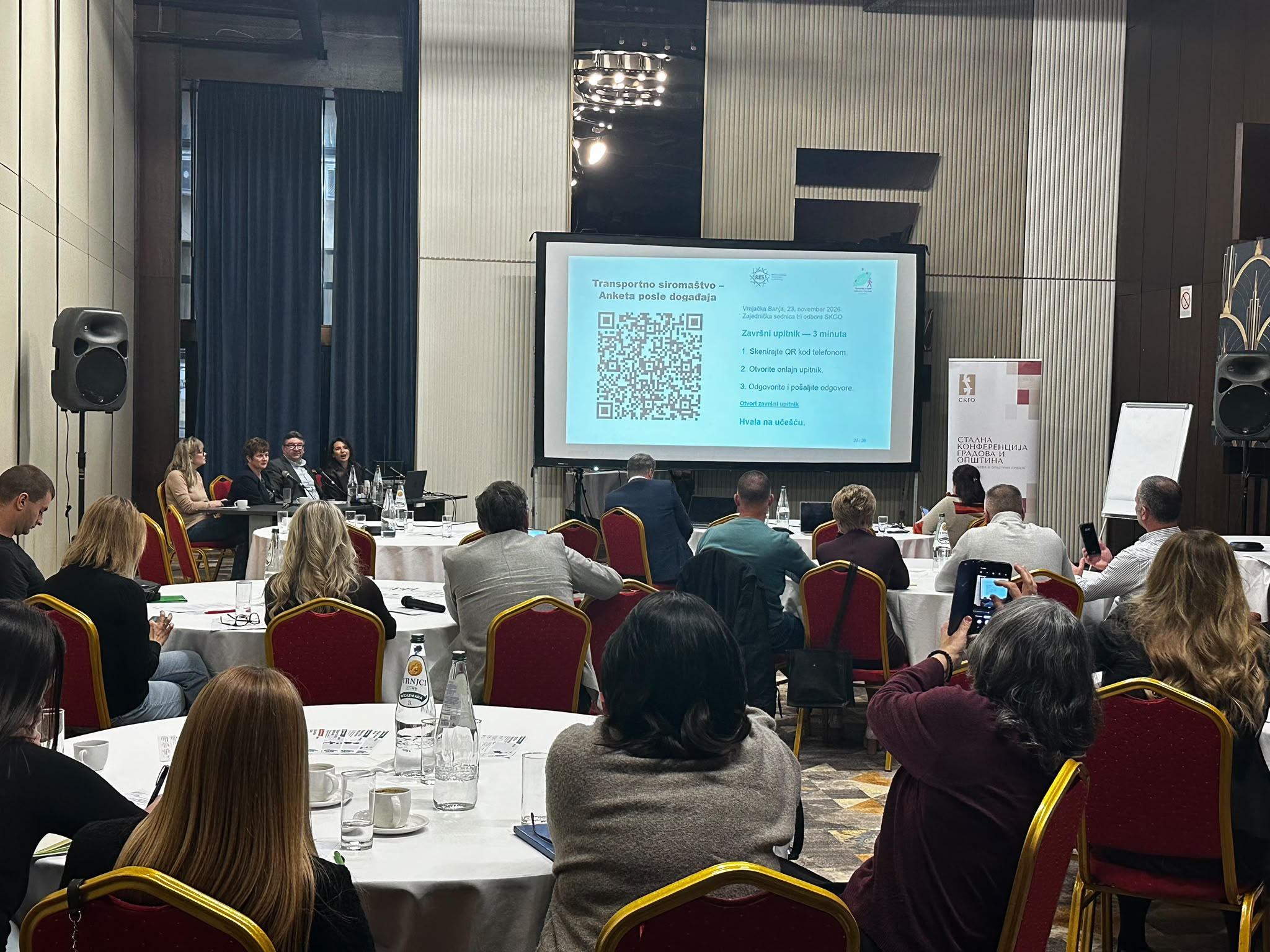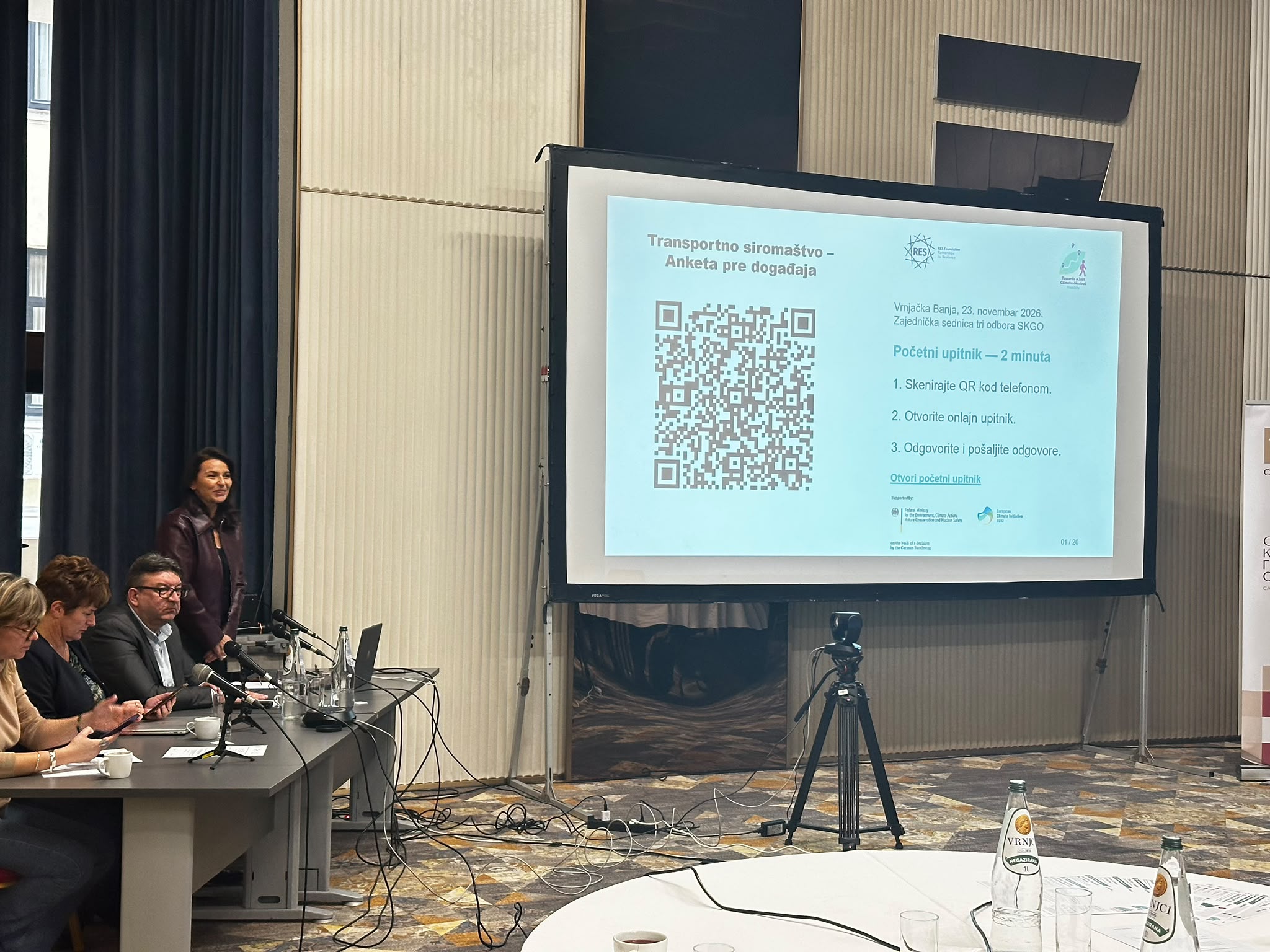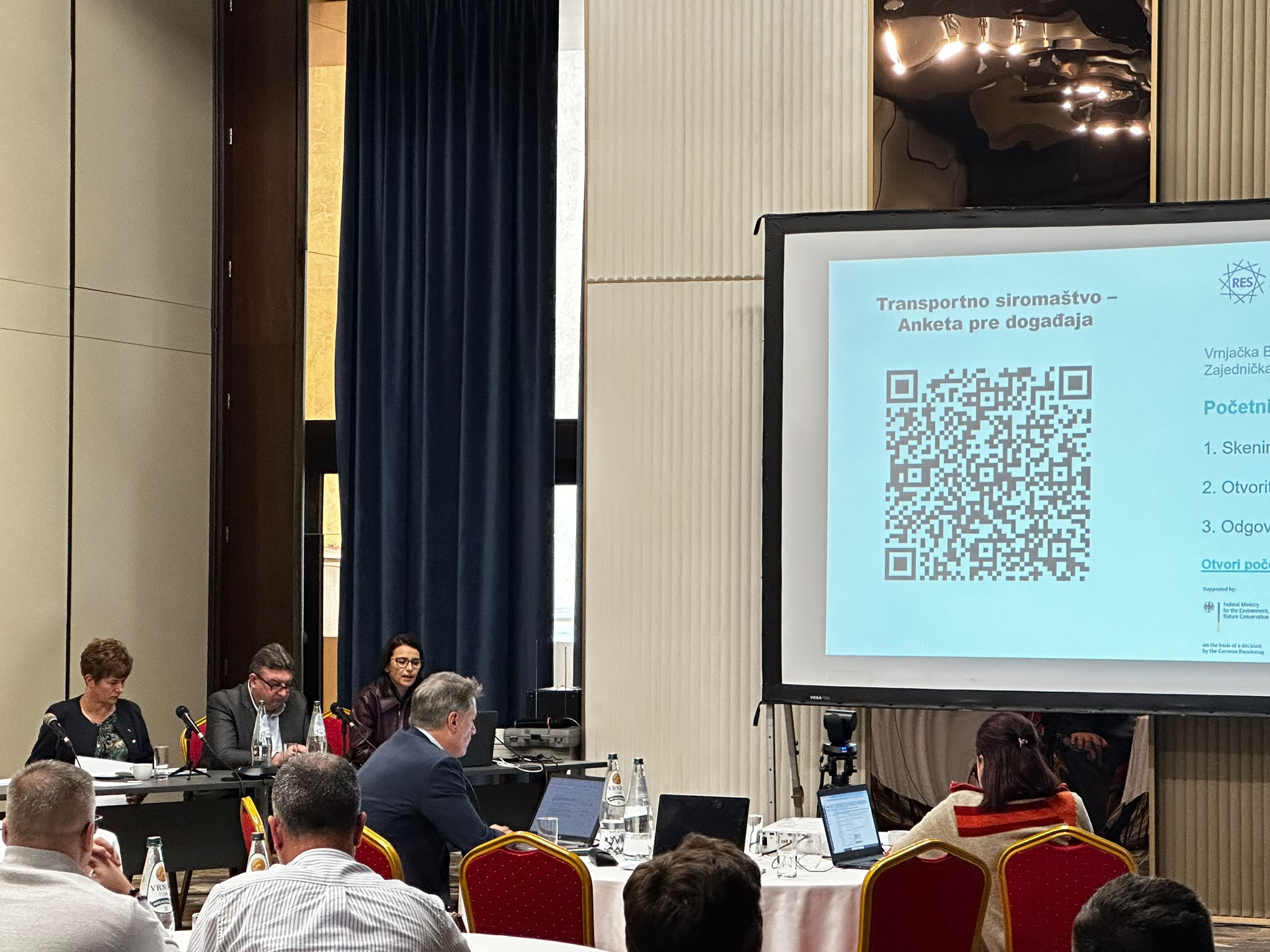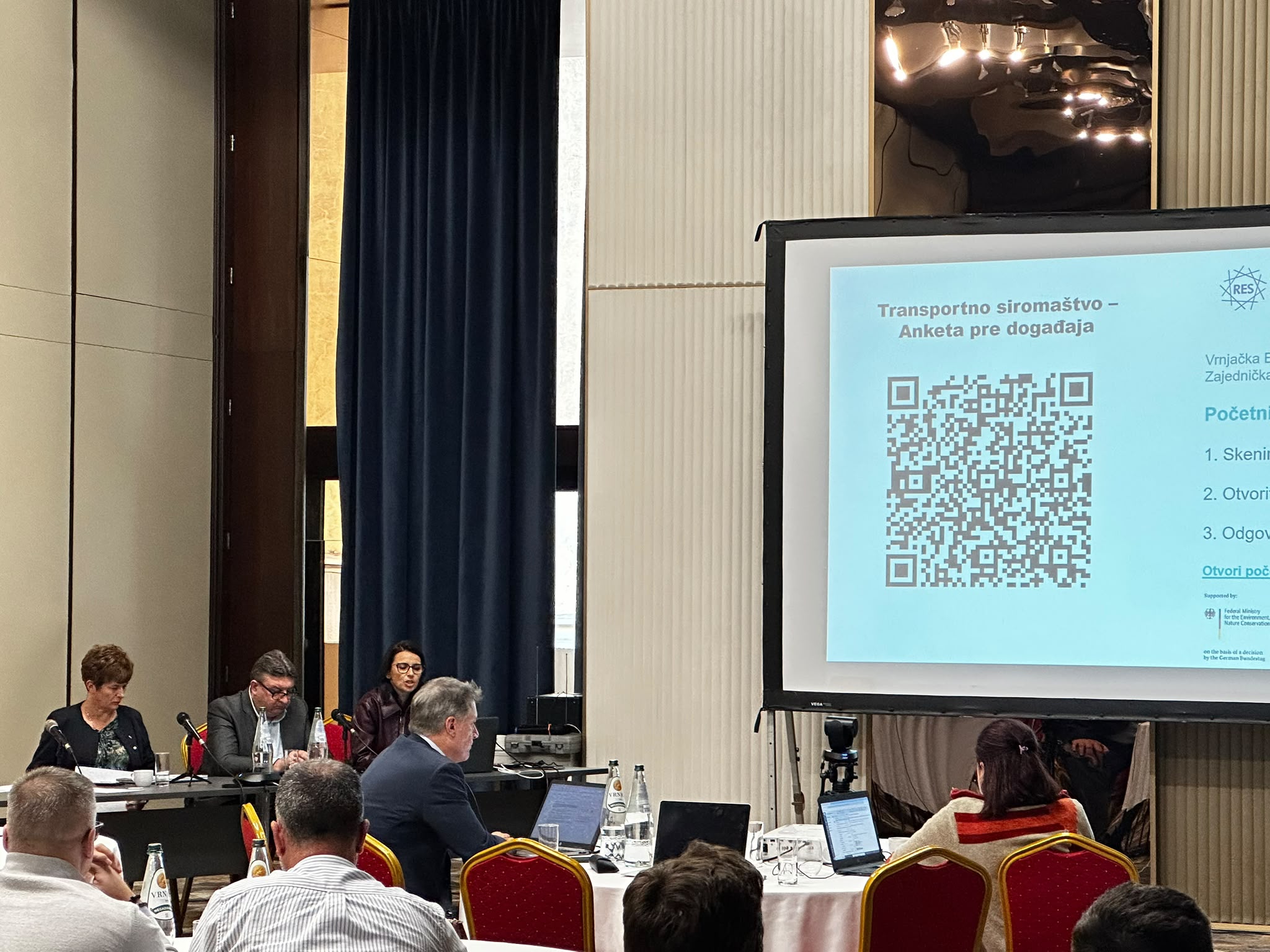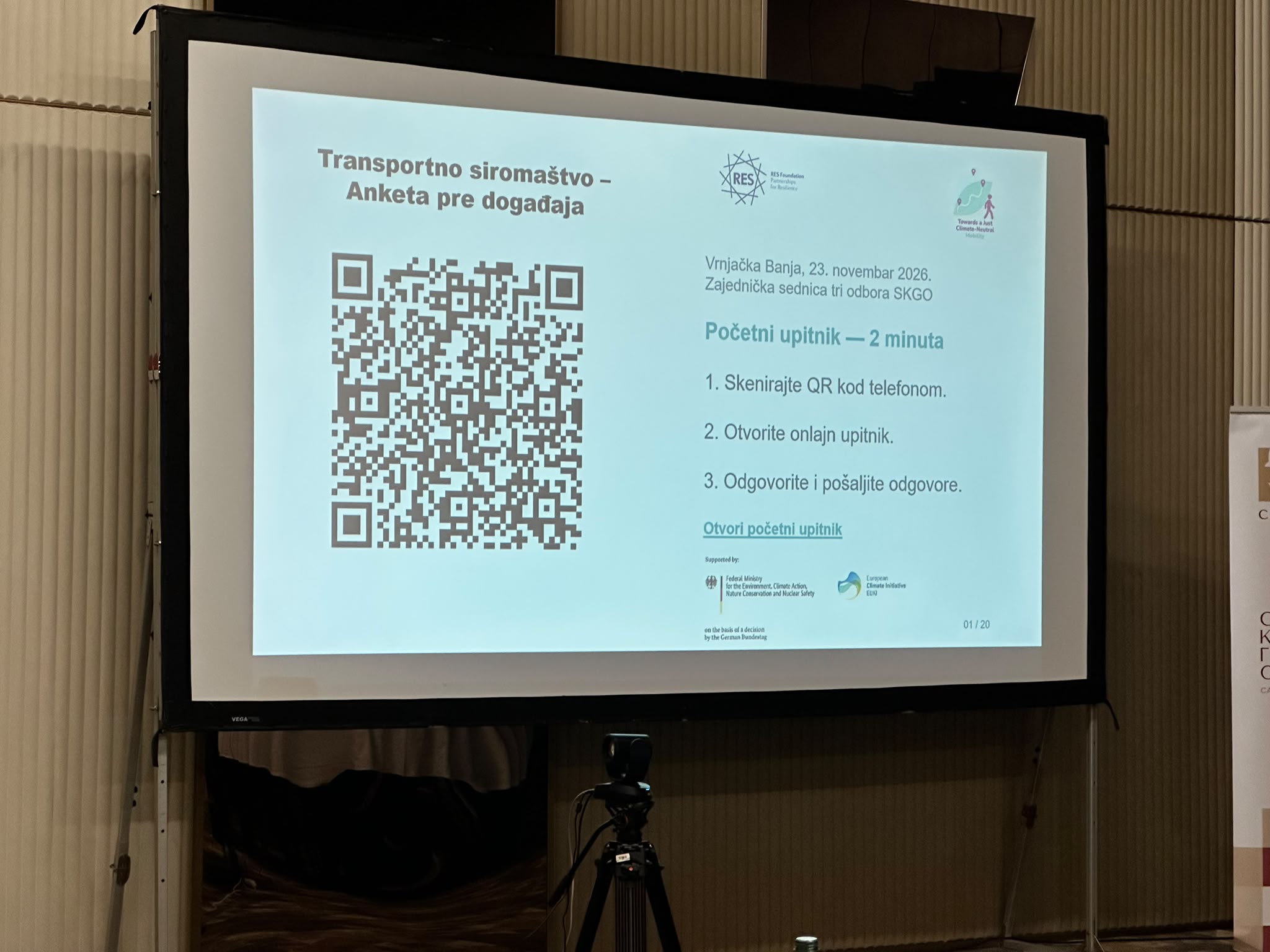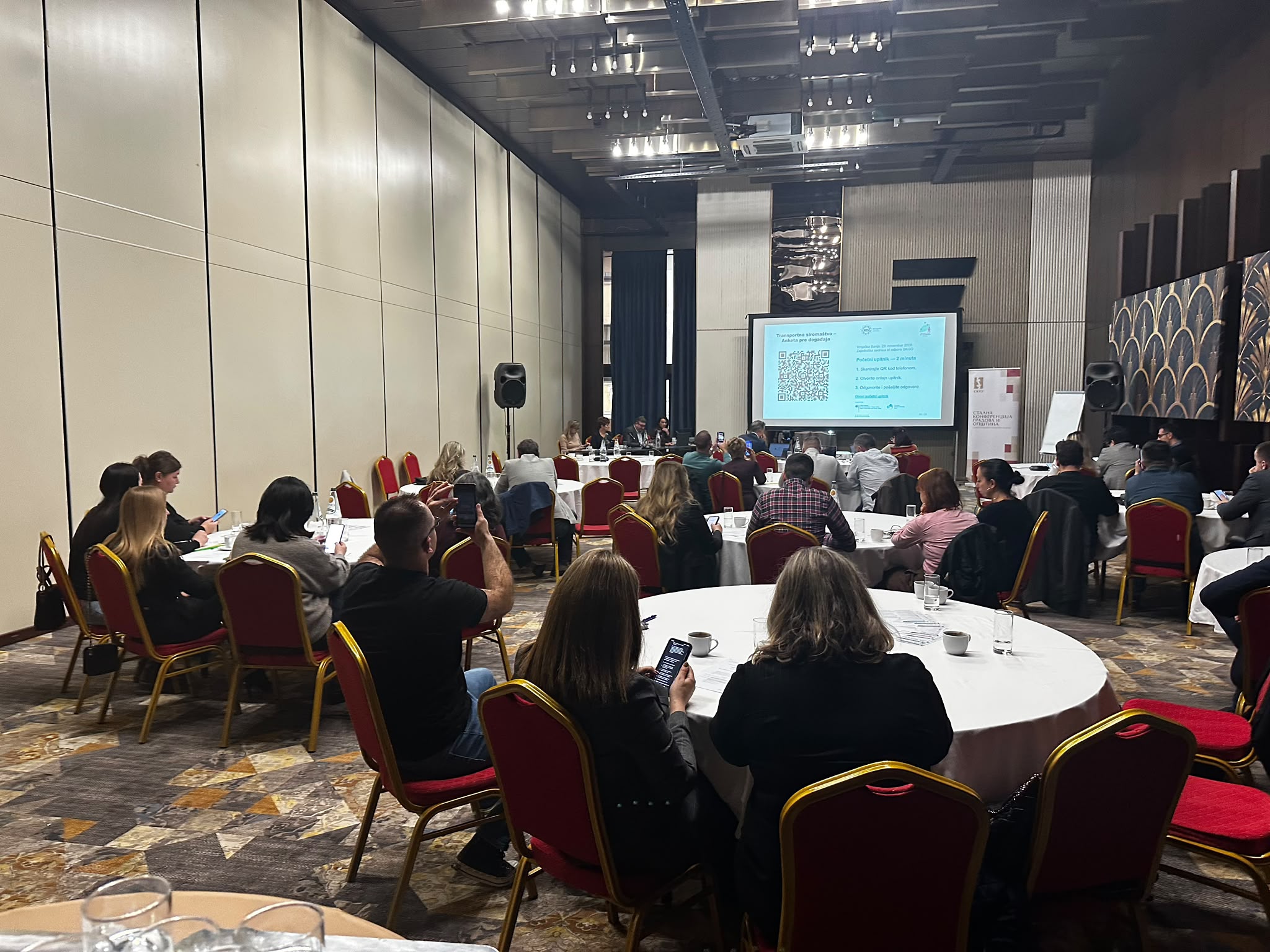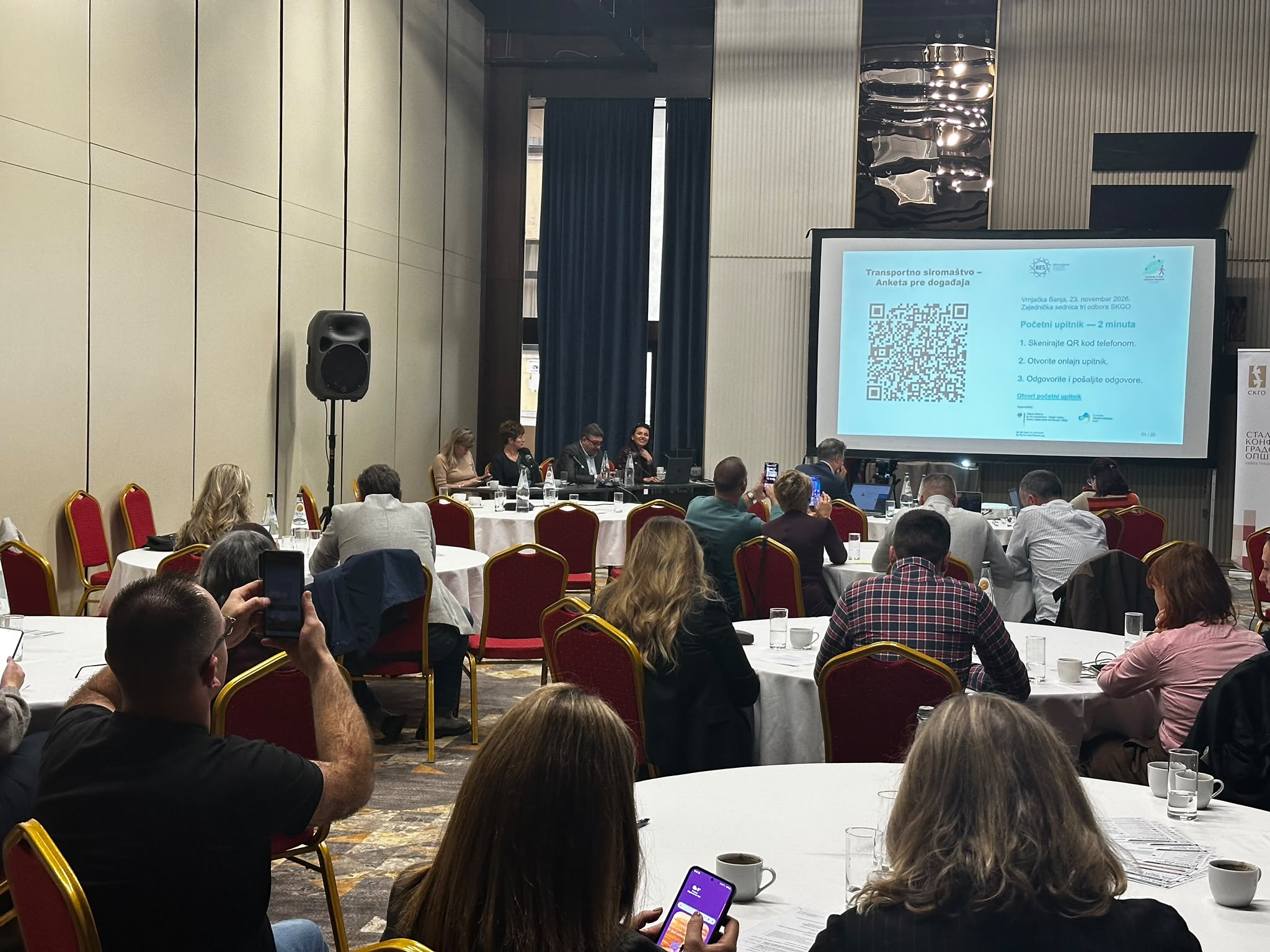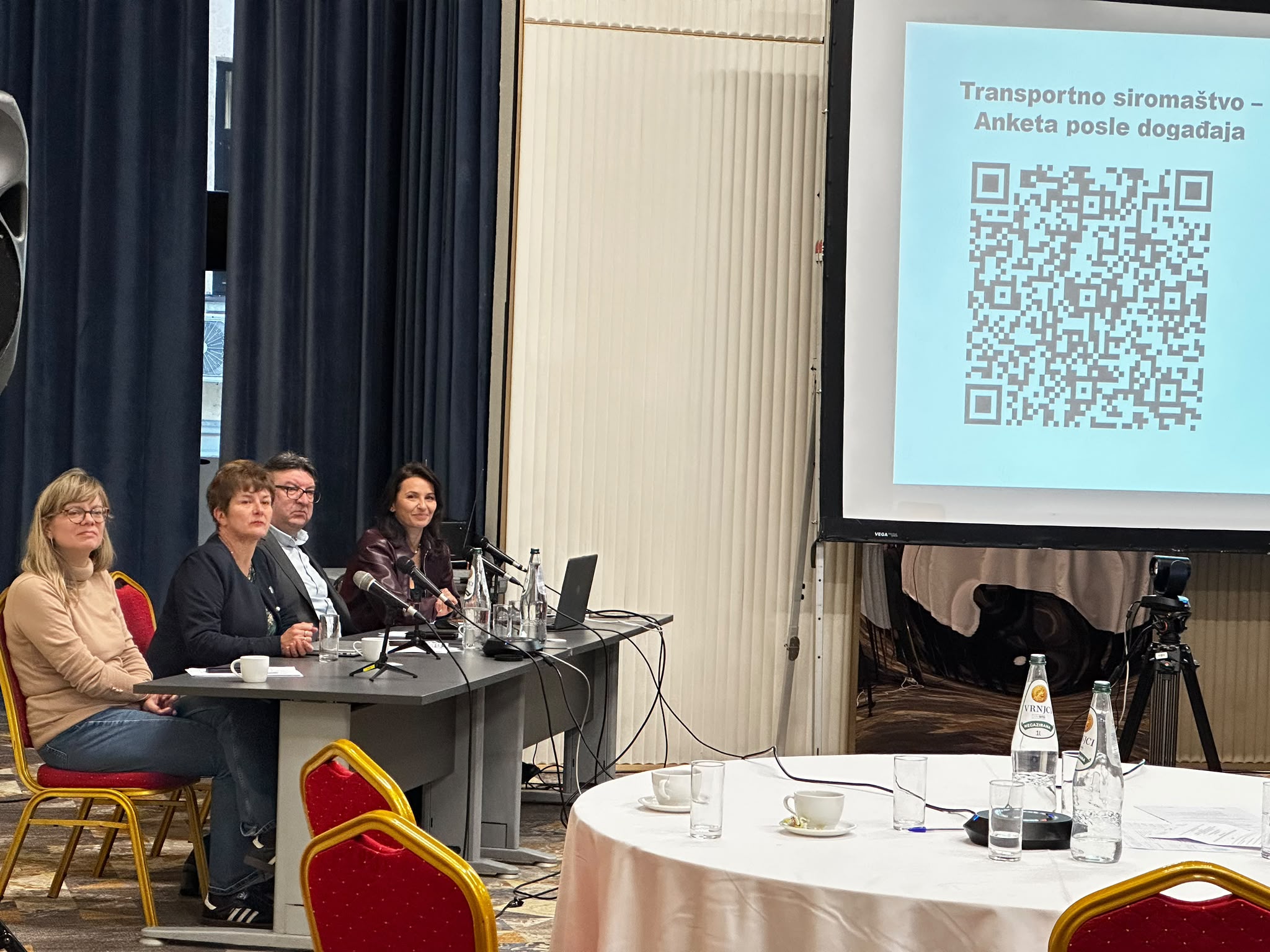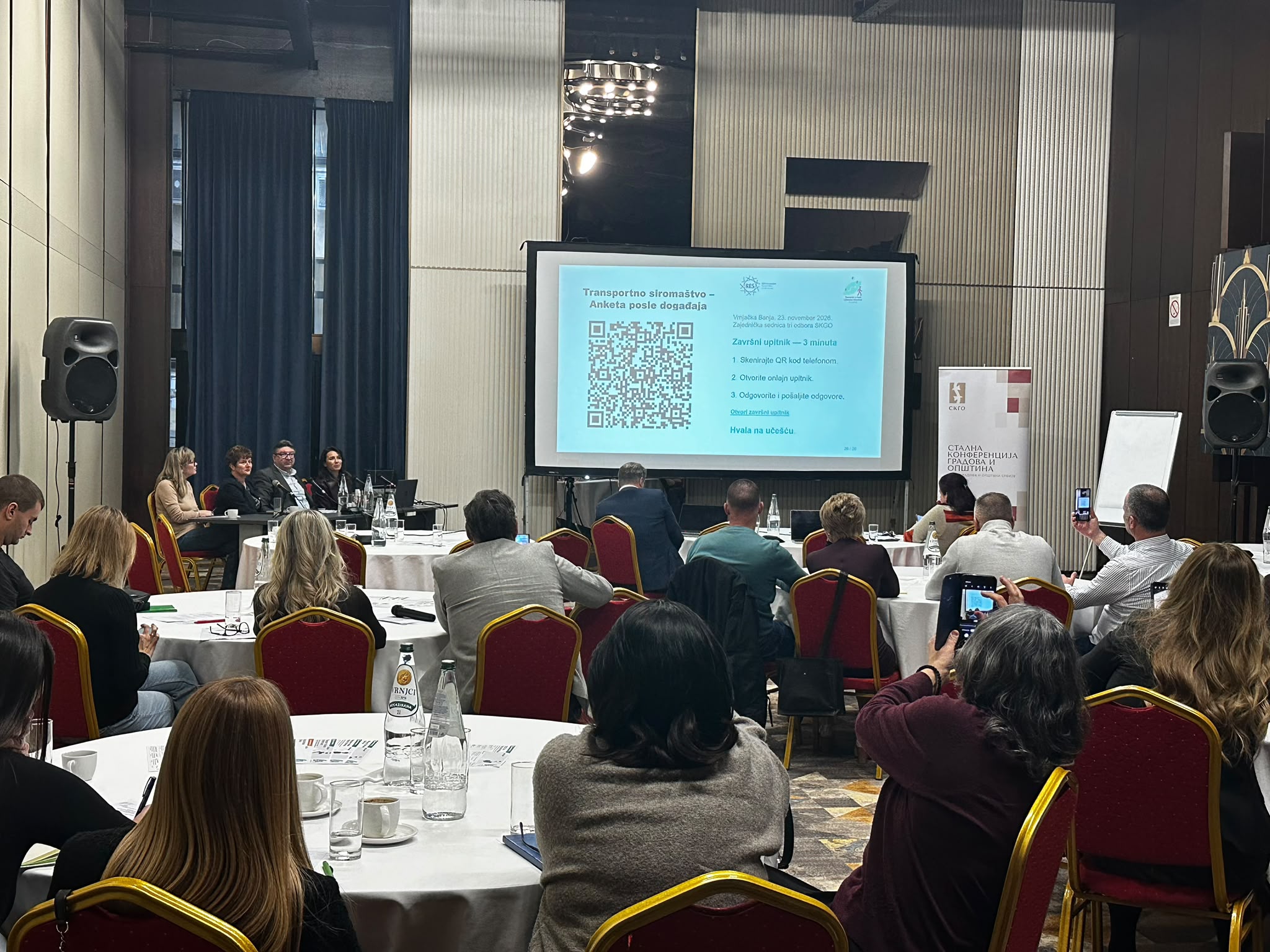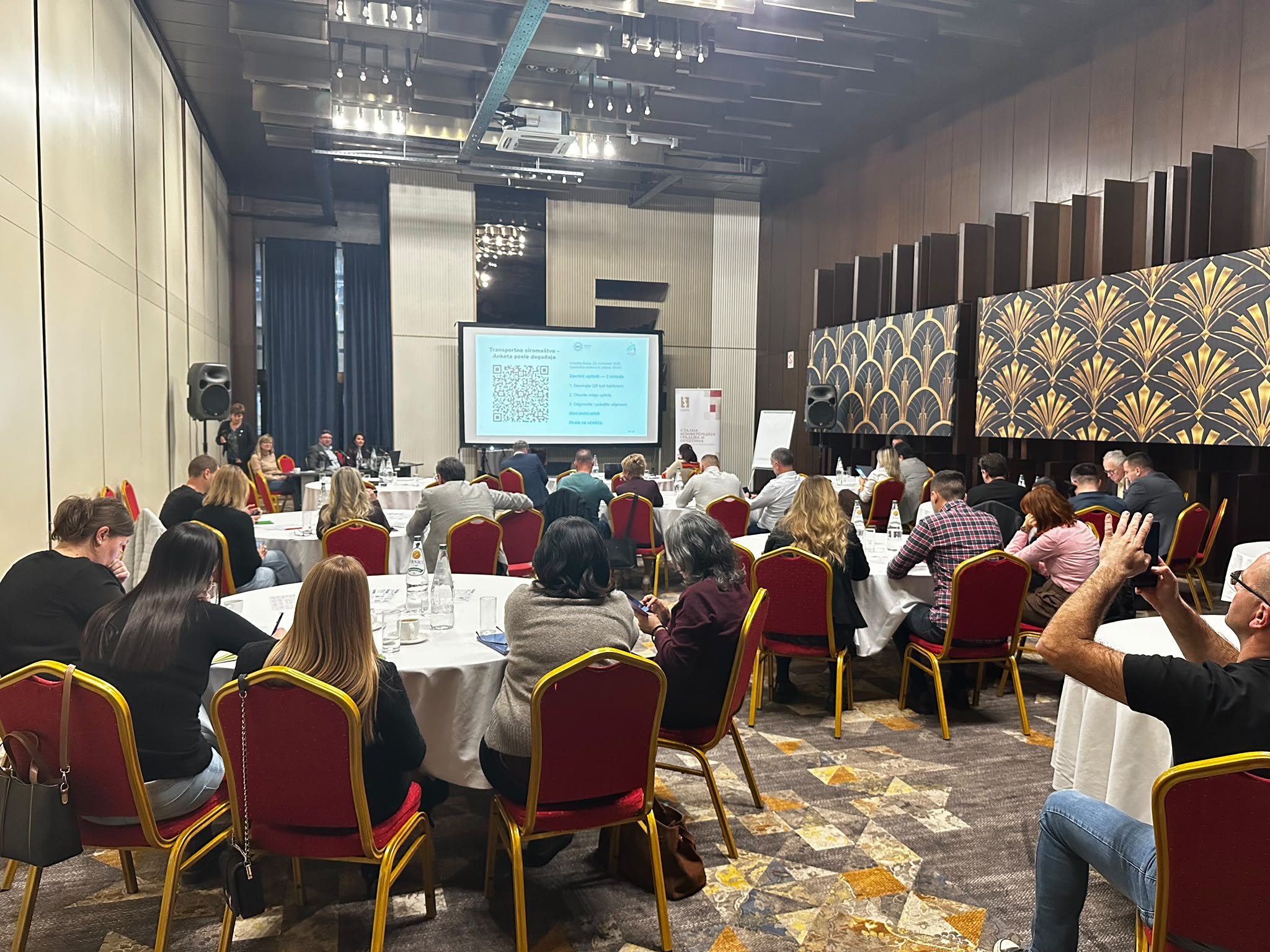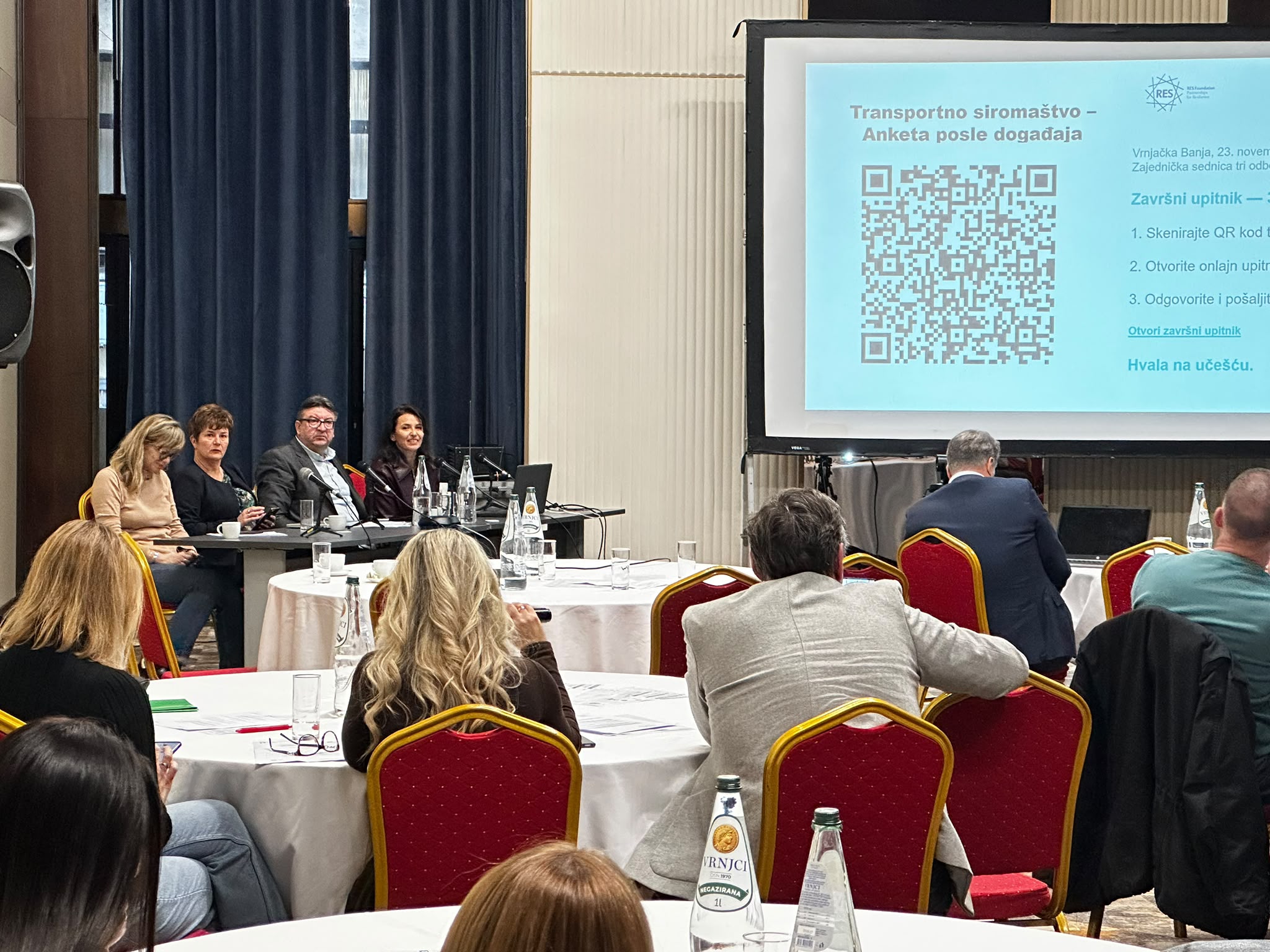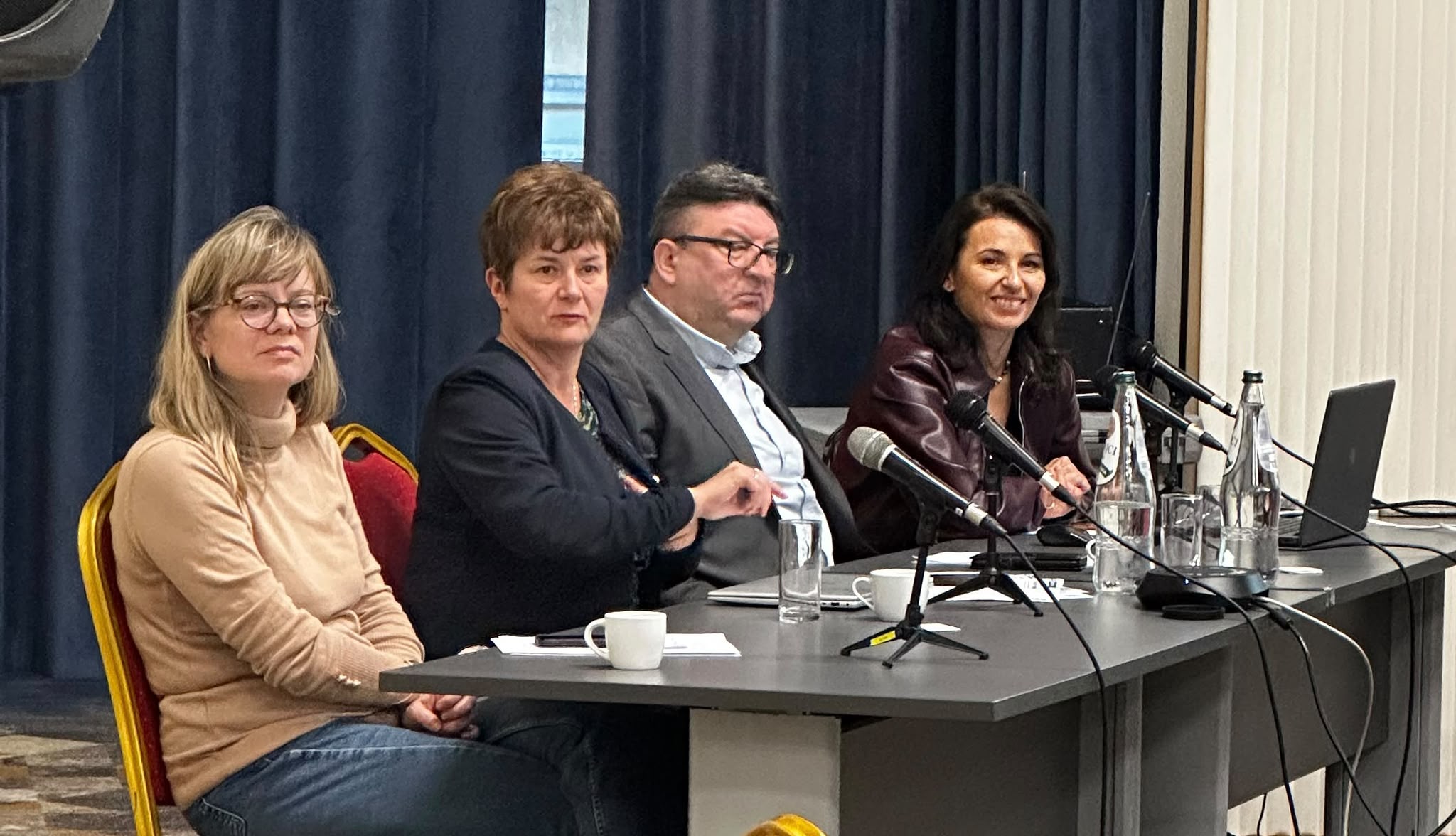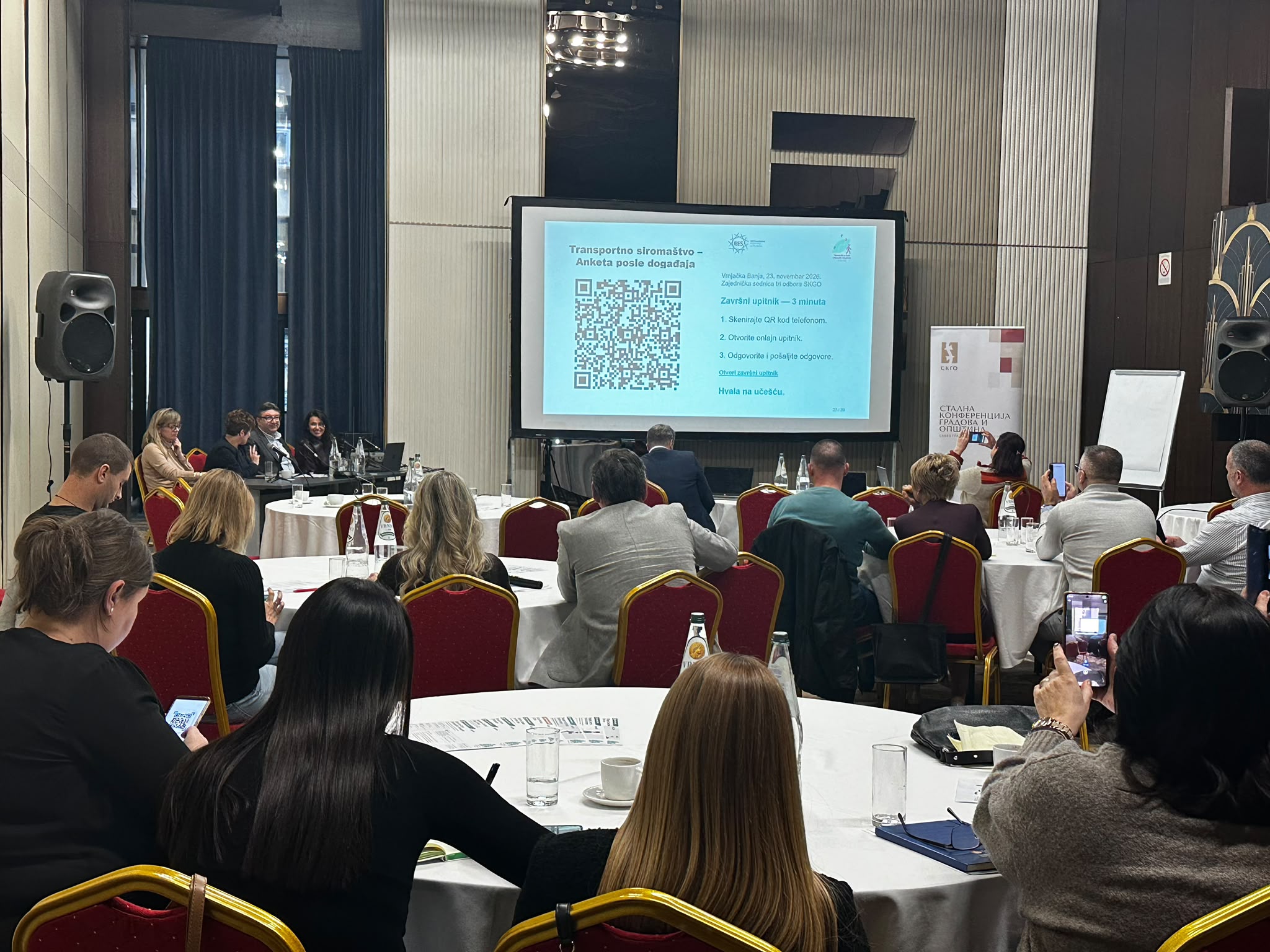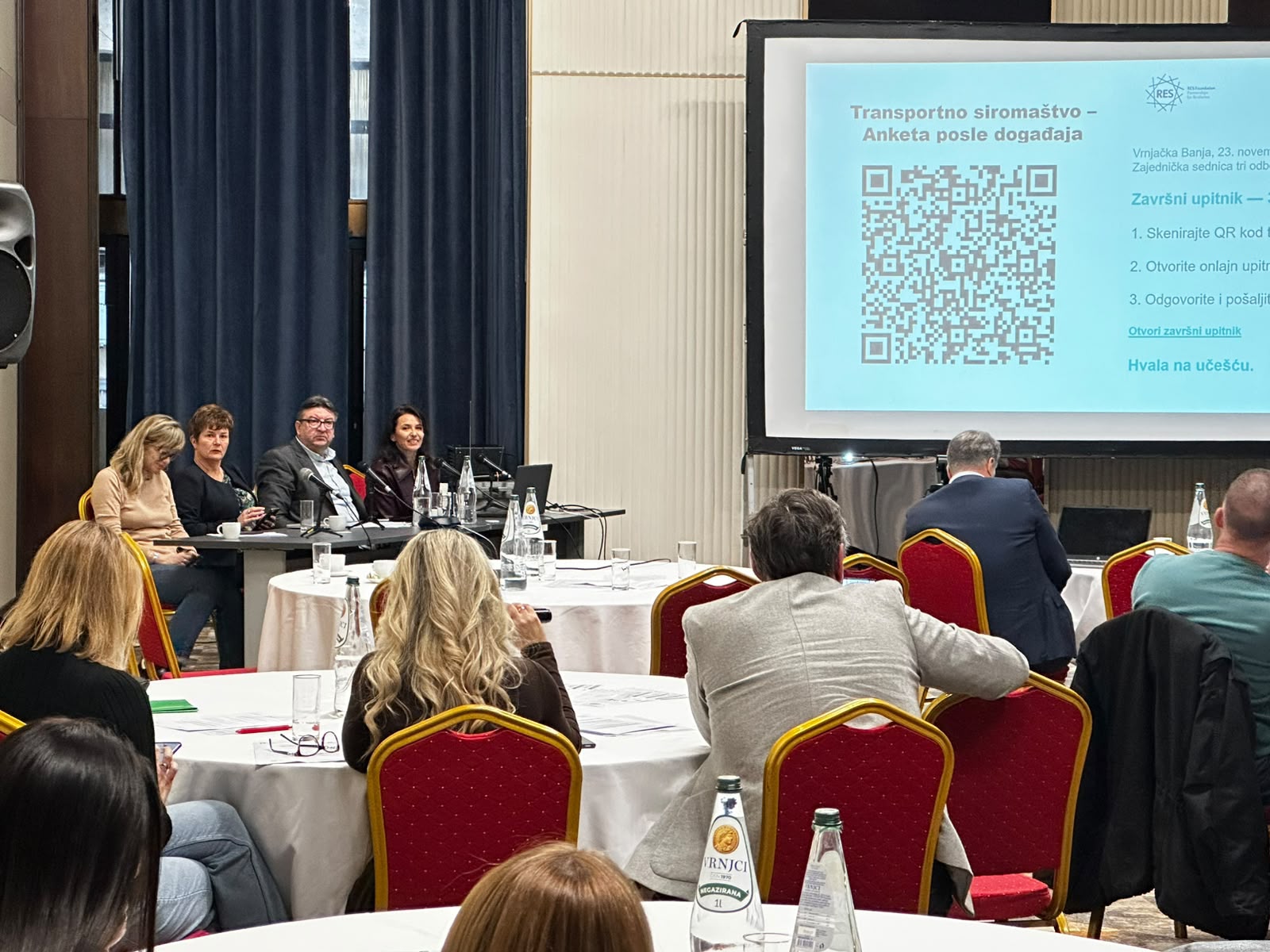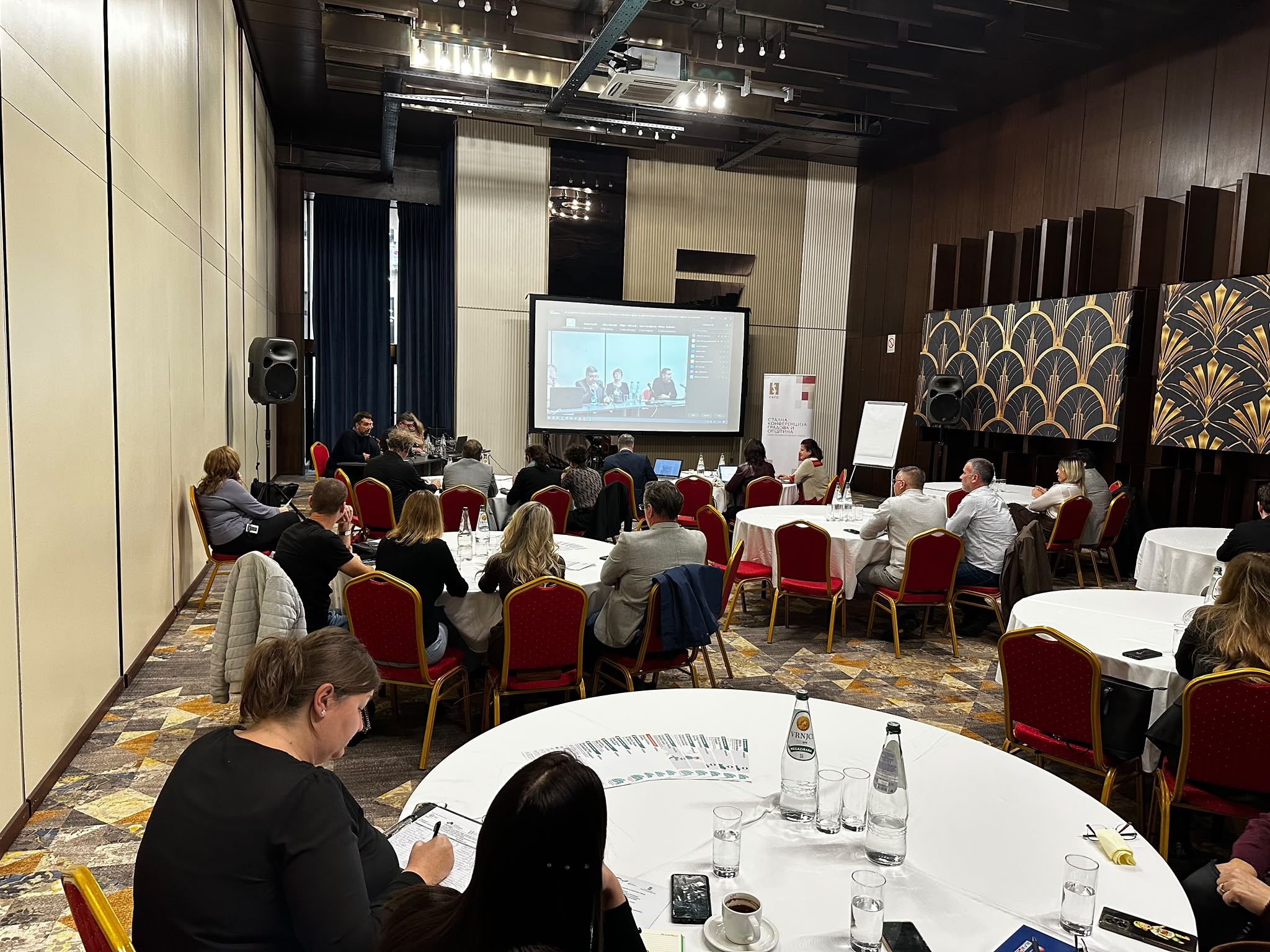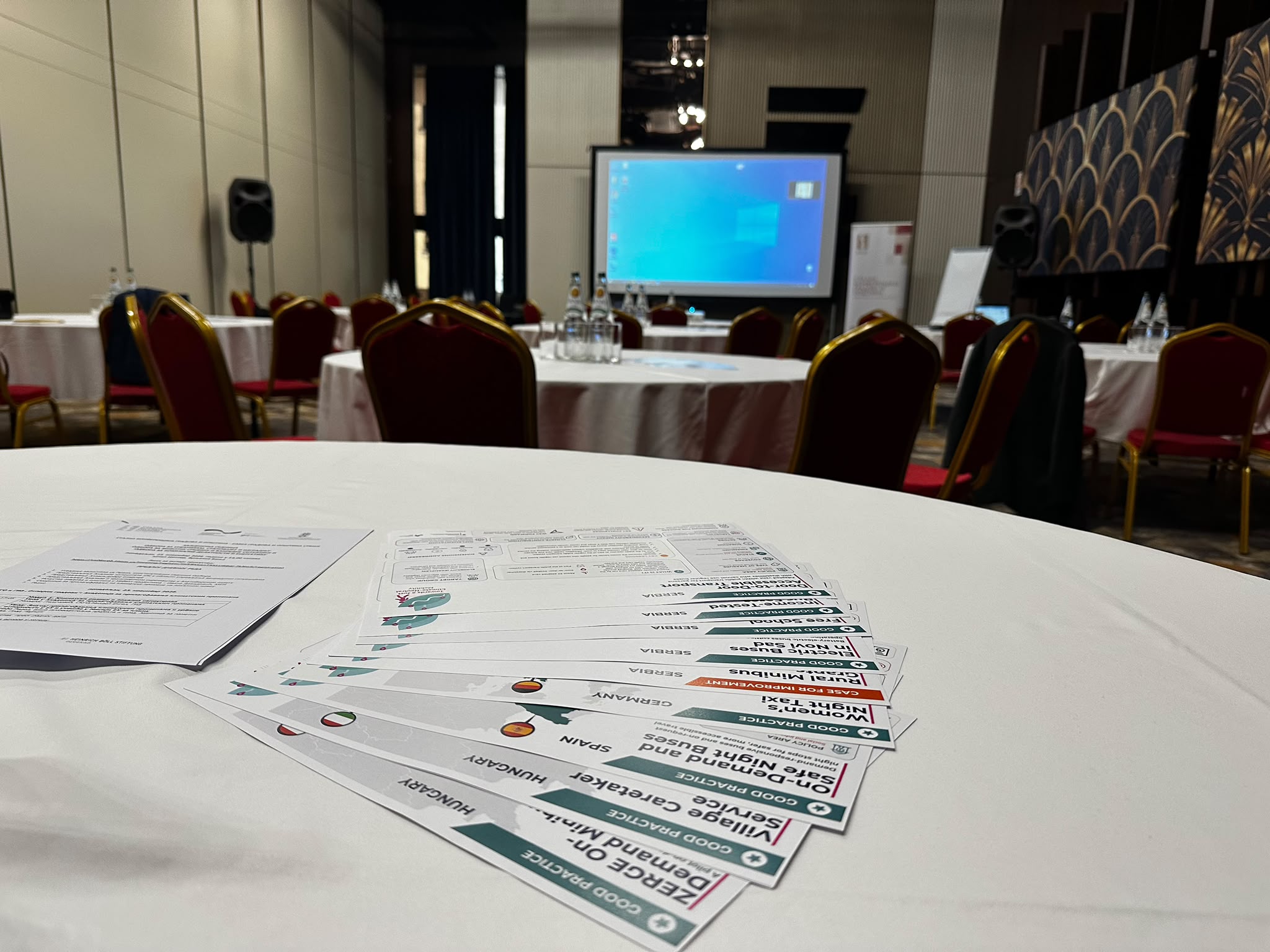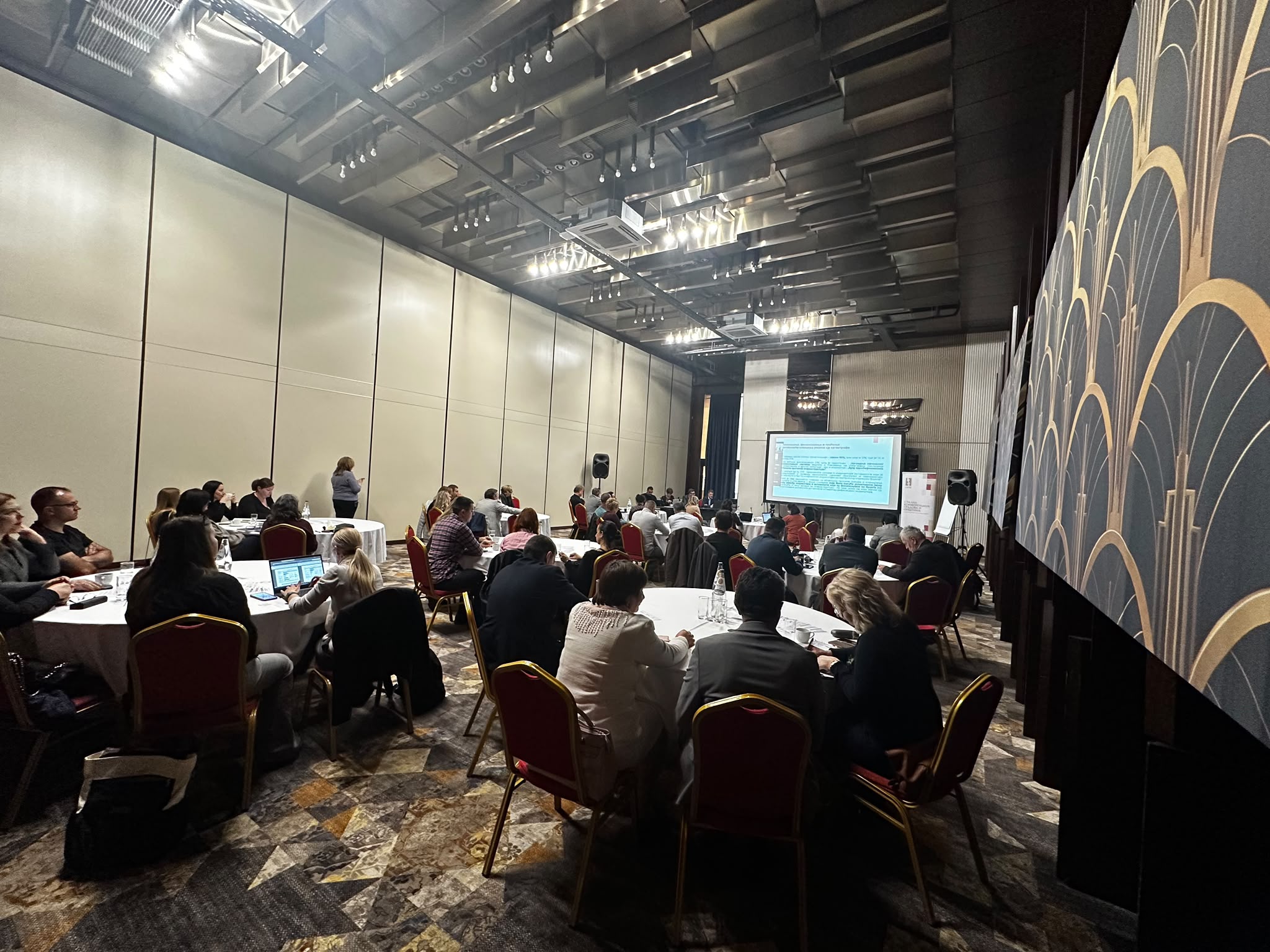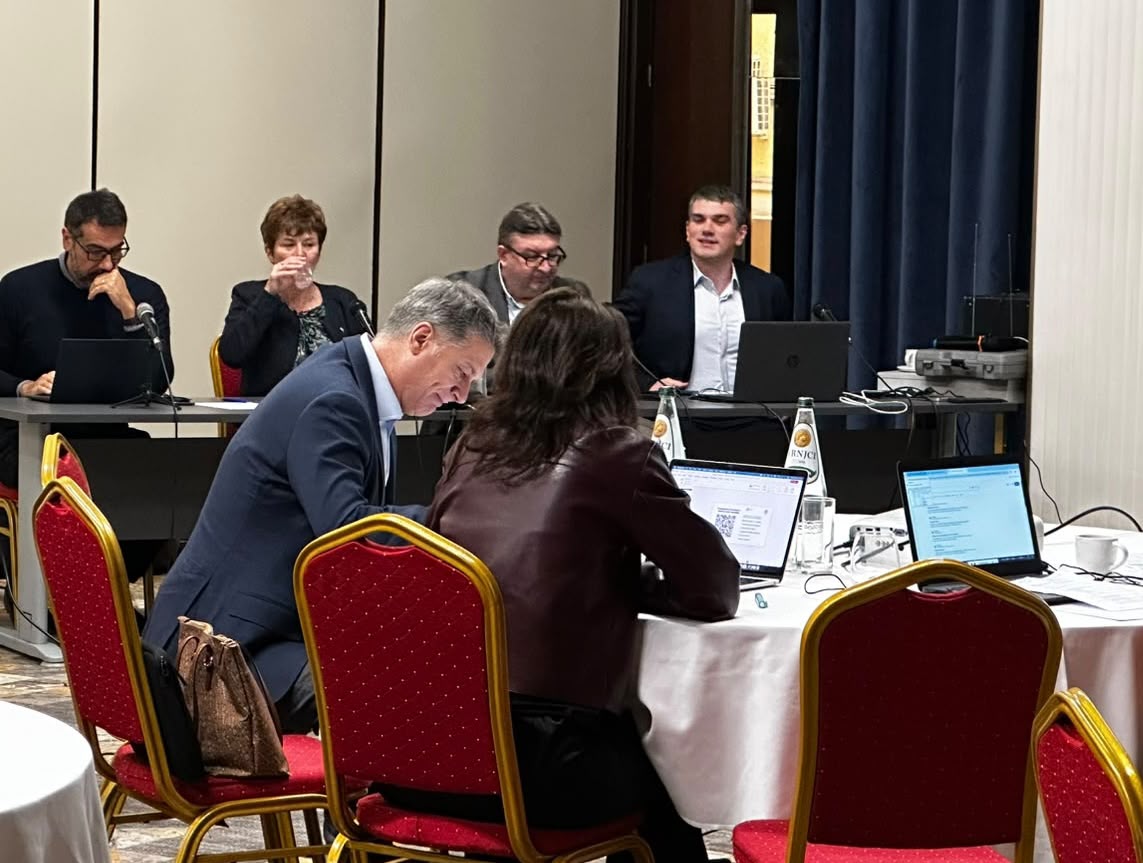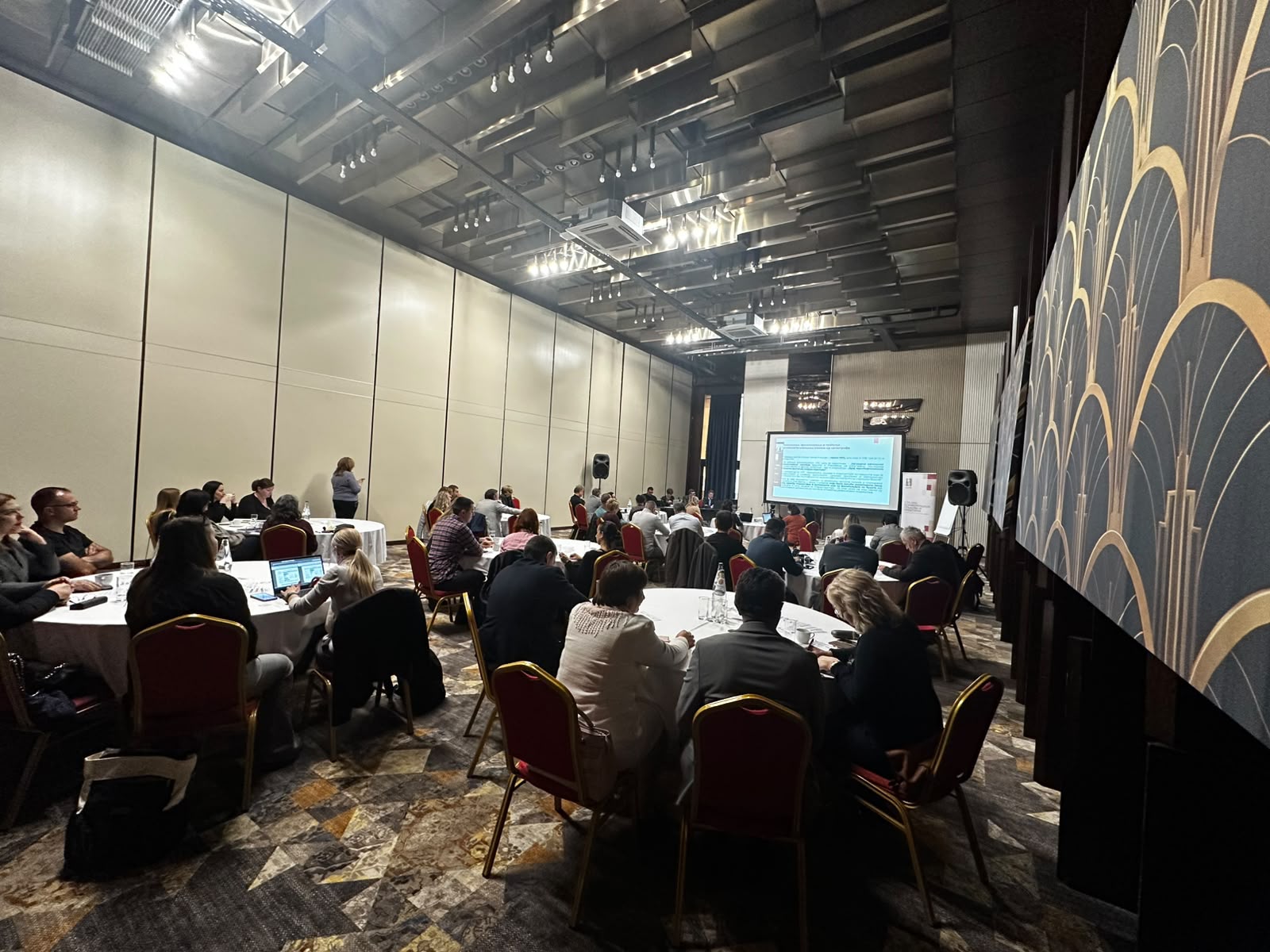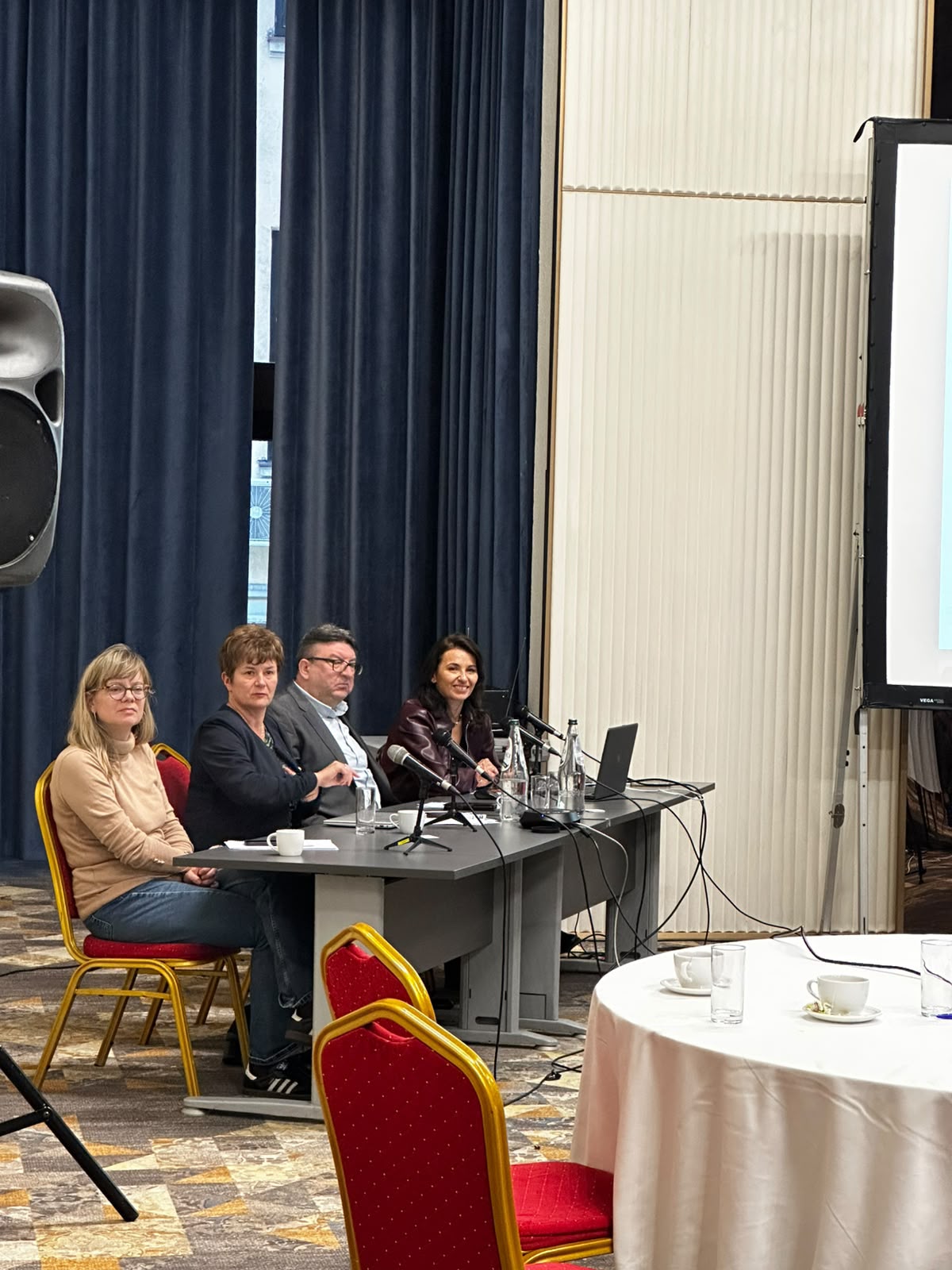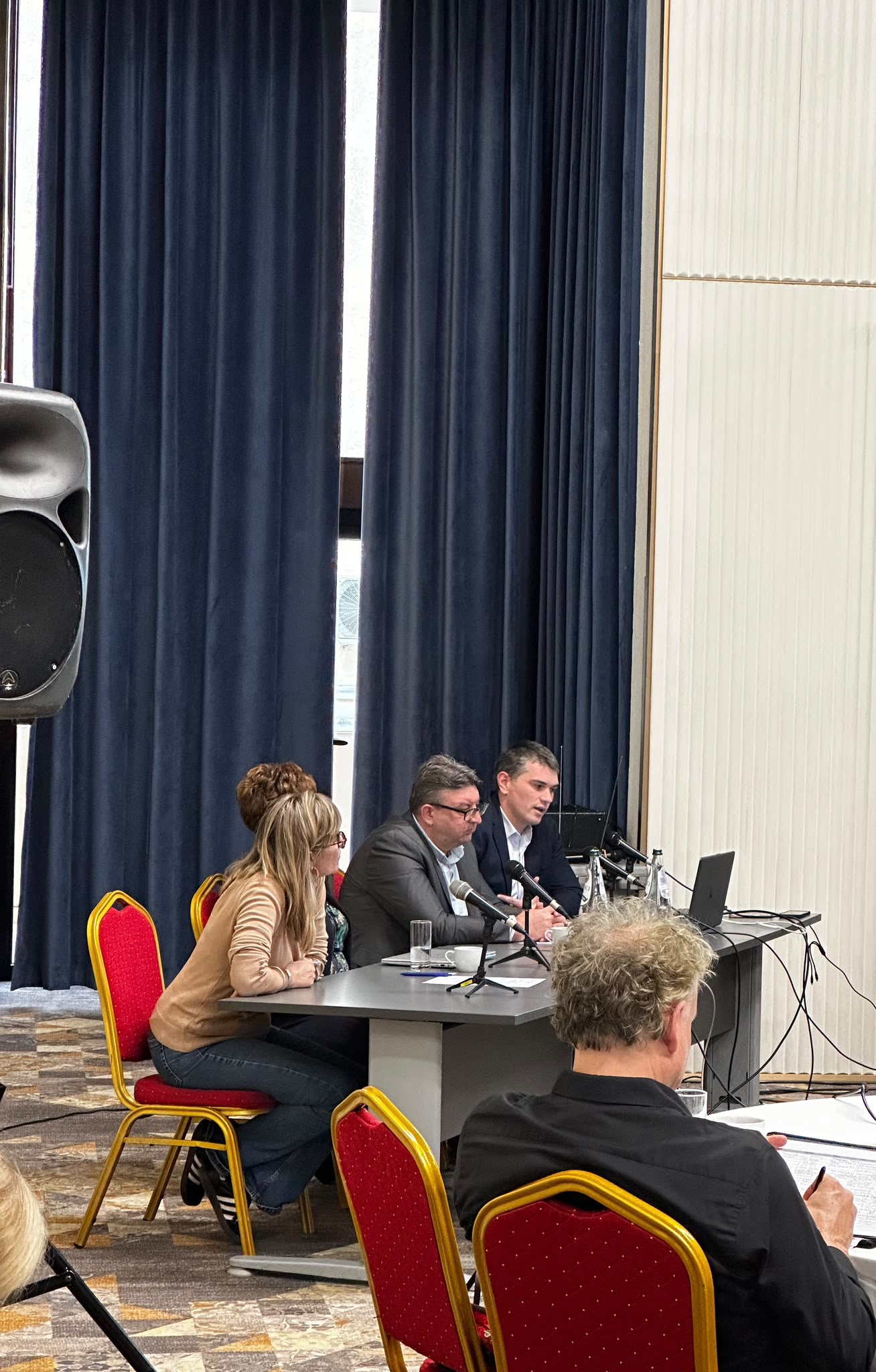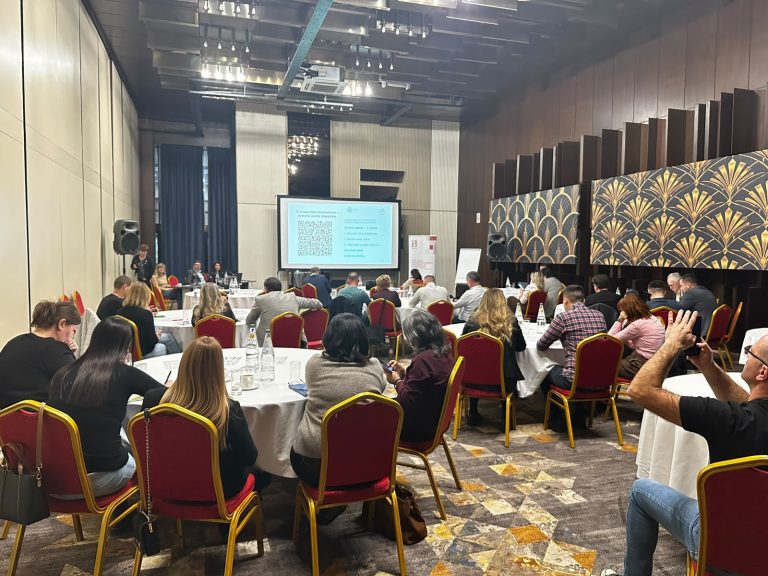
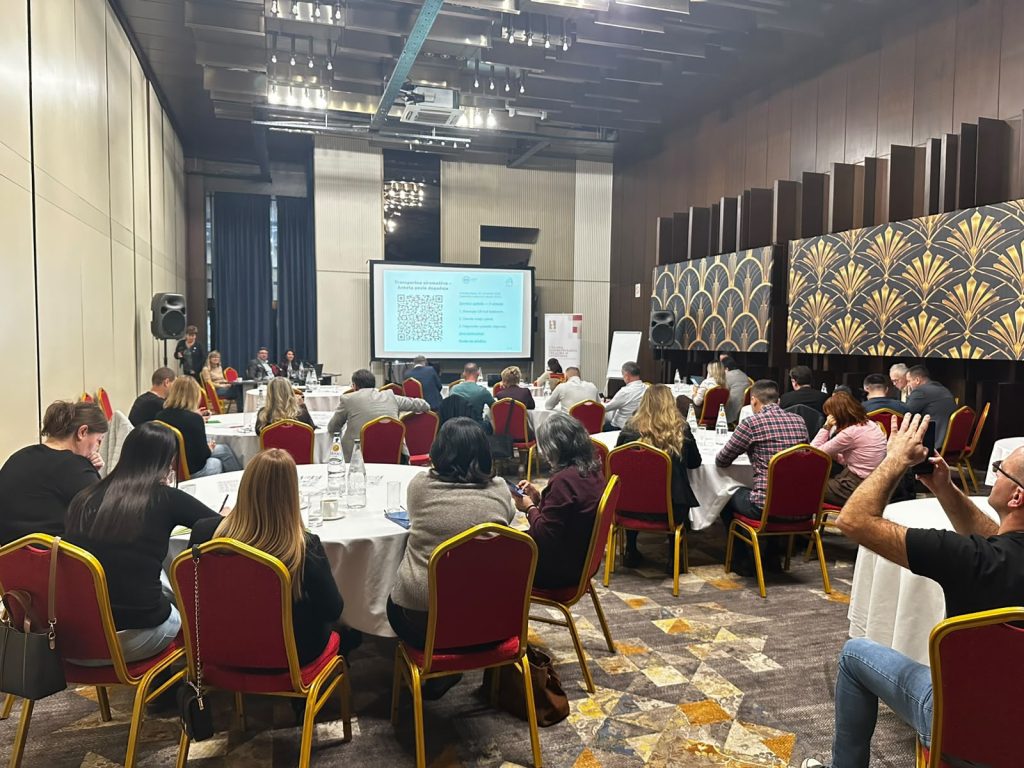
On November 23, 2026, in Vrnjačka Banja, RES Foundation presented the findings of research on transport poverty and tools for local energy planning at a joint session of three committees of the Standing Conference of Towns and Municipalities (SKGO). The meeting brought together more than 40 participants.
Members of the Committee for Urban Planning, Housing and Construction, the Committee for the Environment and Emergency Situations and the Committee for Communal Activities and Energy participated in the session. The session was part of a two-day program that also included the Academy for Adaptation to Climate Change, jointly organized by SKGO and GIZ’s “Resilient Cities” project.
Jasminka Young presented findings on transport poverty, within the EUKI project and capacity building activities of local self-governments. An overview of public policies shows that certain elements of this problem are recognized in different areas, but remain insufficiently connected.
The survey included 600 adult respondents from 10 local governments of the Zlatibor District. Due to problems with transportation, 20.1% of respondents did not make the desired or necessary trip in the seven days before the survey, while among young people aged 18 to 29, that share was 39.3%. Differences between villages and towns are particularly visible in access to health services: 53.4% of respondents from rural settlements rate the journey to the hospital as very or somewhat difficult, compared to 28.4% from urban settlements. The needs of rural residents, women and young people were particularly emphasized, as well as the importance of local solutions linking the availability and affordability of transportation with decarbonization.
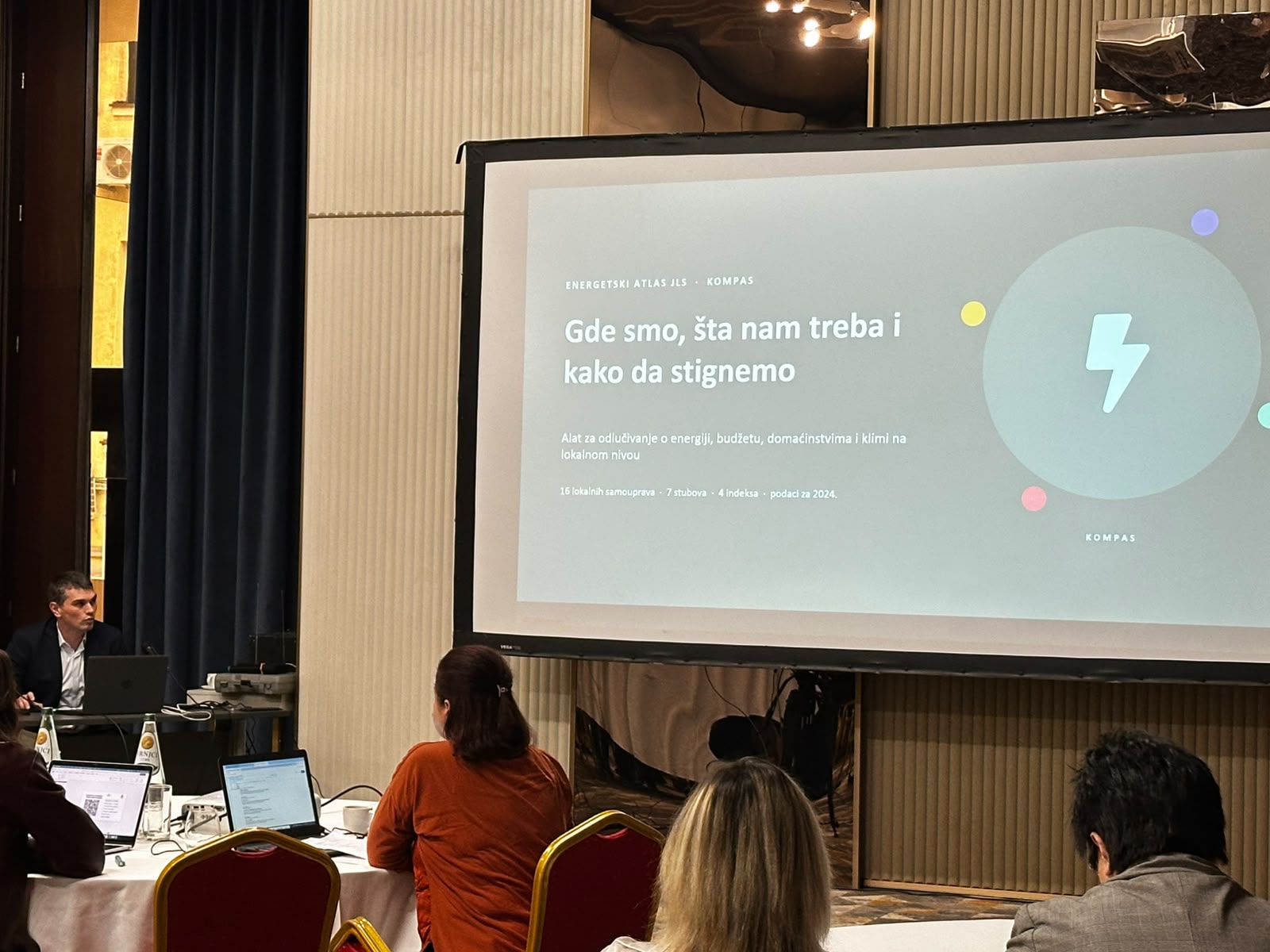
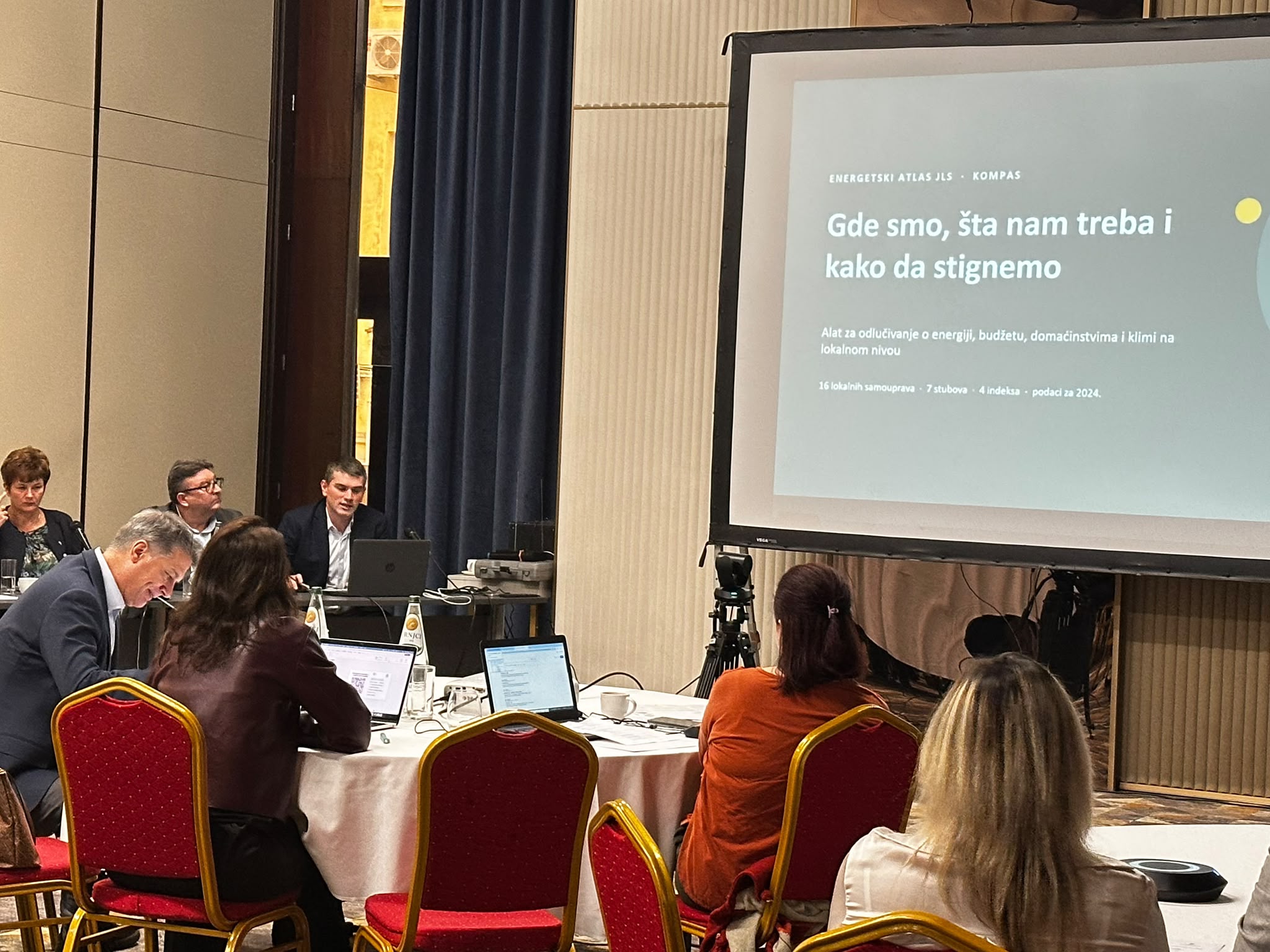
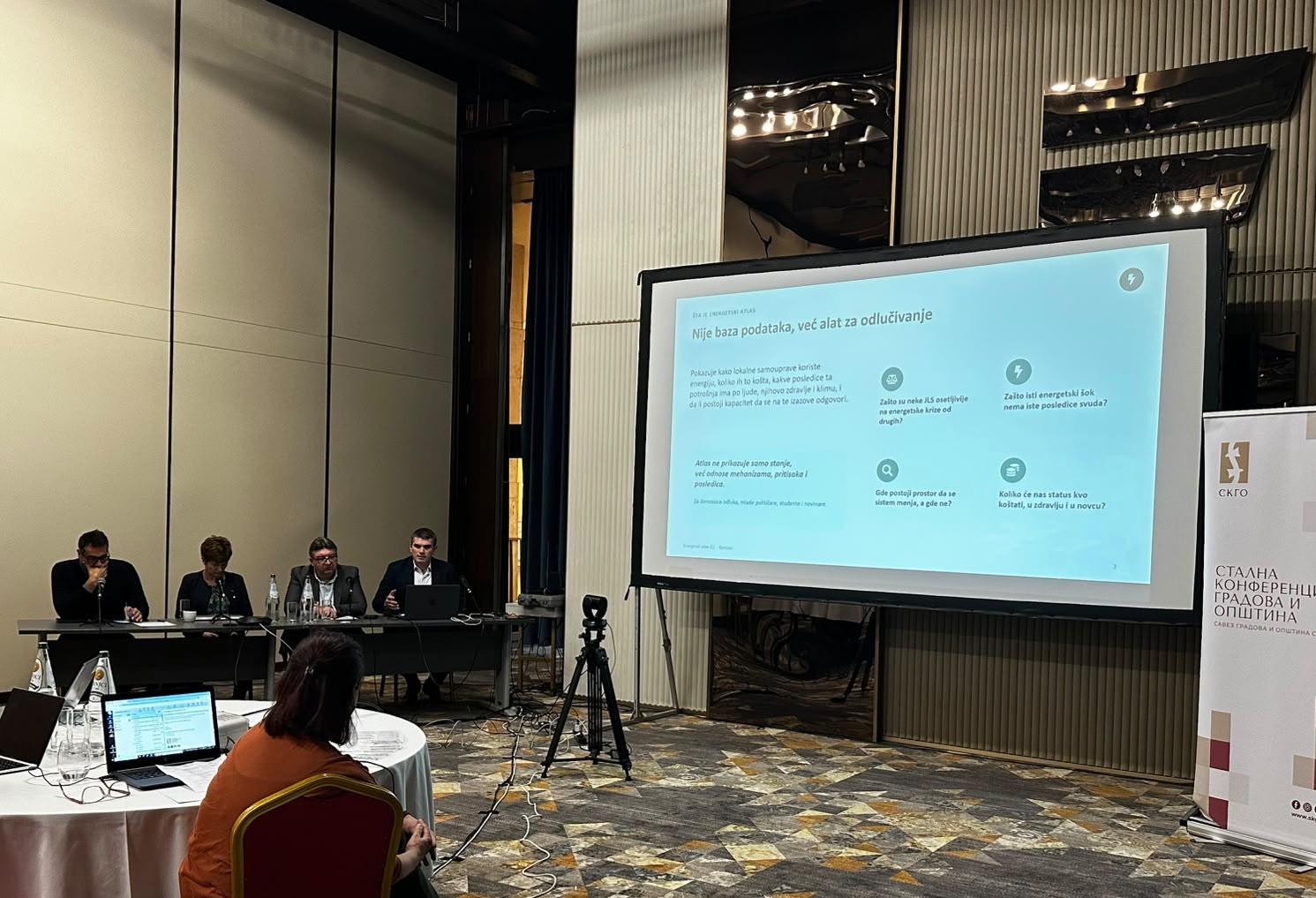
Filip Blagojević presented the Atlas of Good Energy, which is being developed as part of a project with the support of the Heinrich Böll Foundation (HBS), as well as Kompas — a calculator for energy savings and measures for local energy and climate plans. The atlas links data on energy consumption and budgets to household vulnerability, climate risks and institutional capacity. The findings for the 16 included local governments indicate significant differences in the readiness to respond to energy challenges: according to the presented overview, only three of them have a valid energy efficiency program. The compass enables, on the basis of the local energy balance, to estimate energy and money savings, changes in emissions and the investment payback period for selected measures.
Photos: Marina Macura, RES Foundation