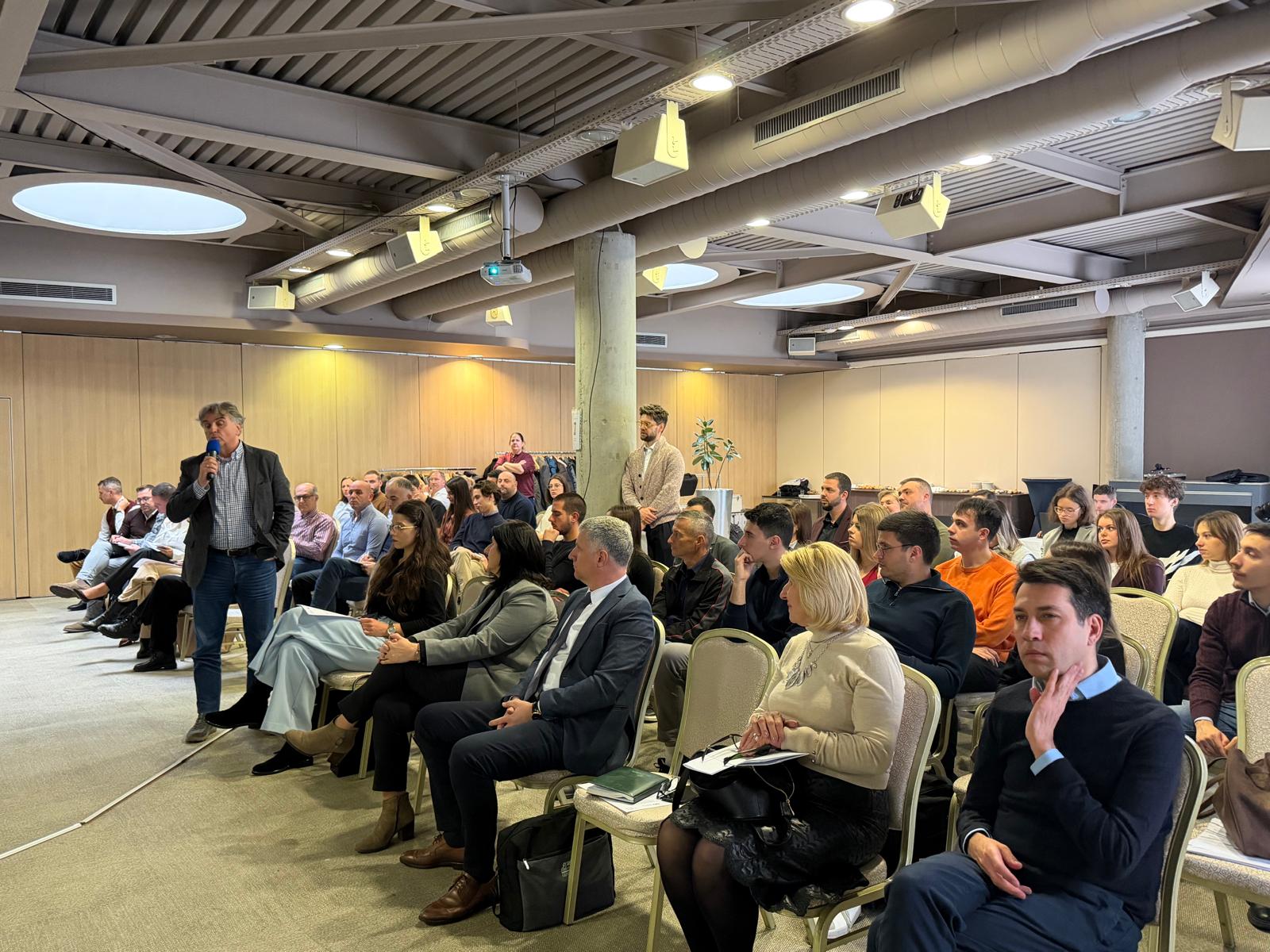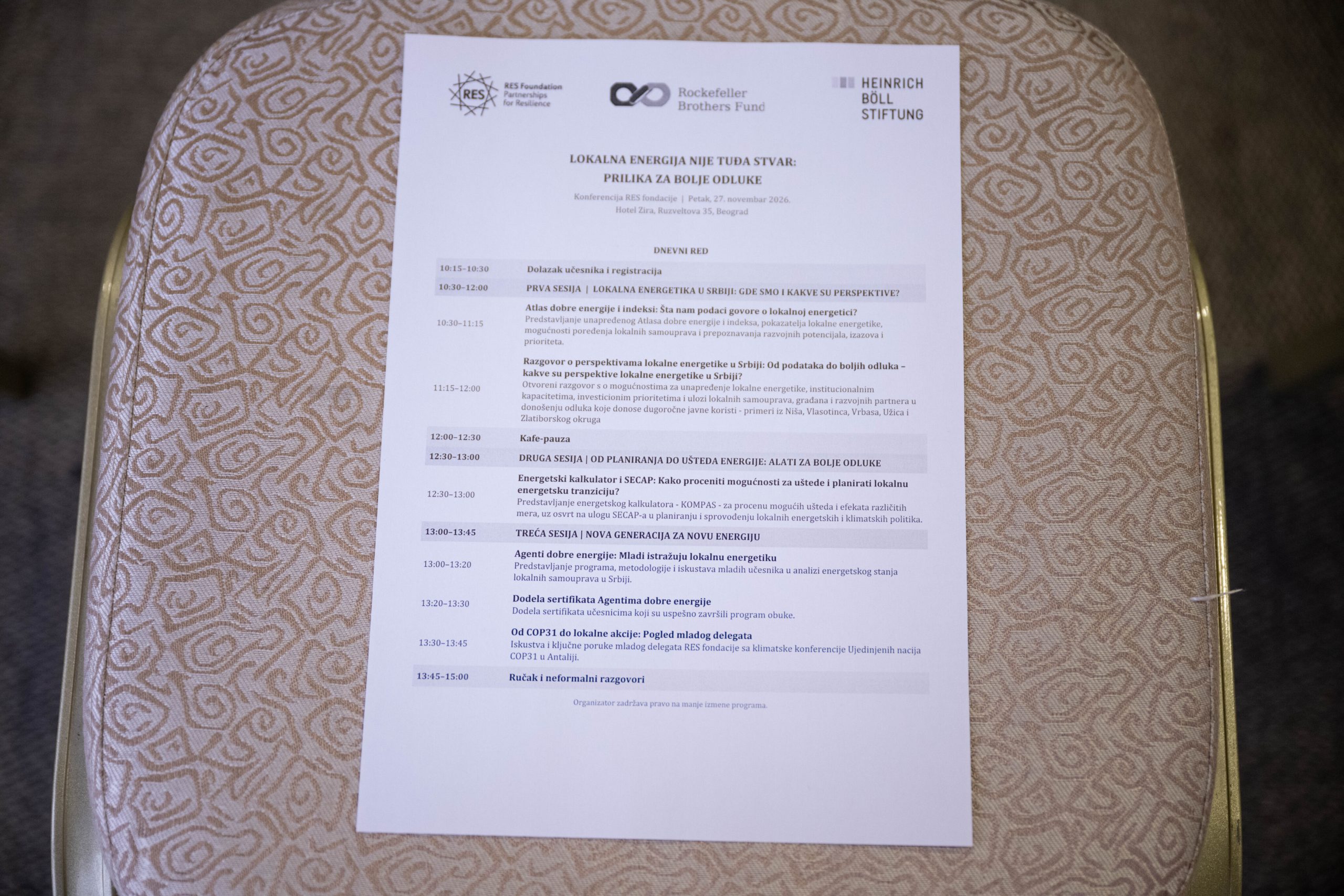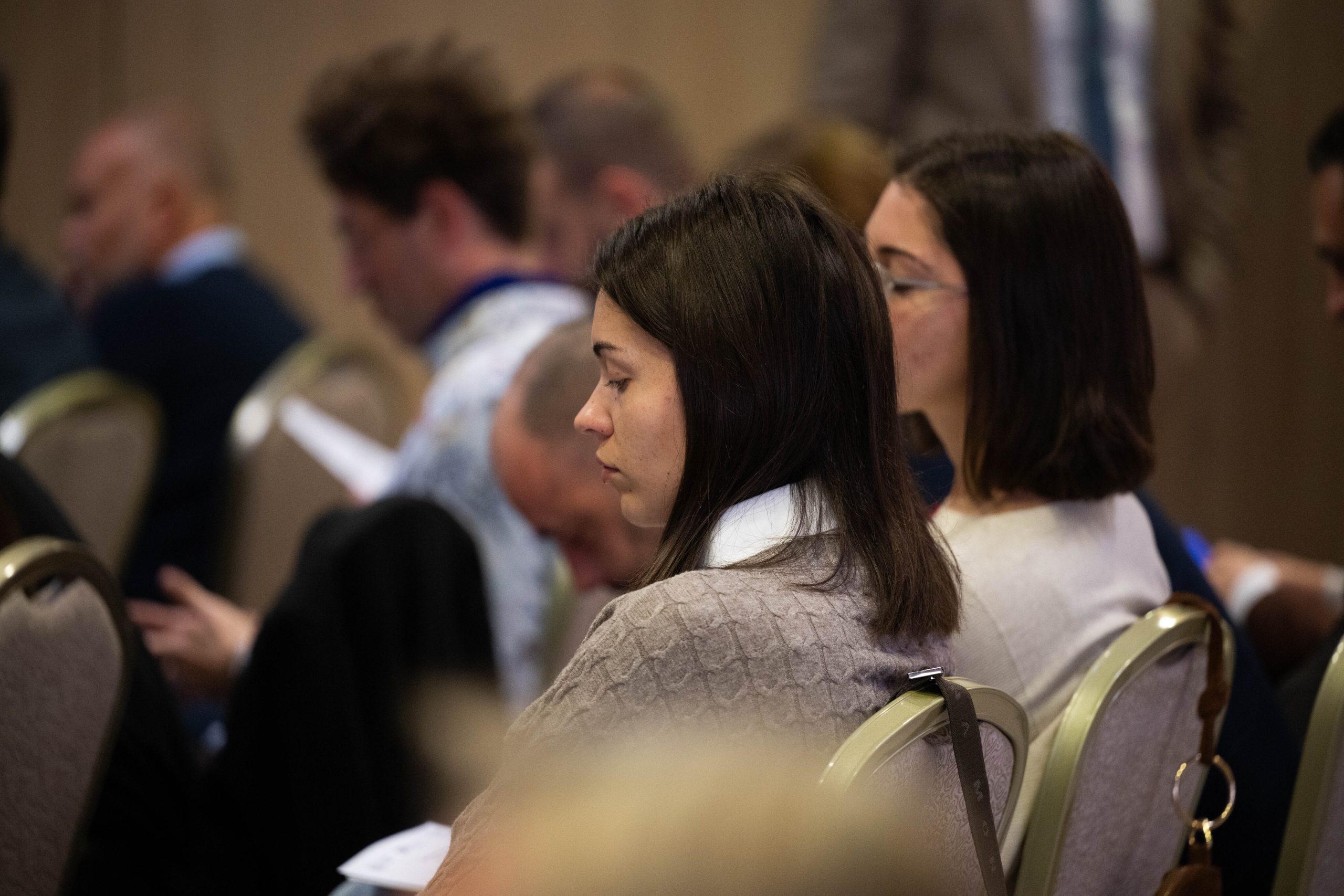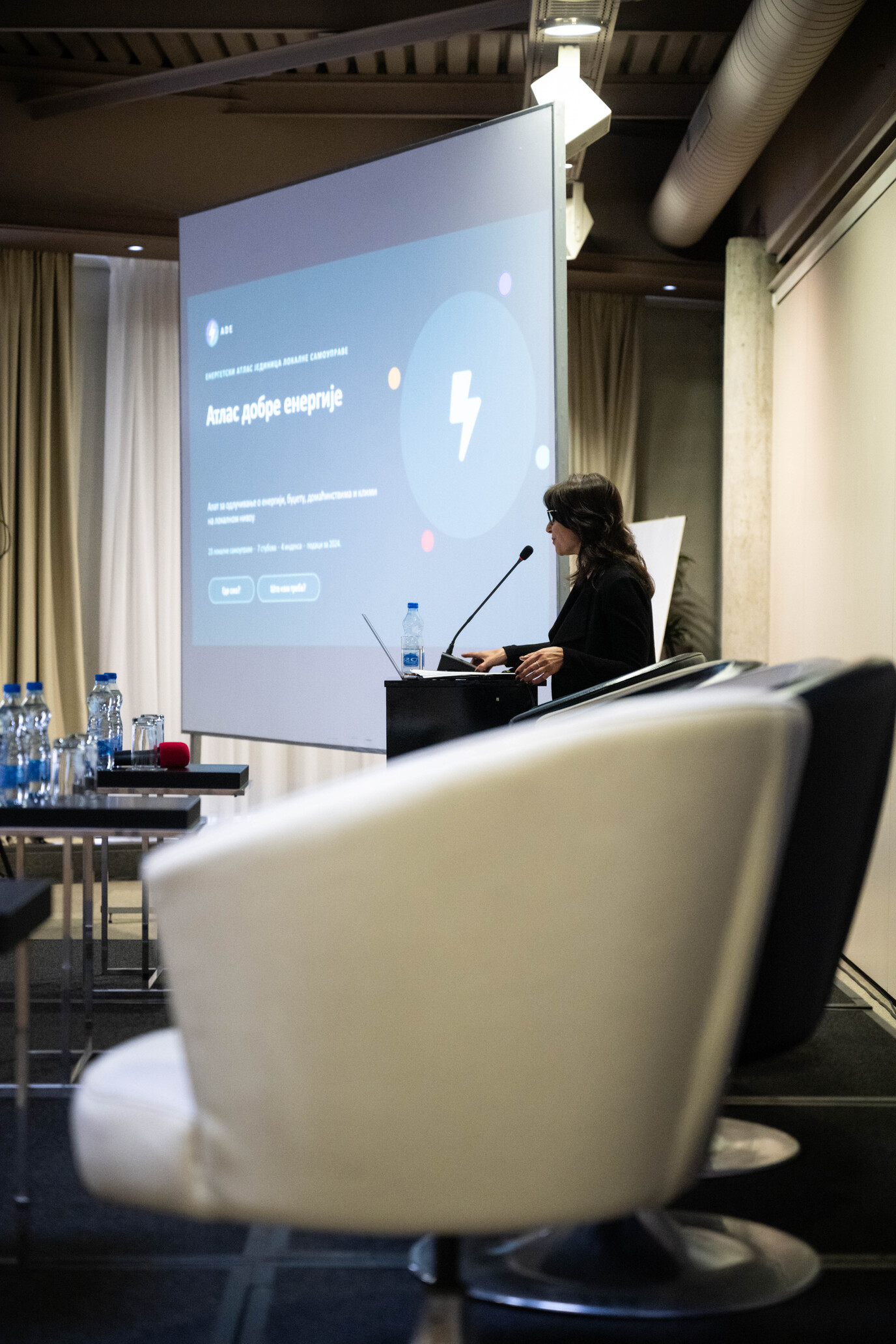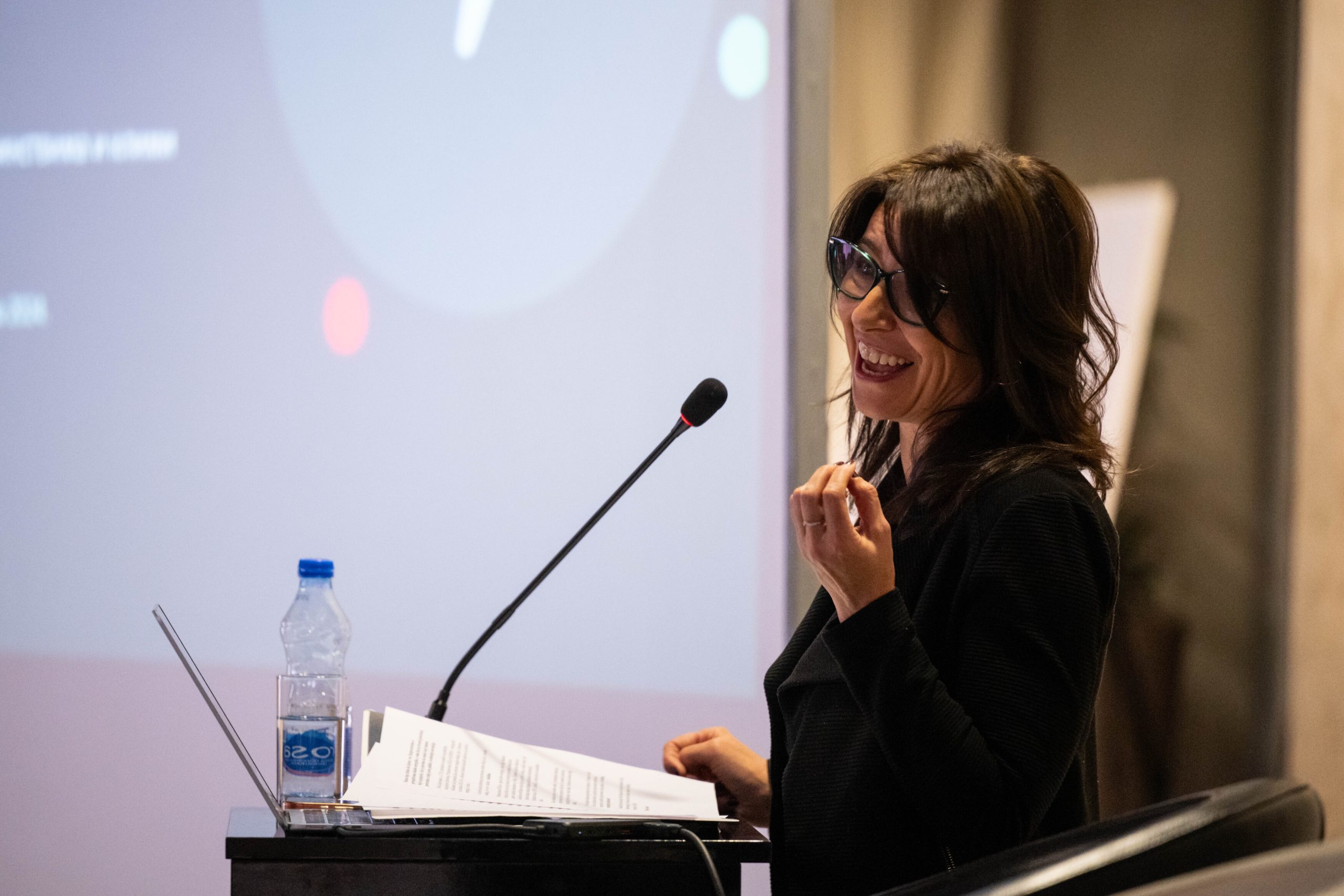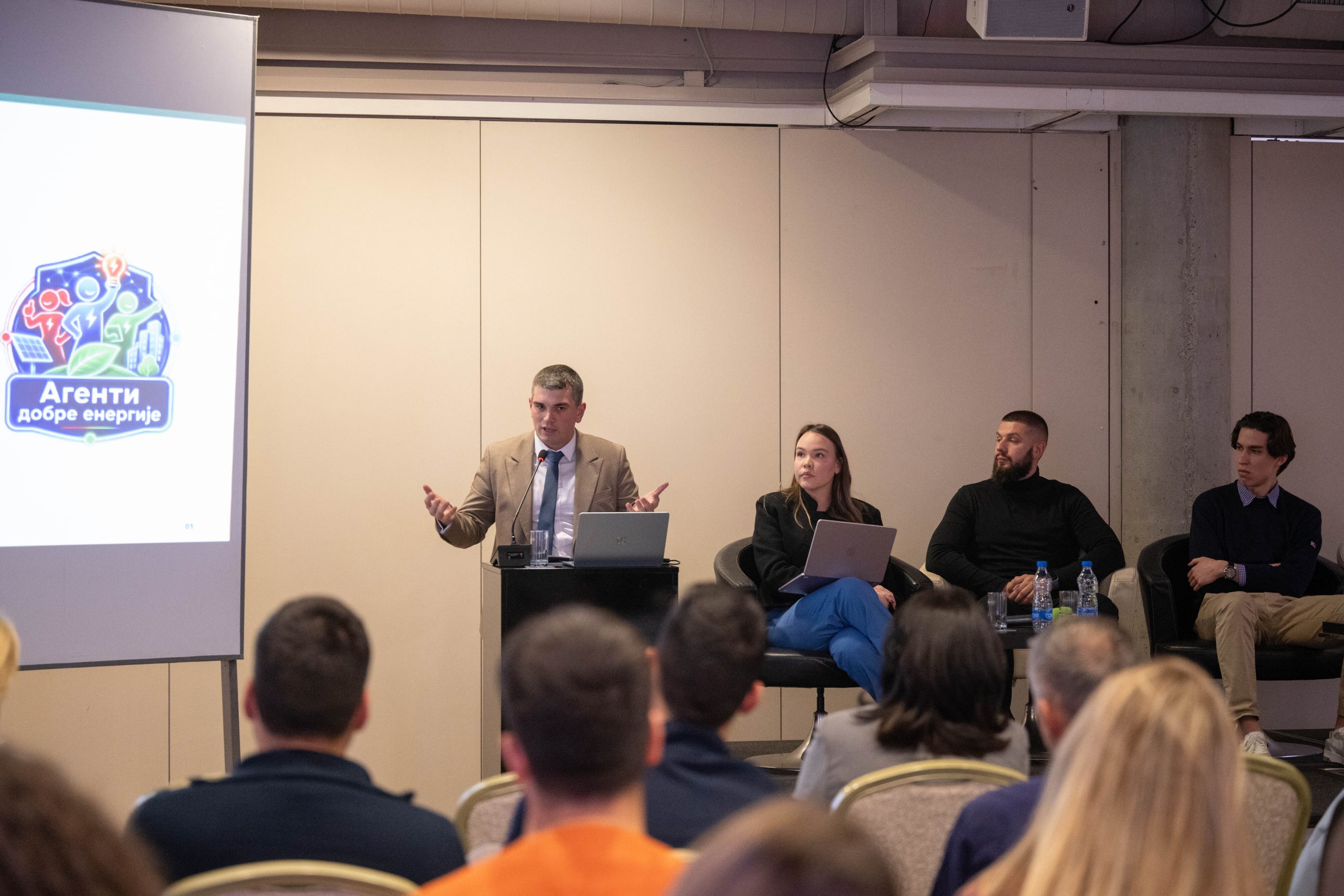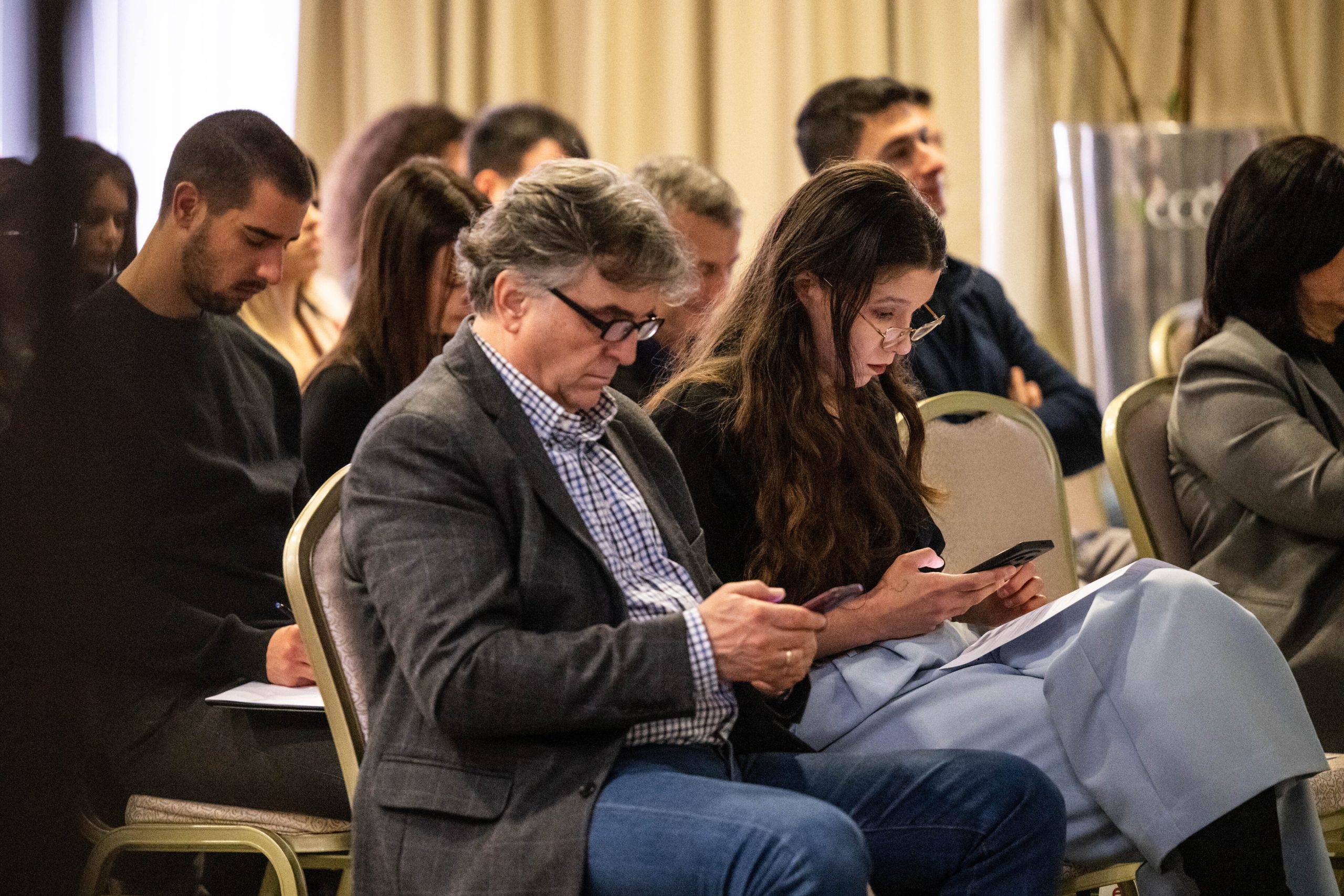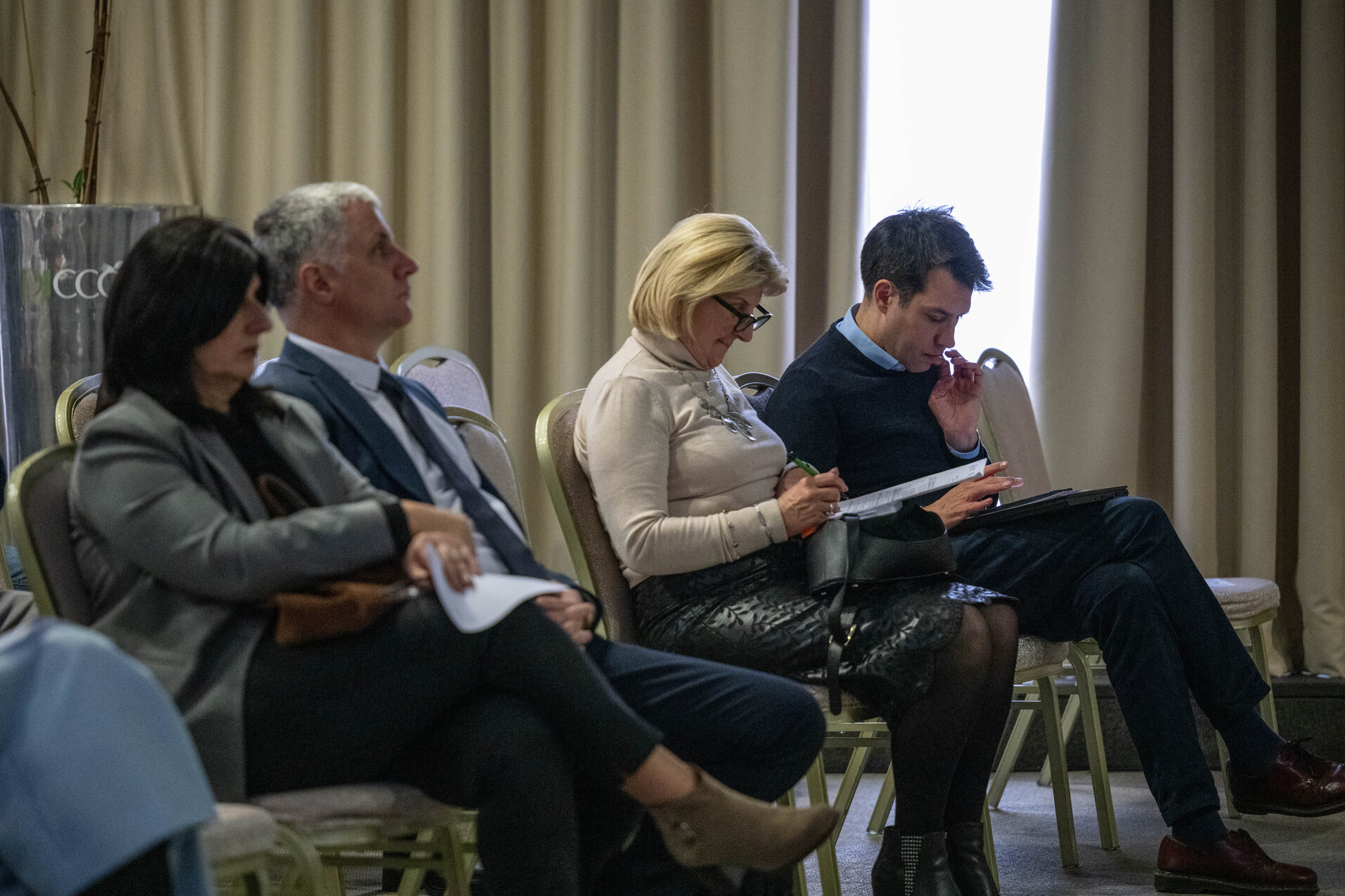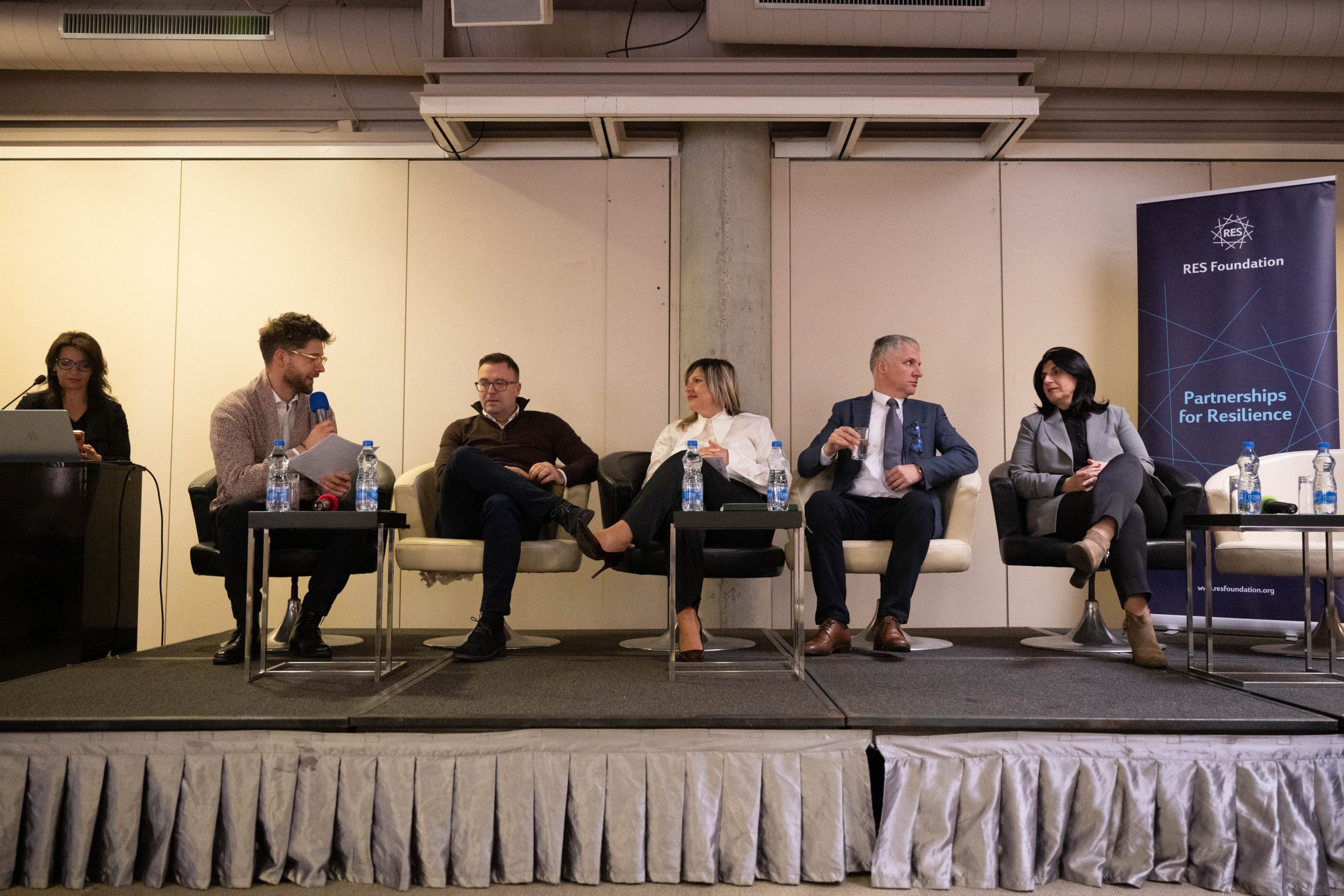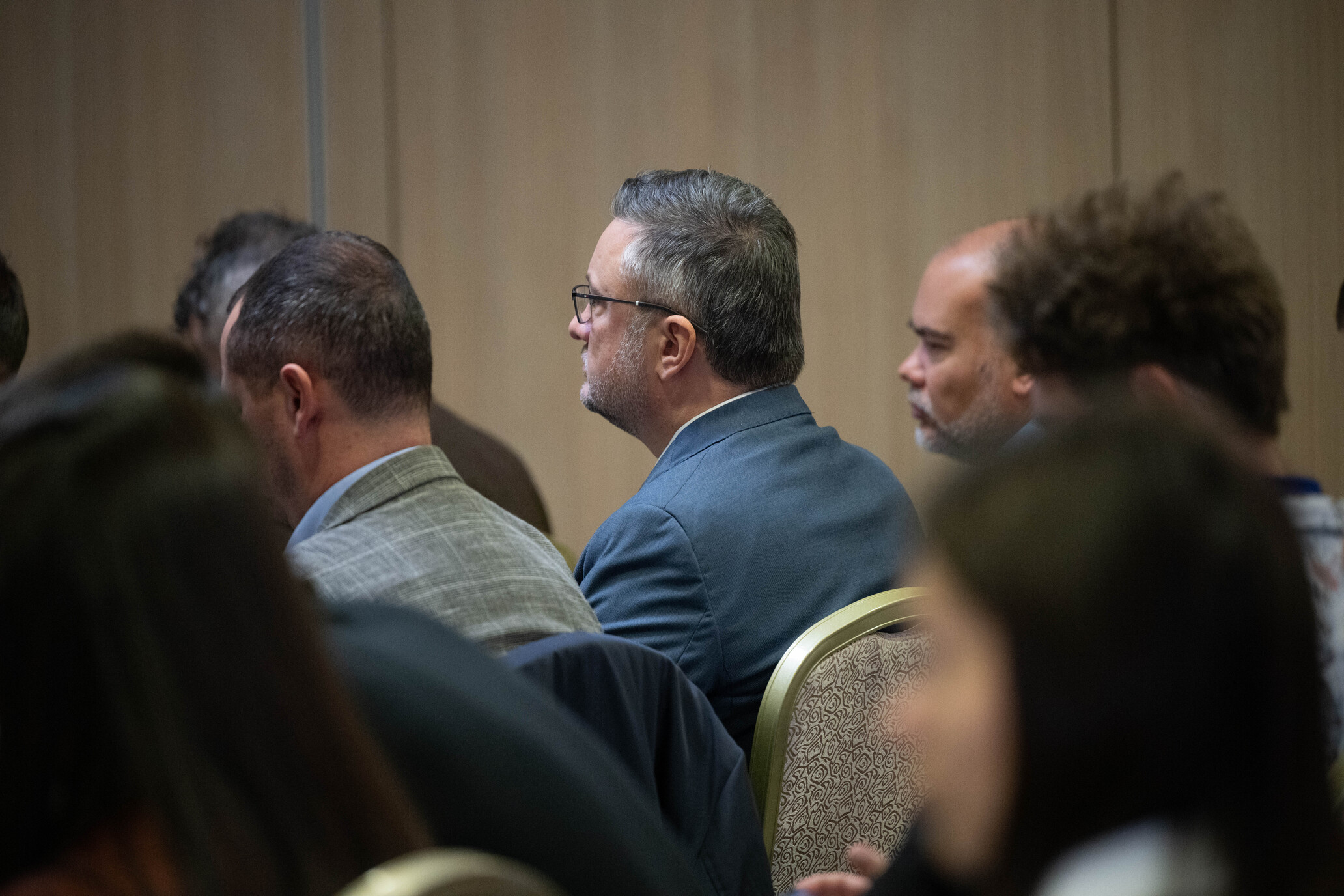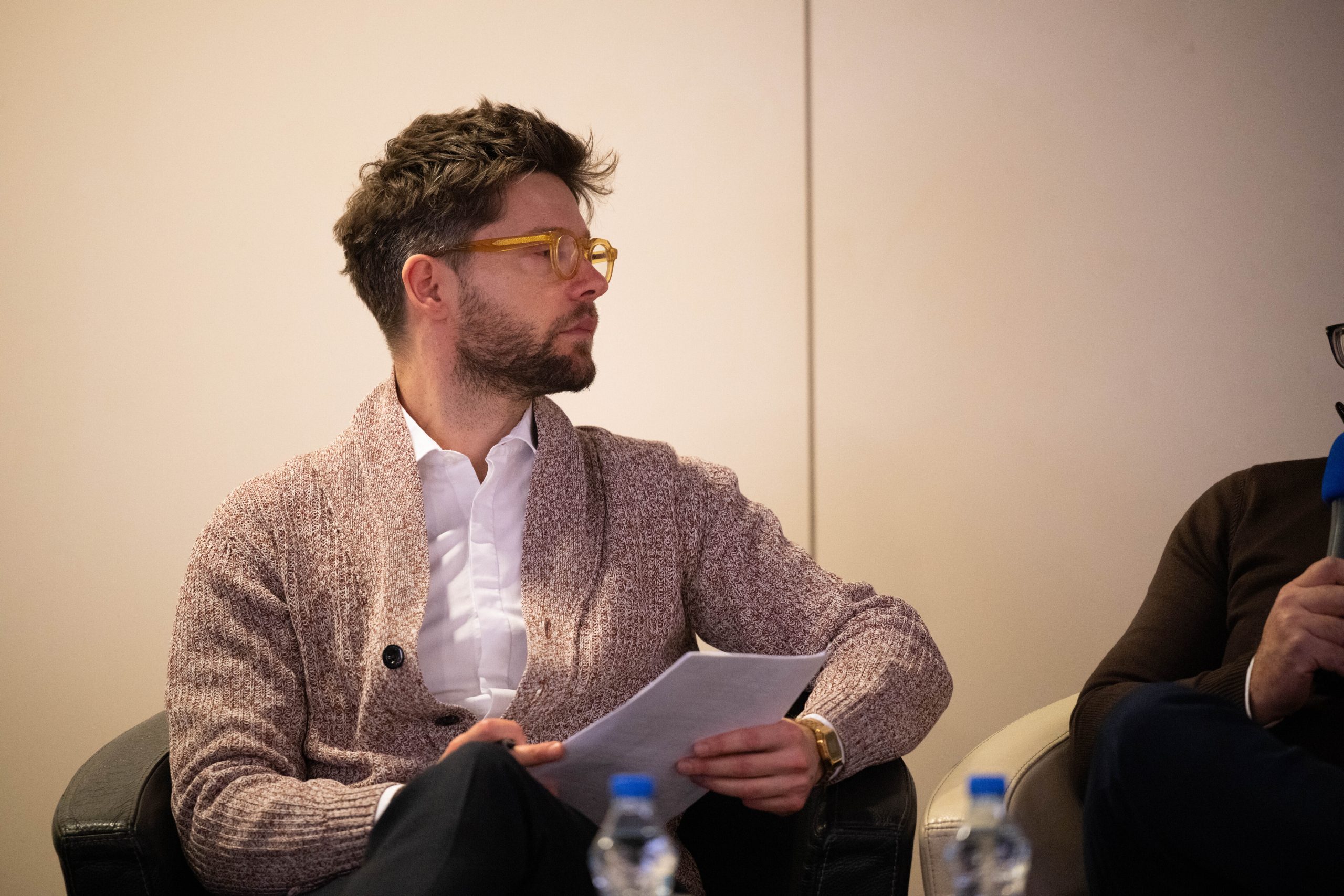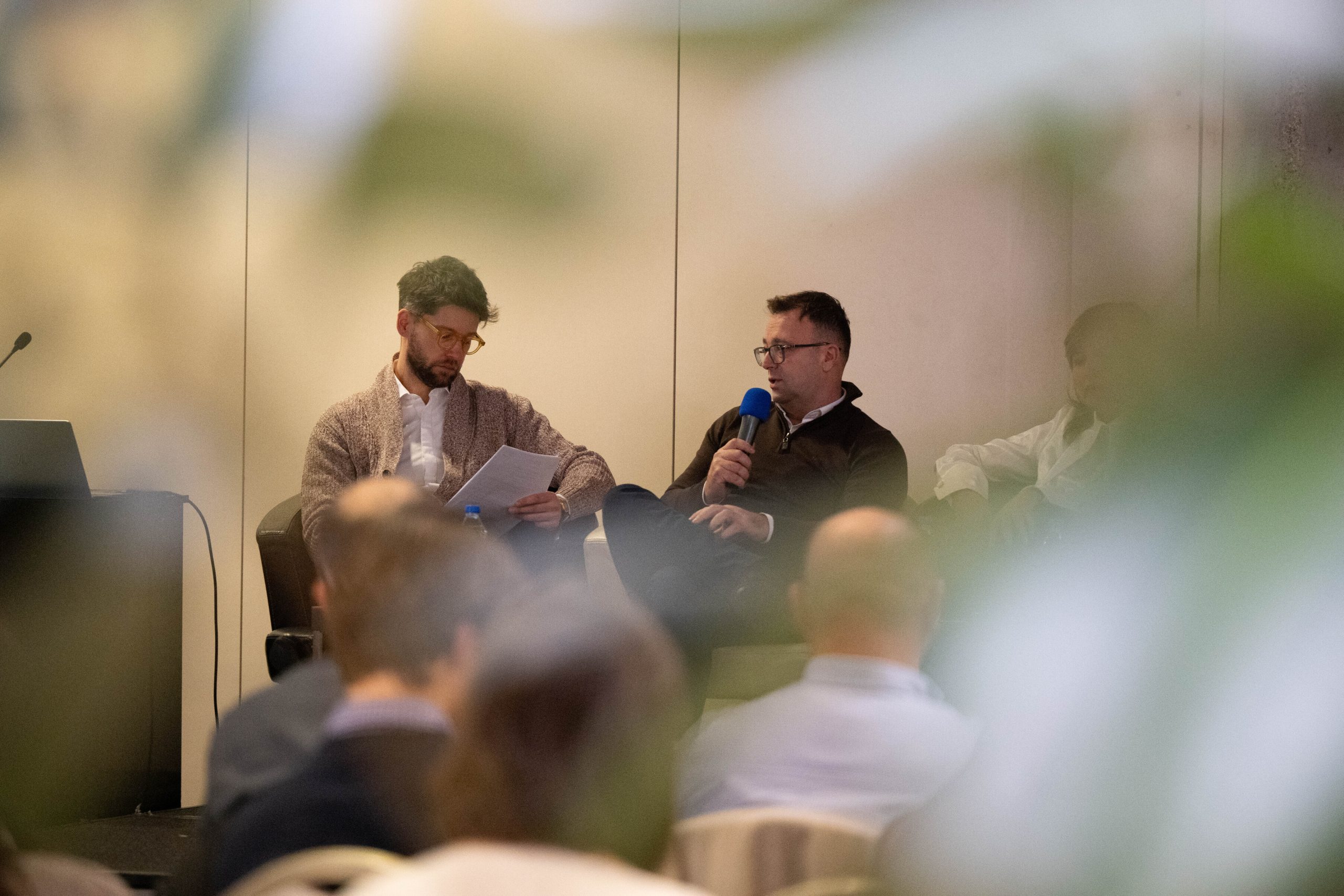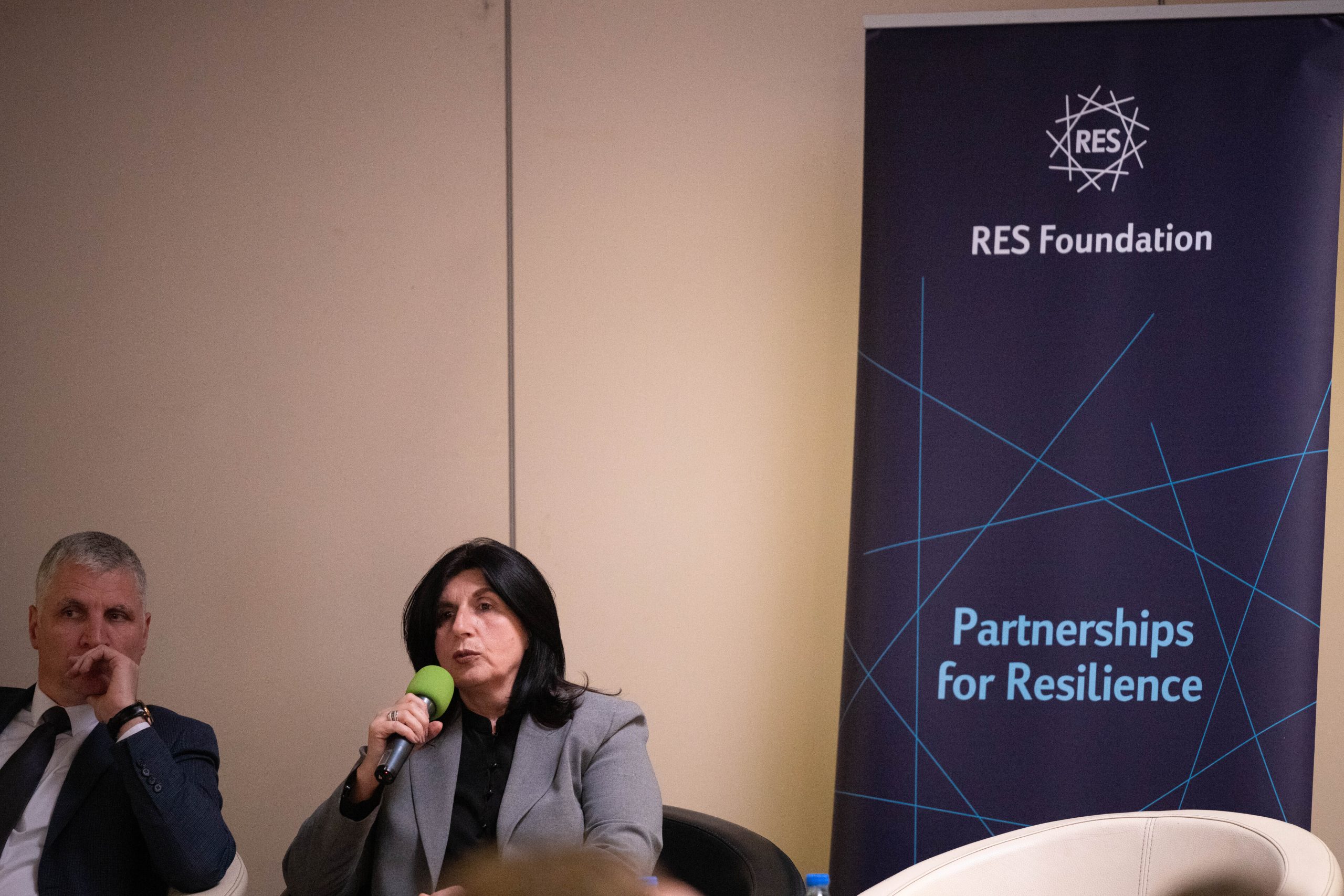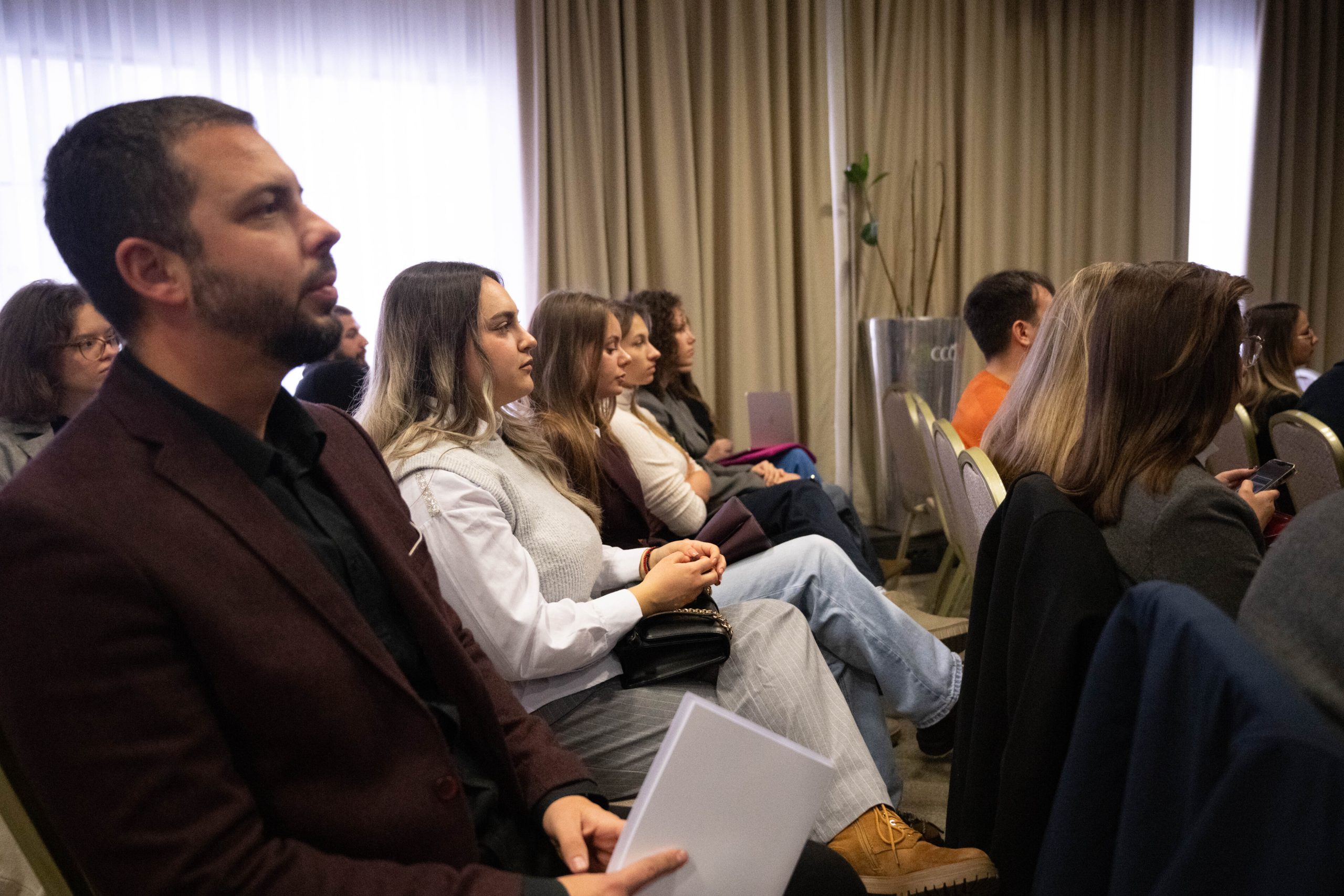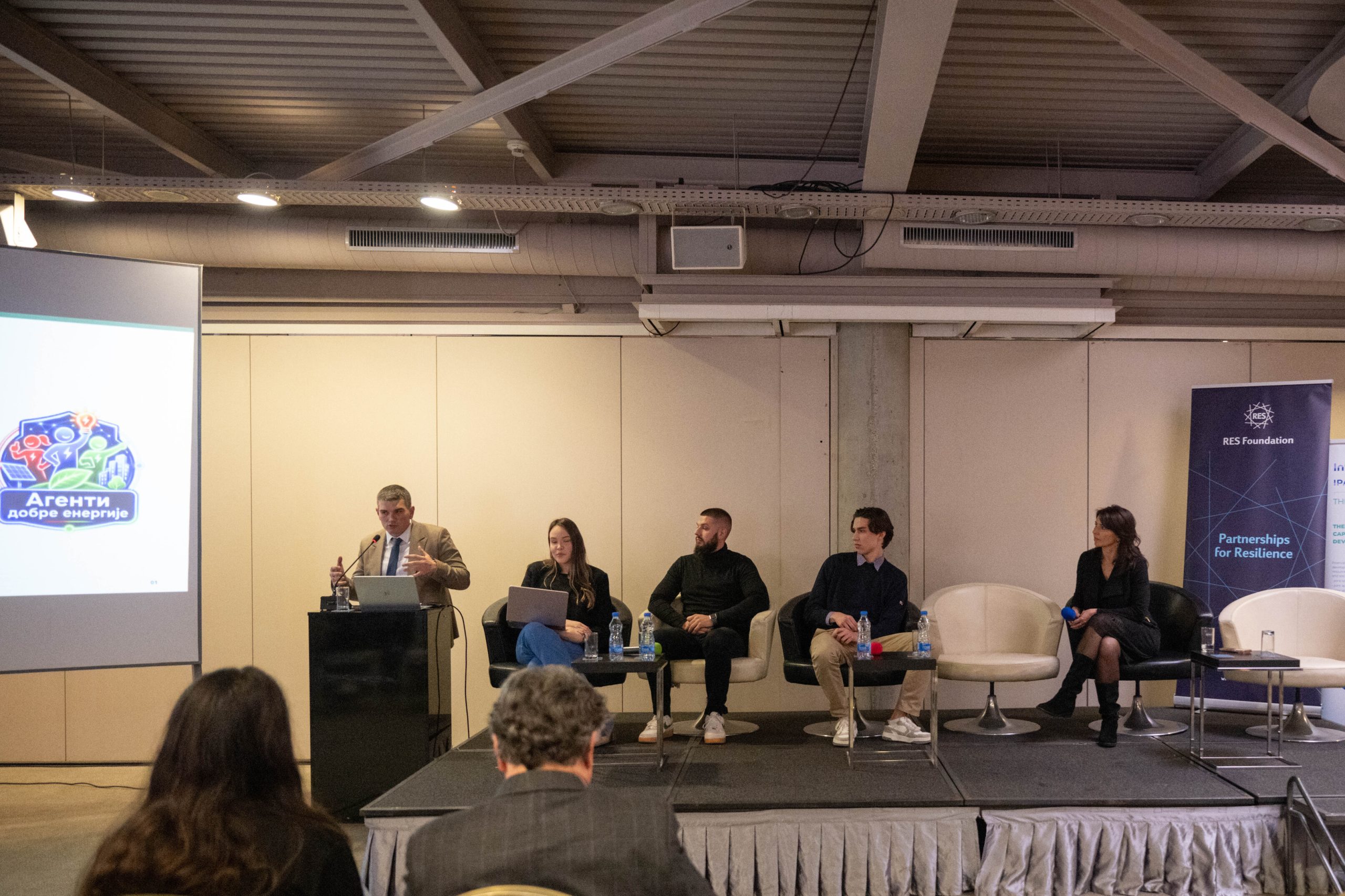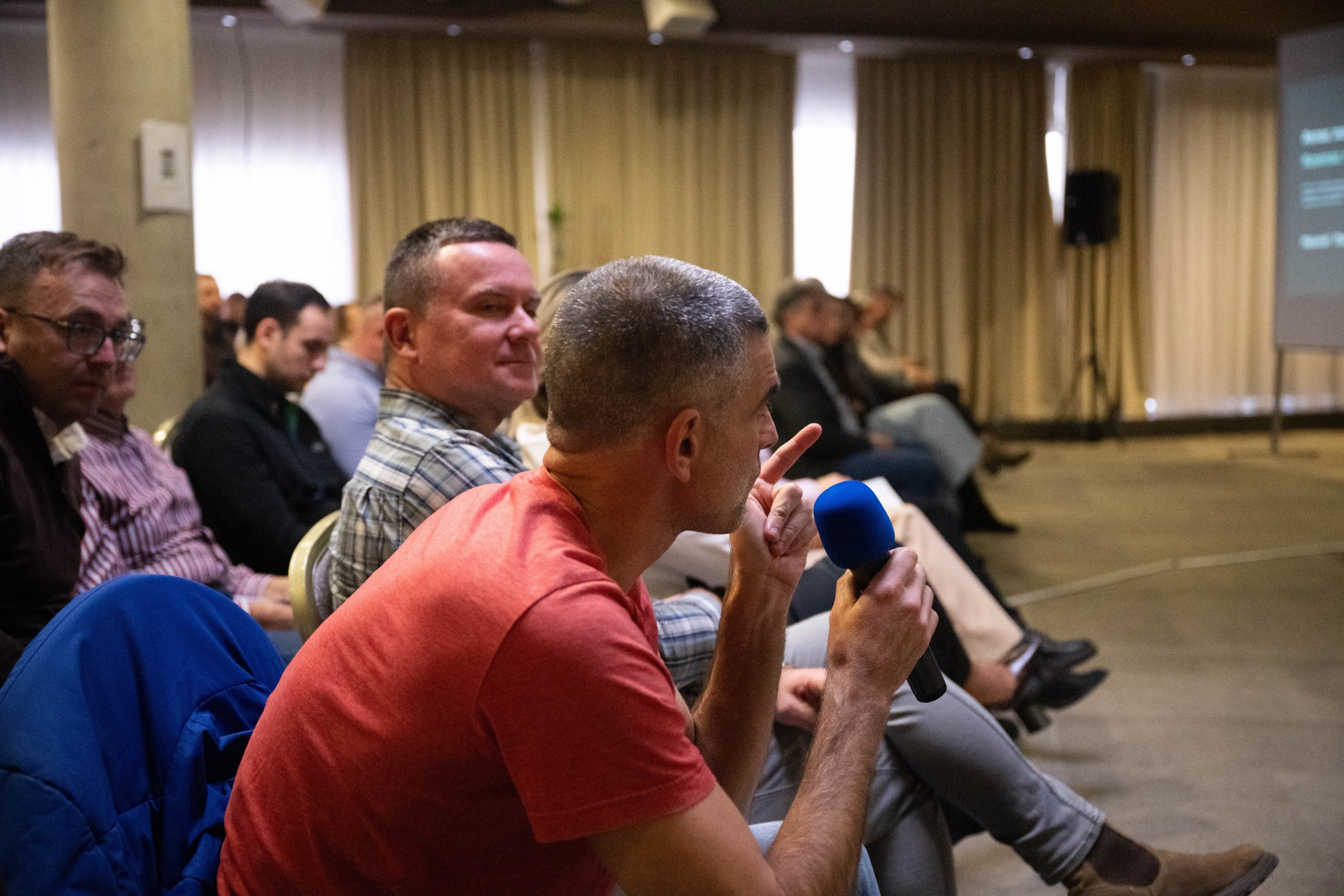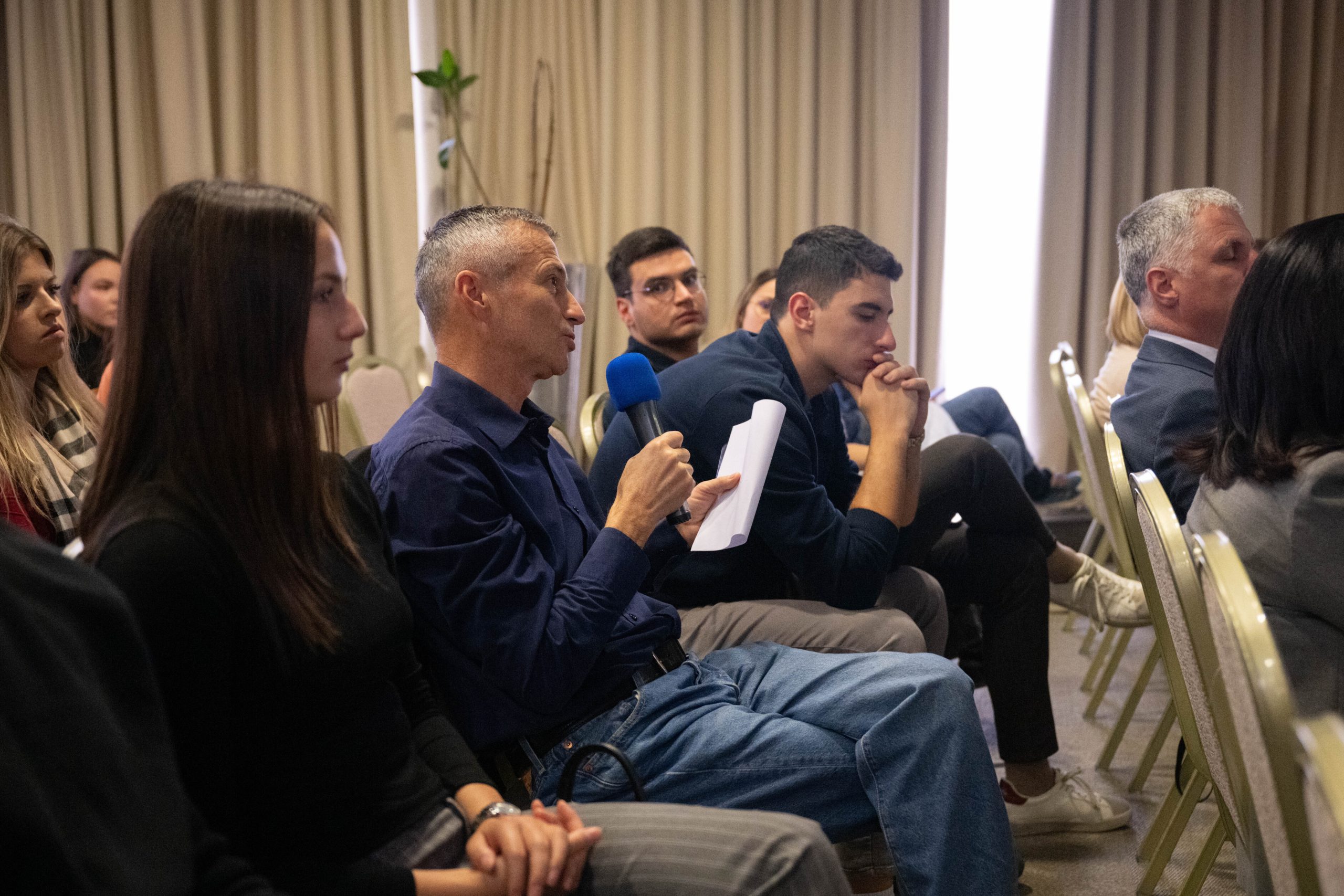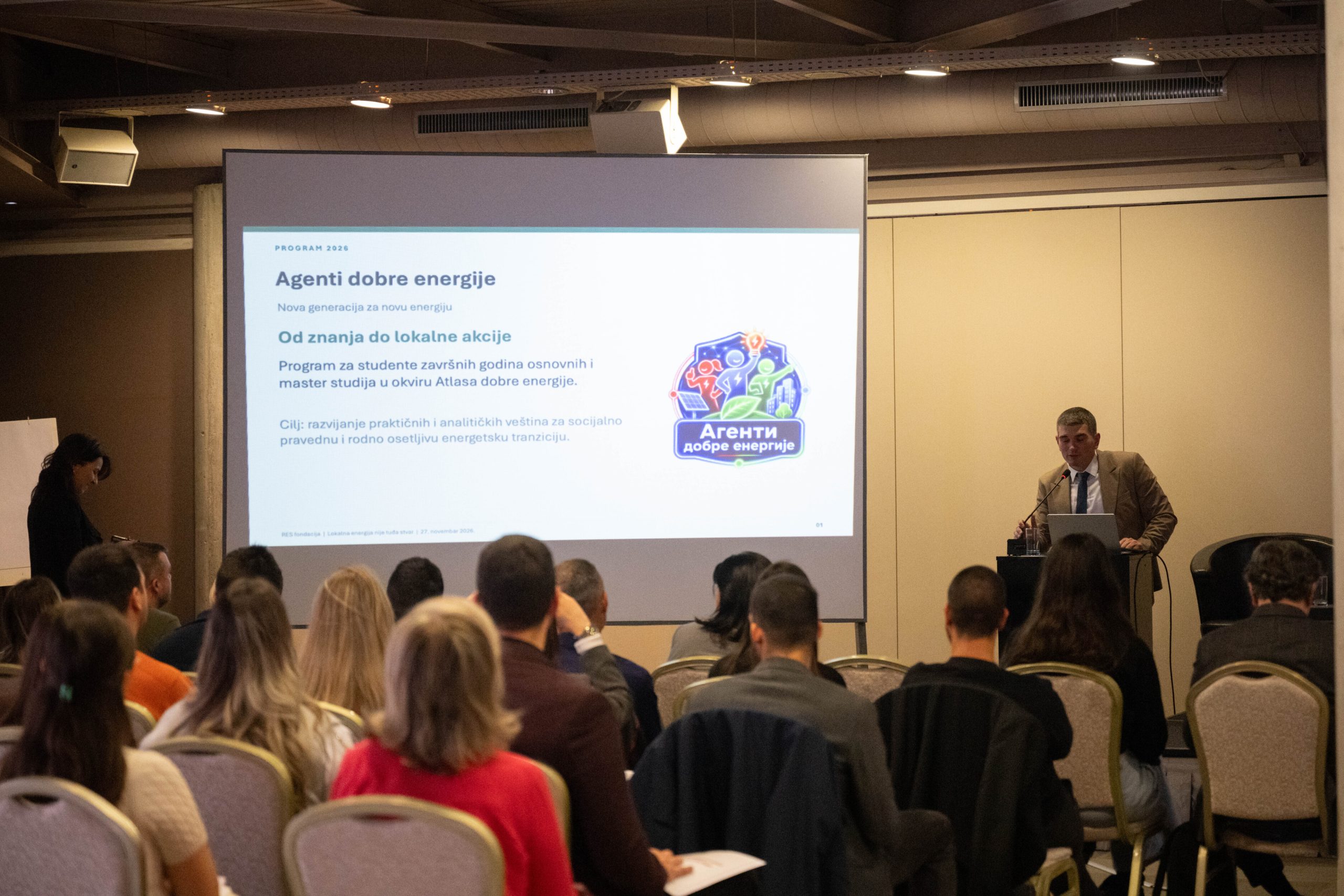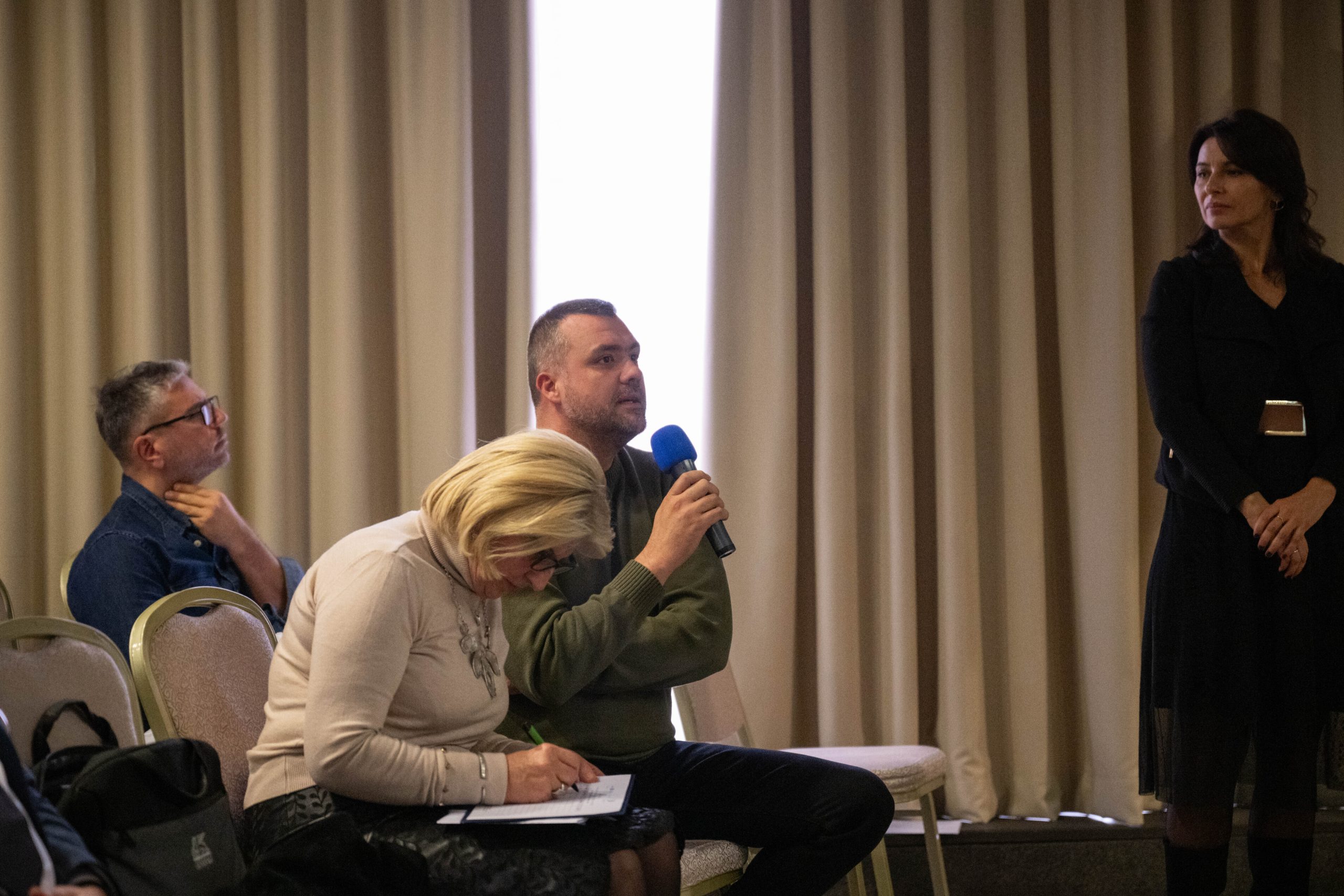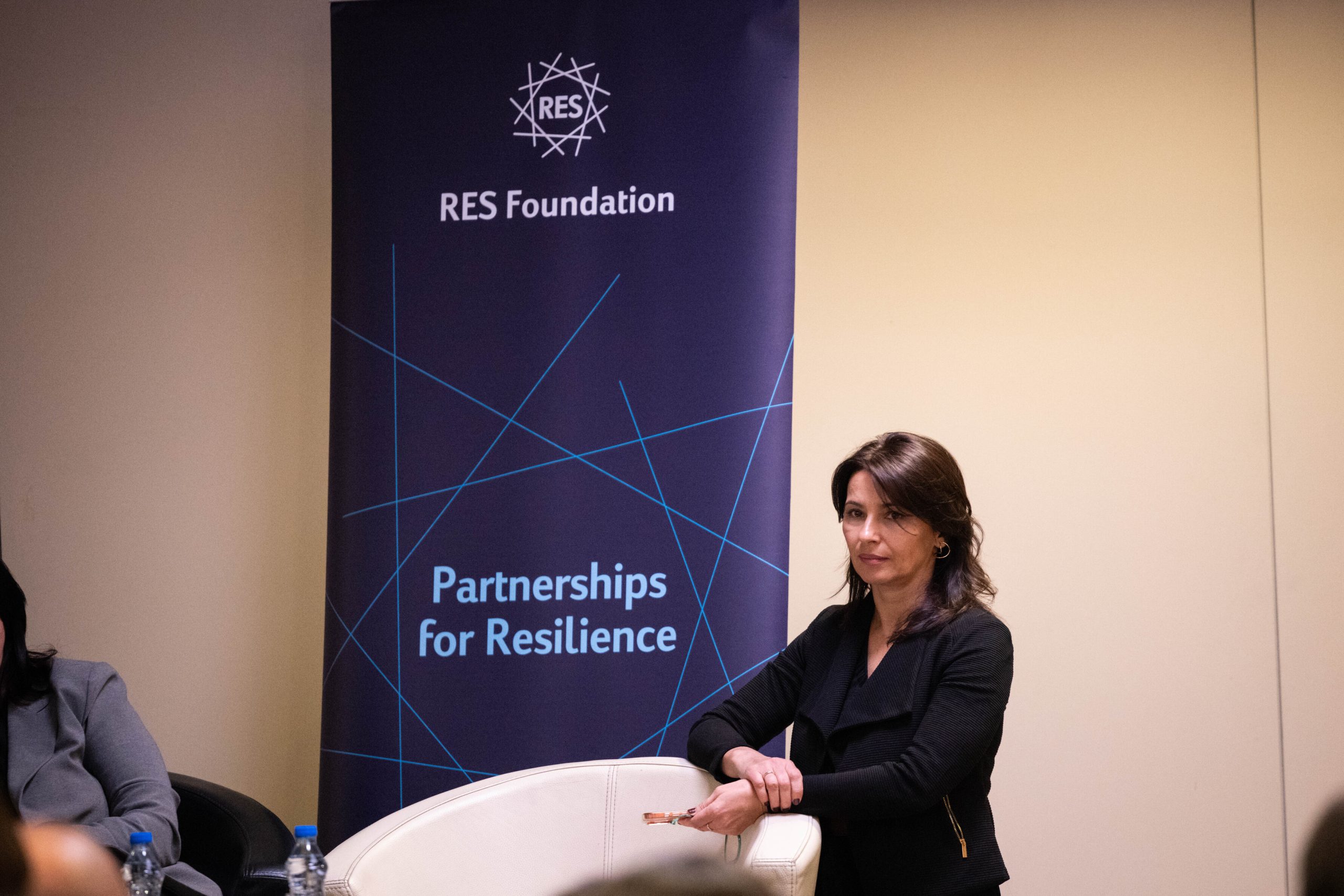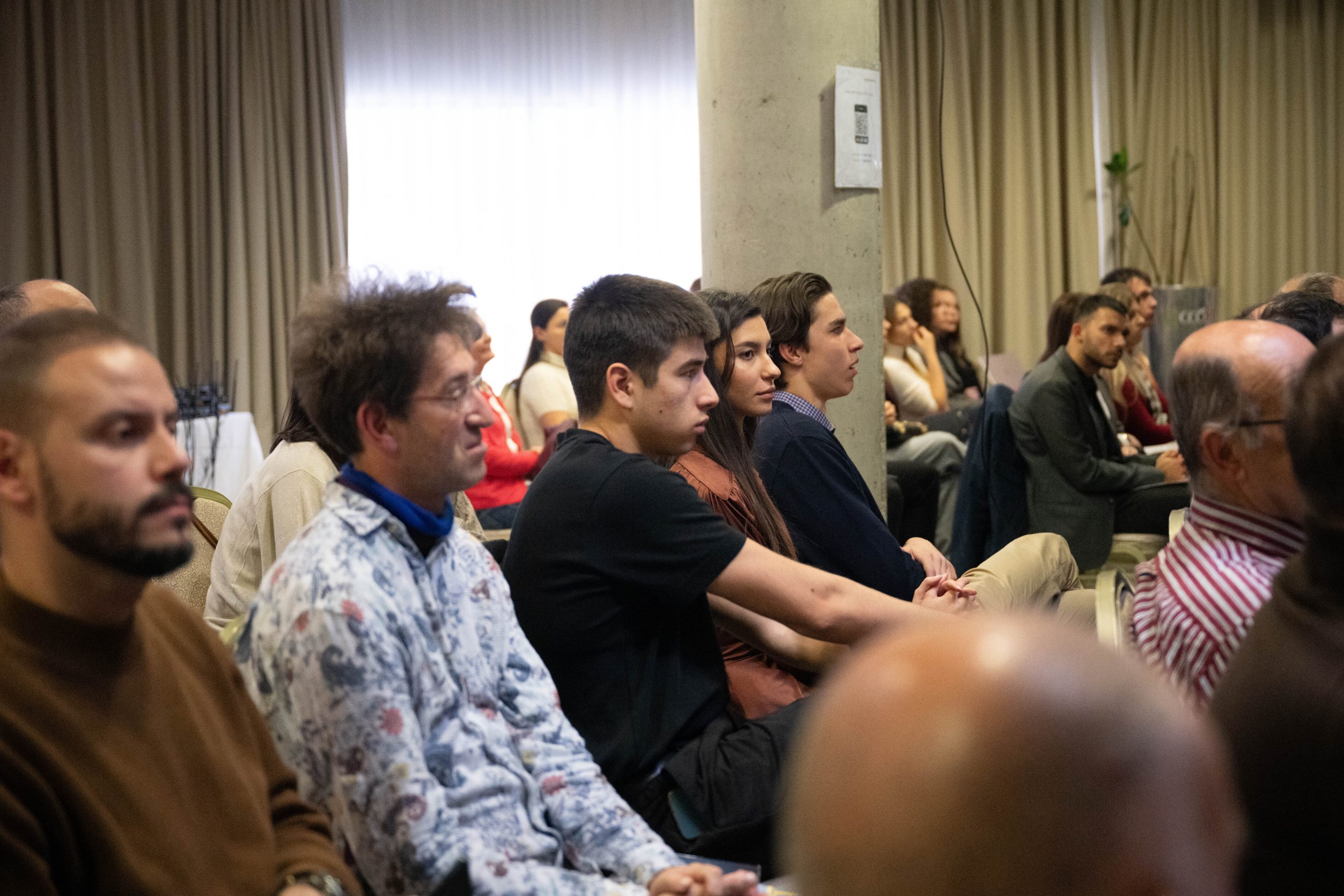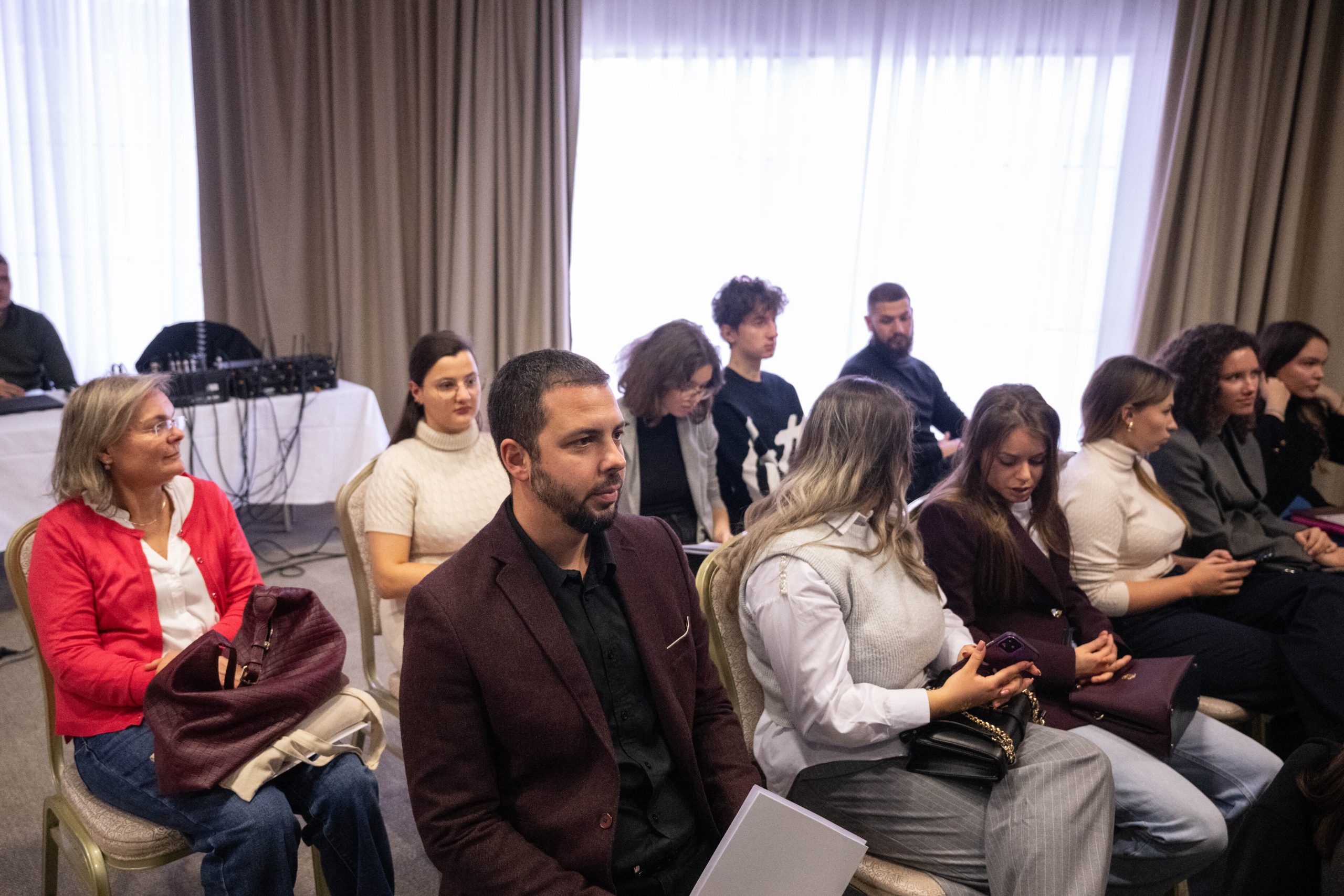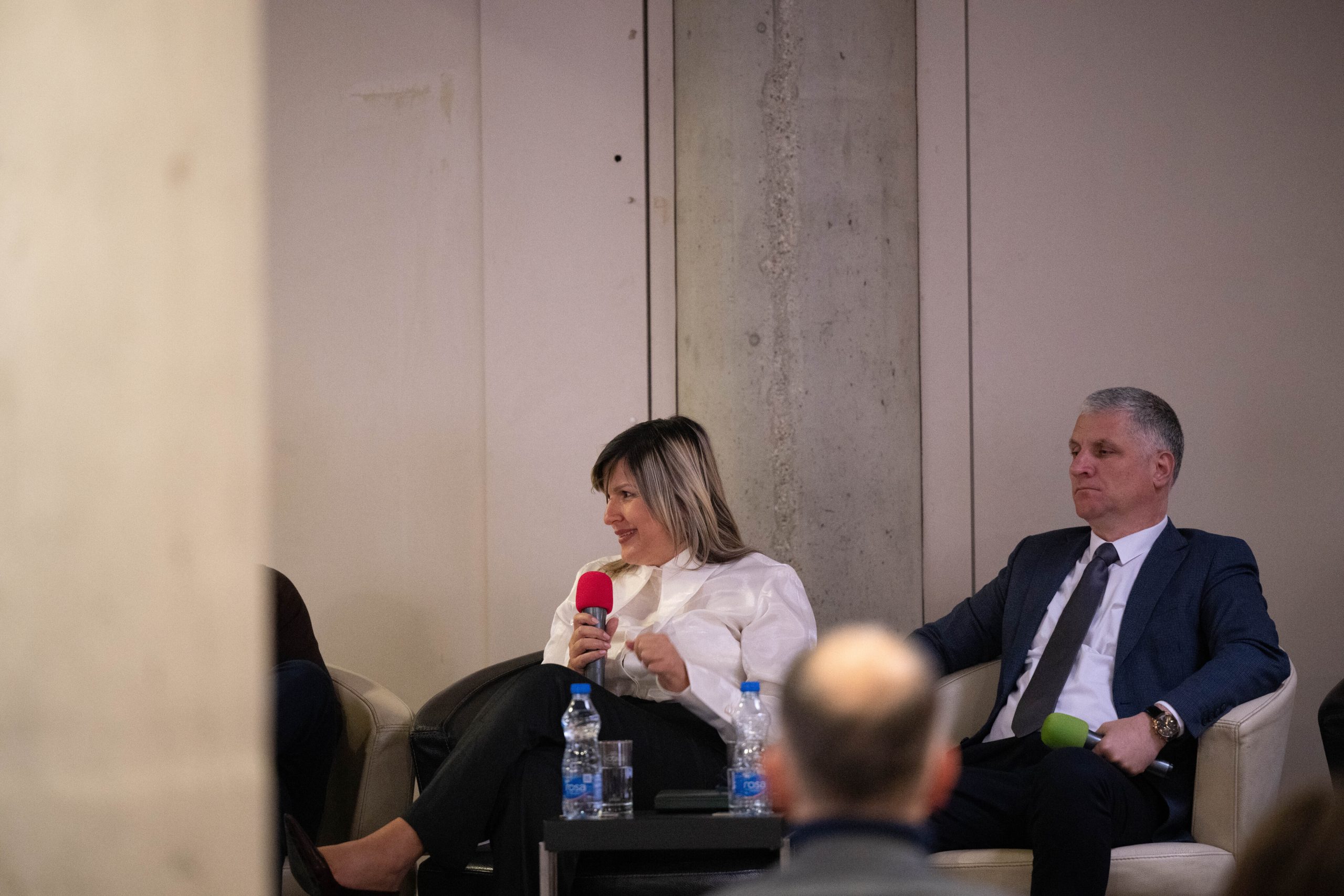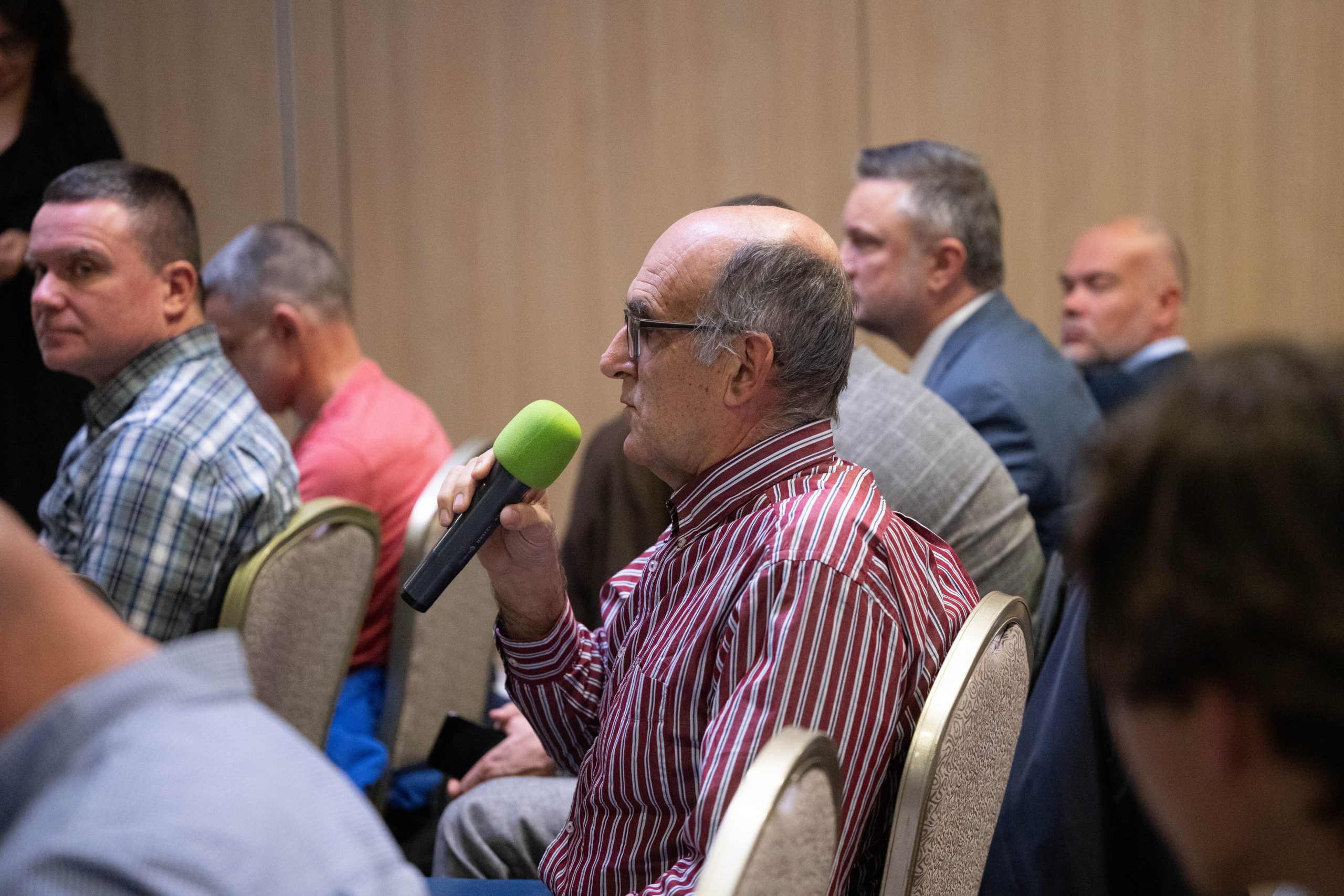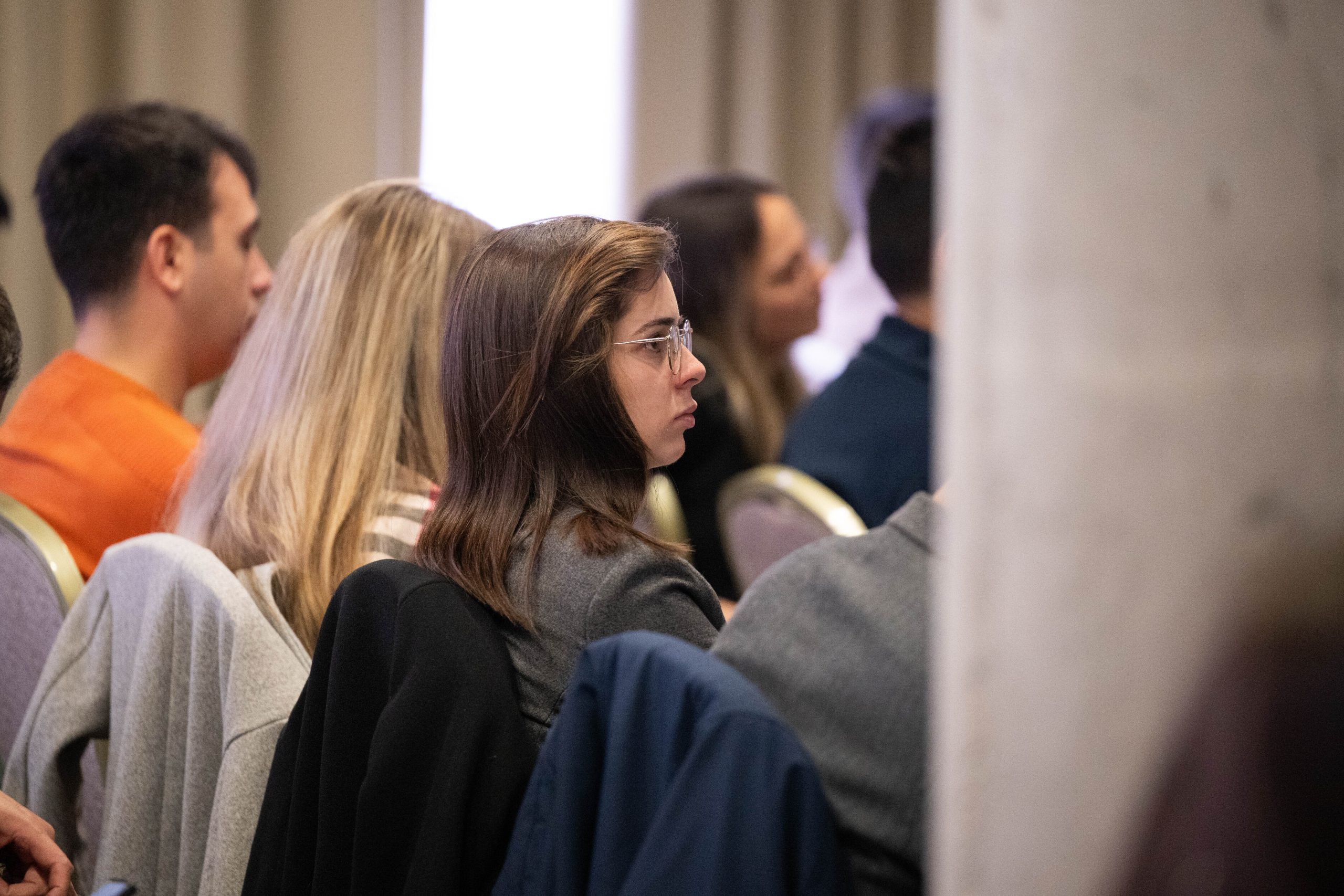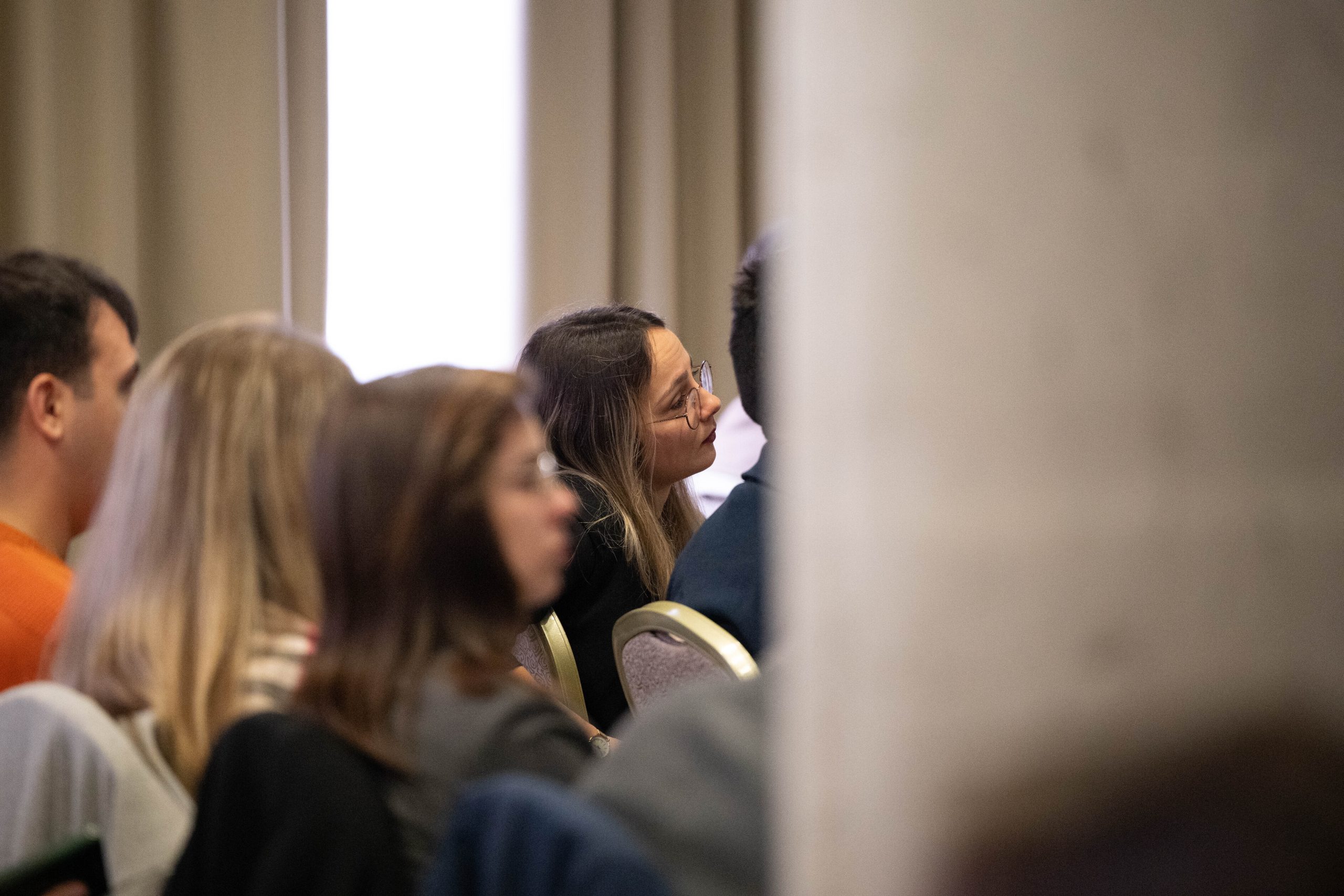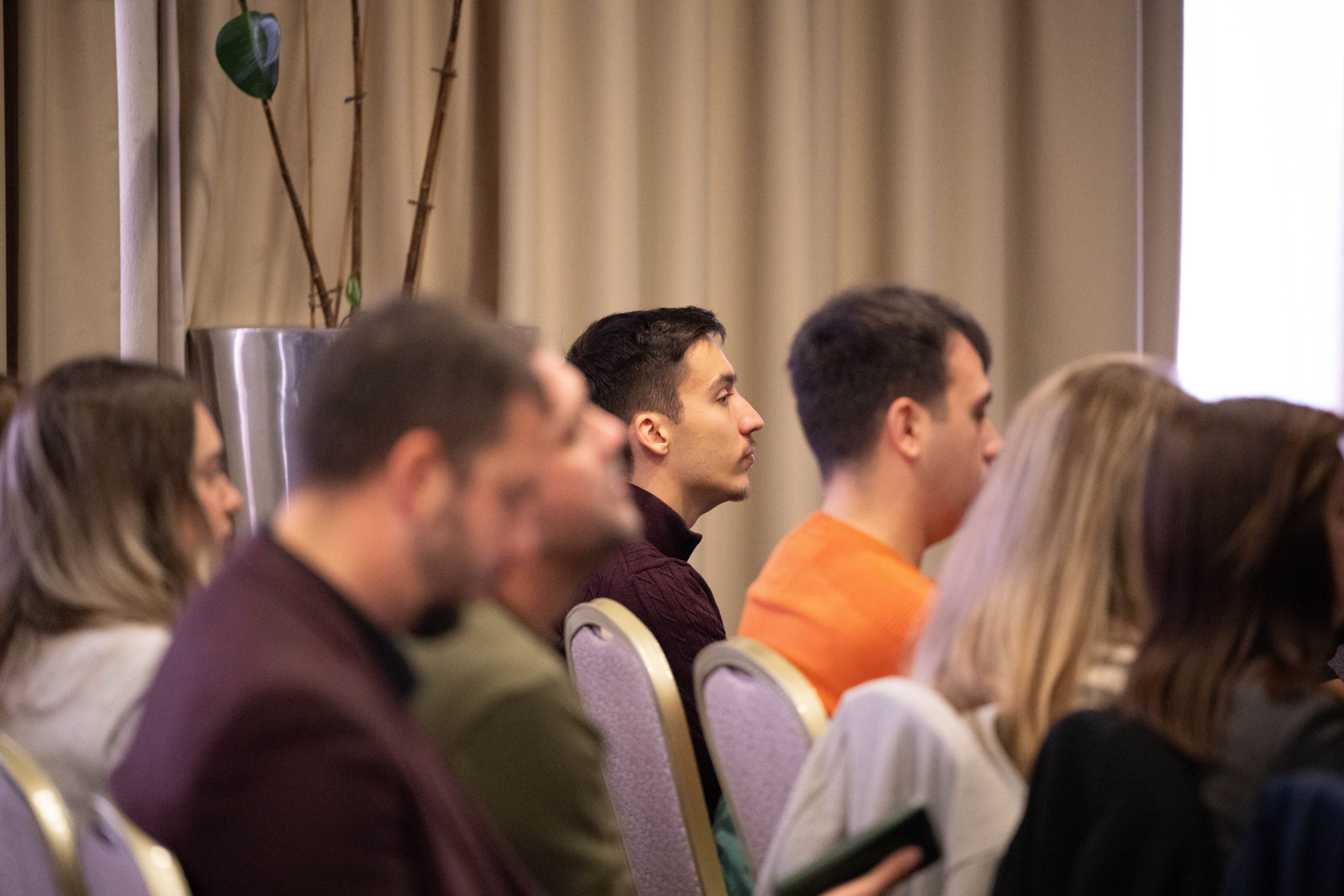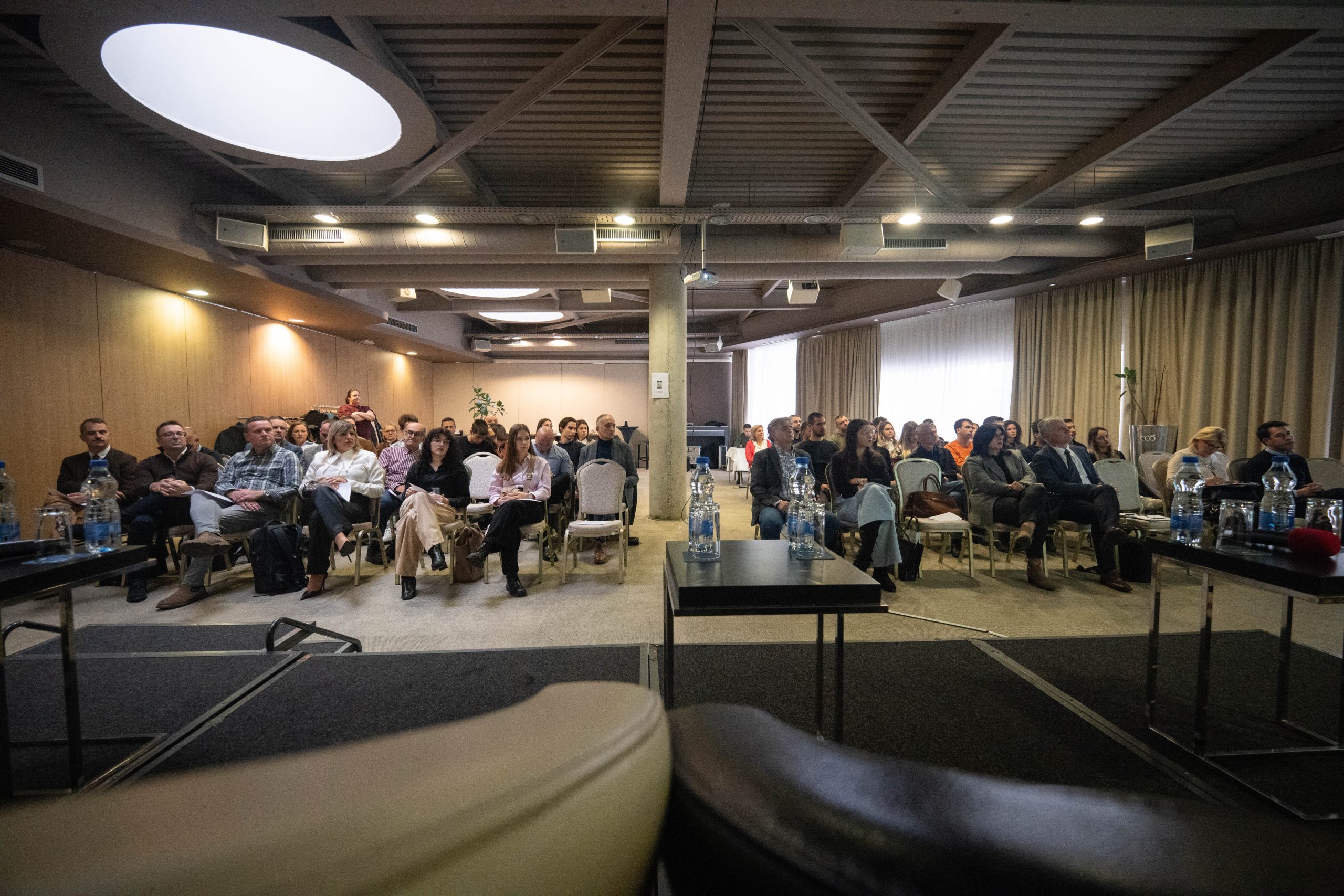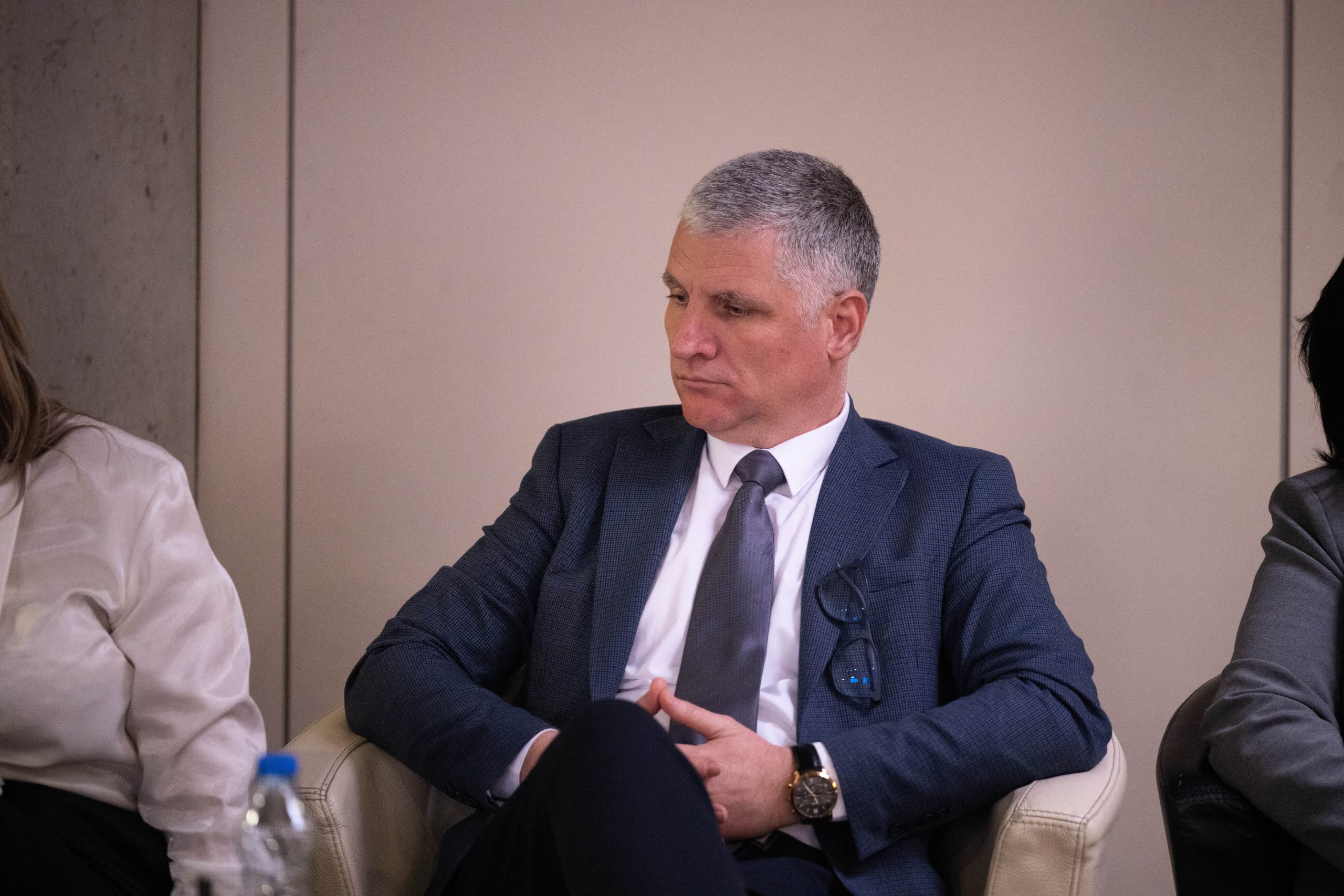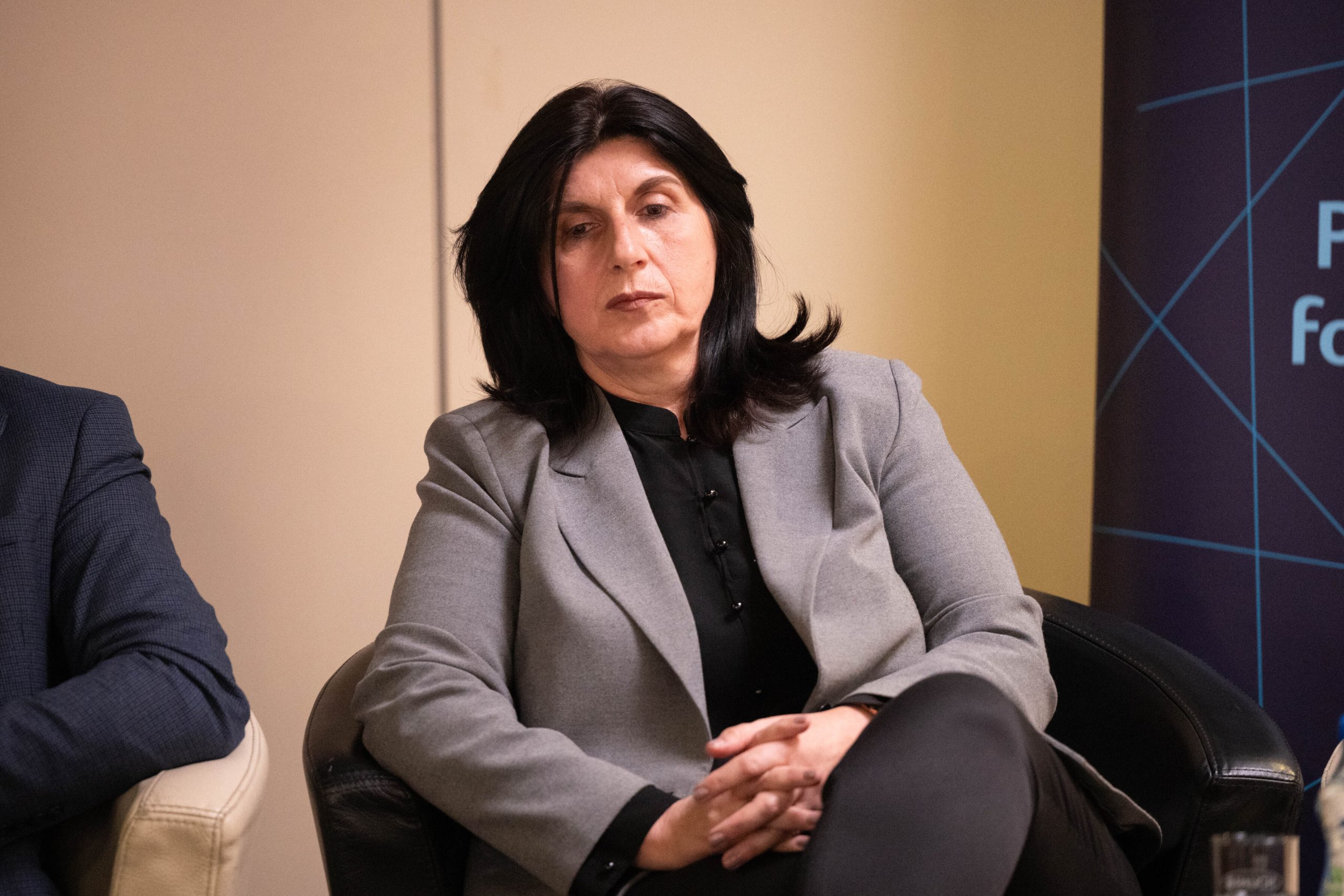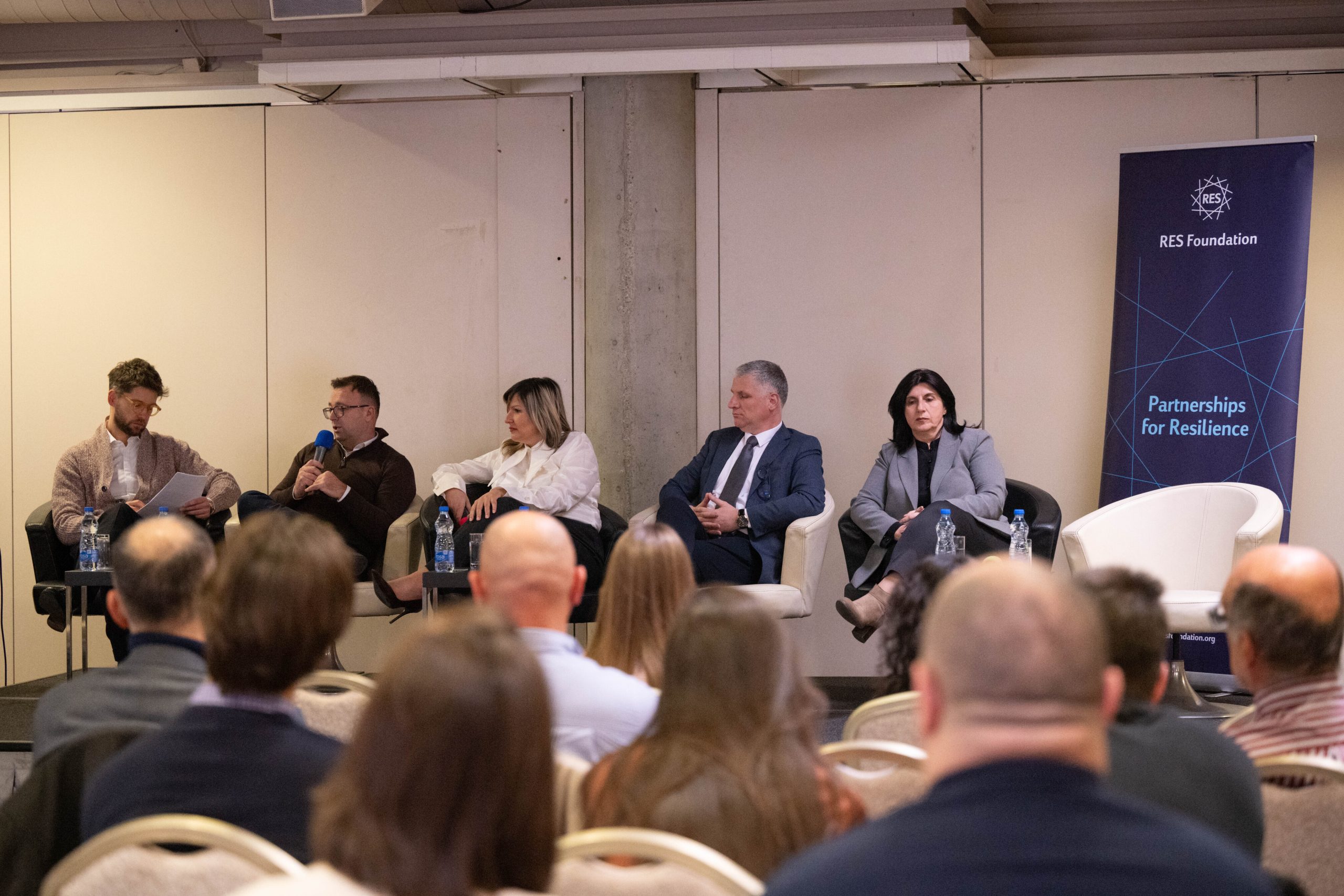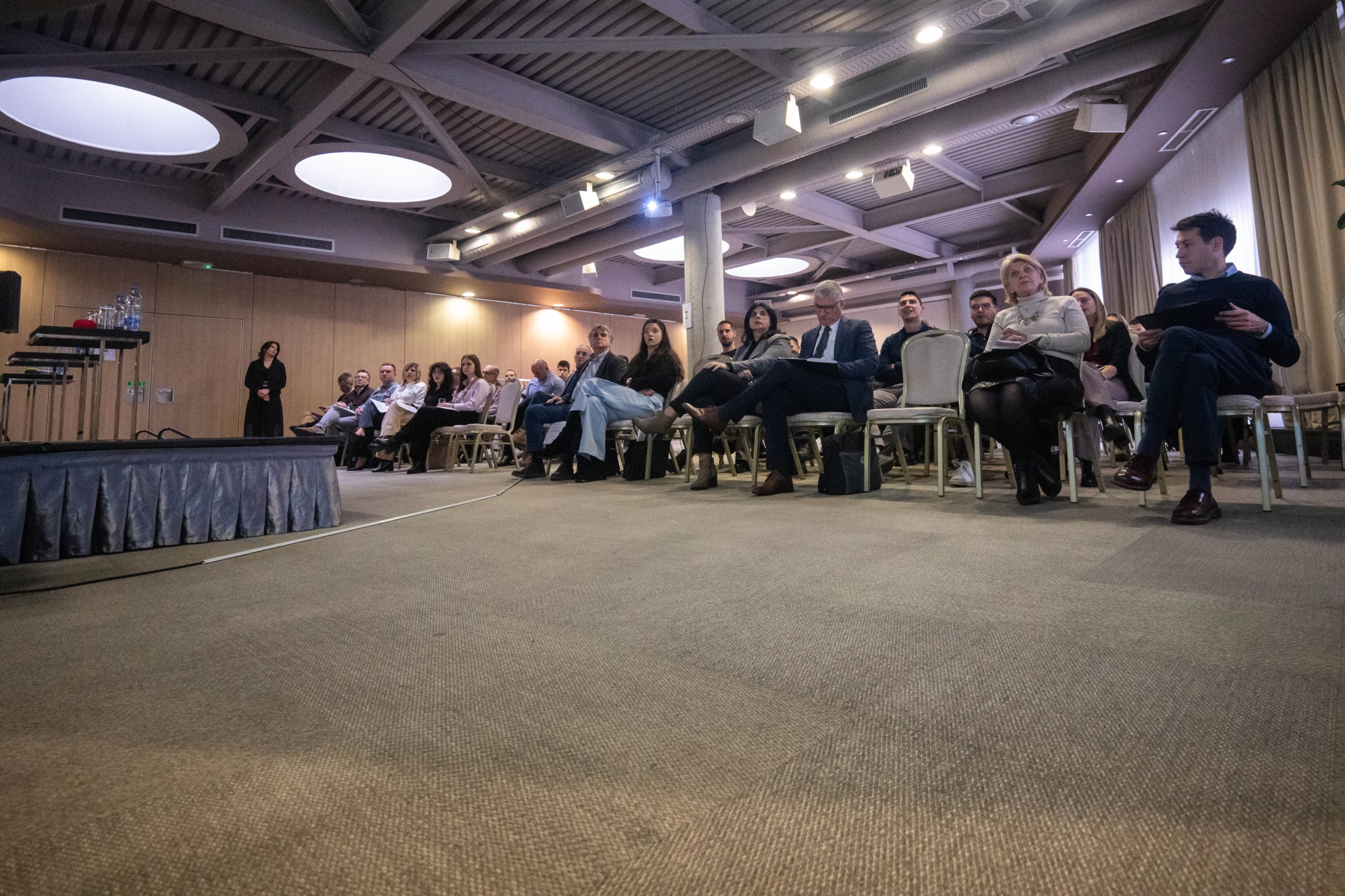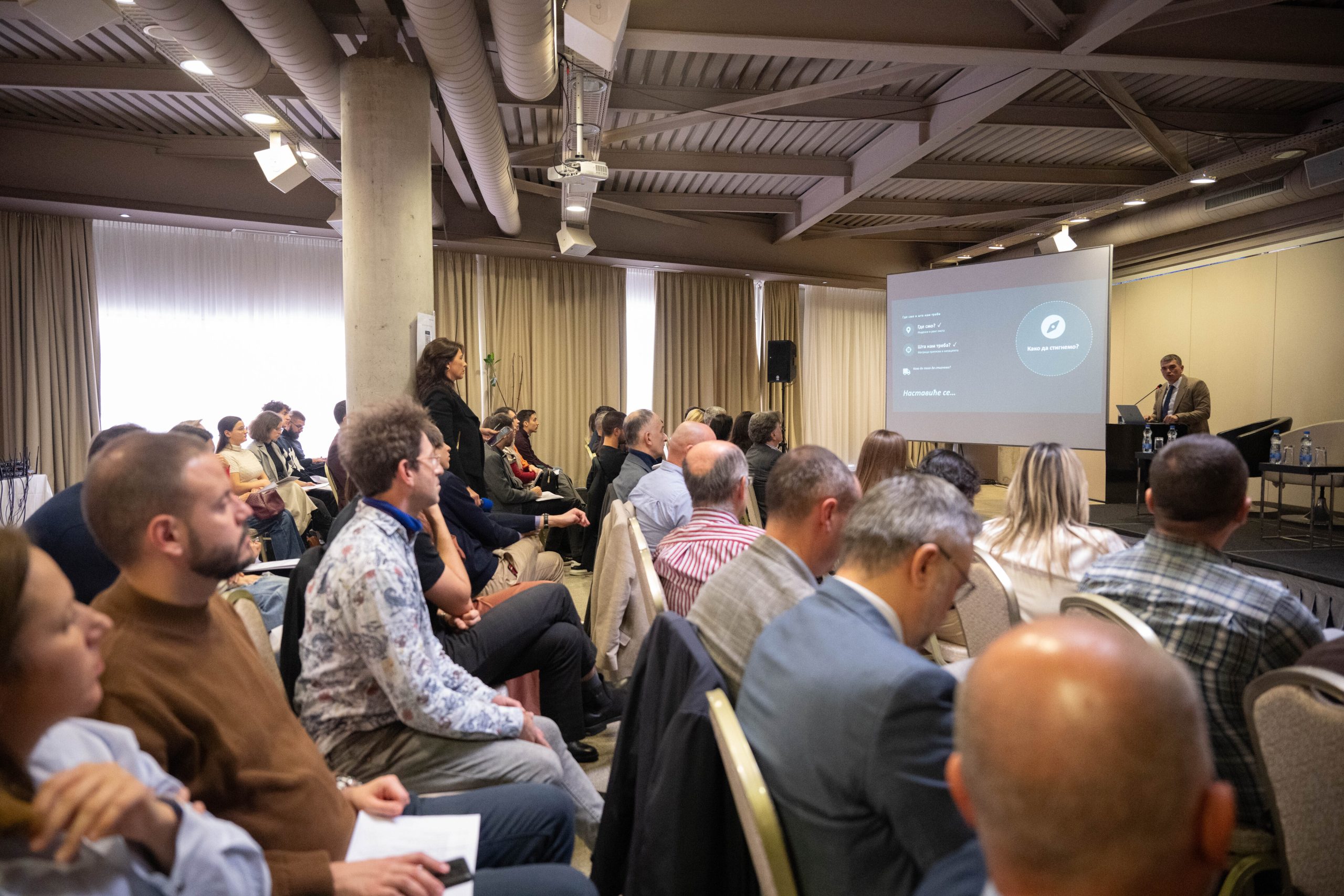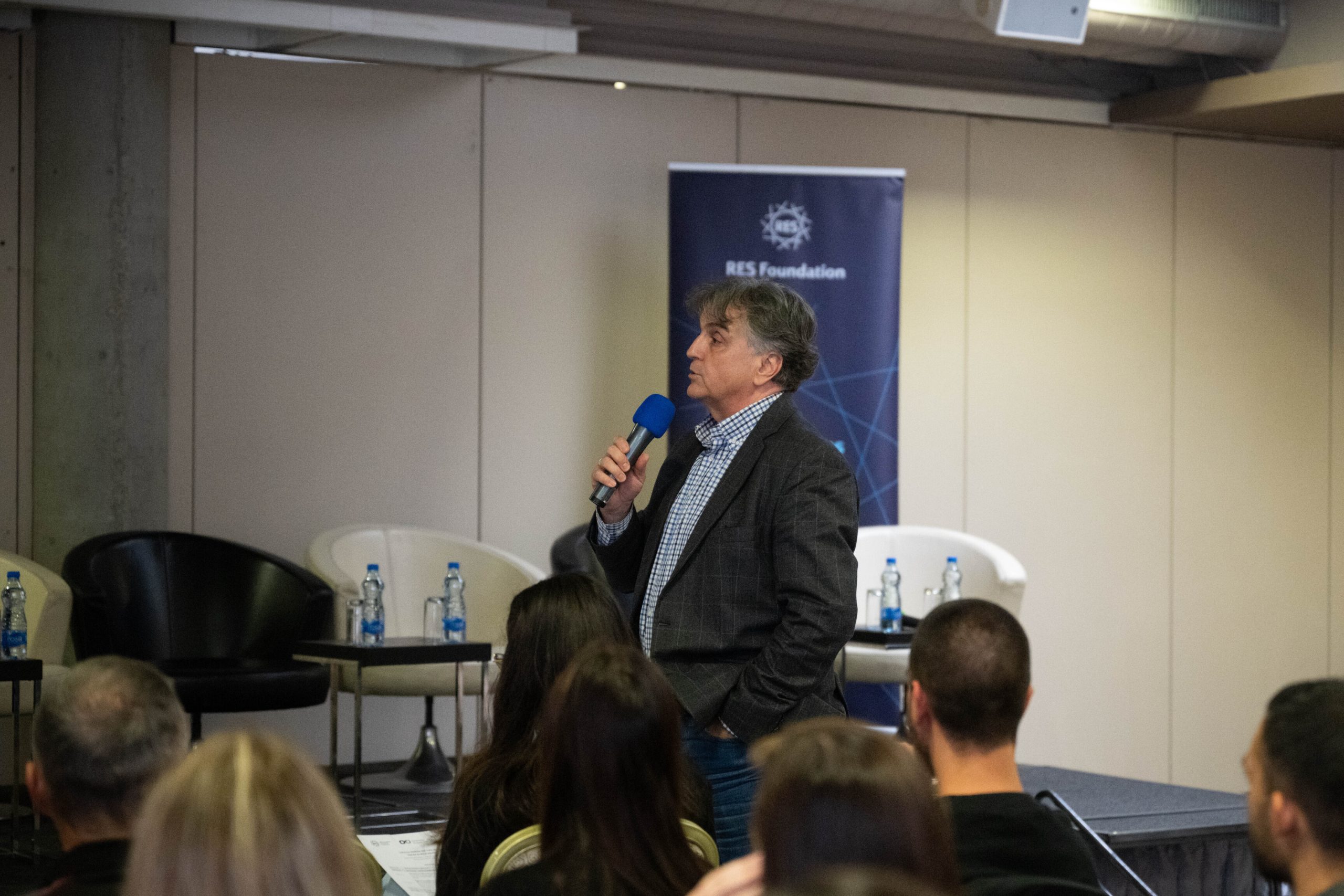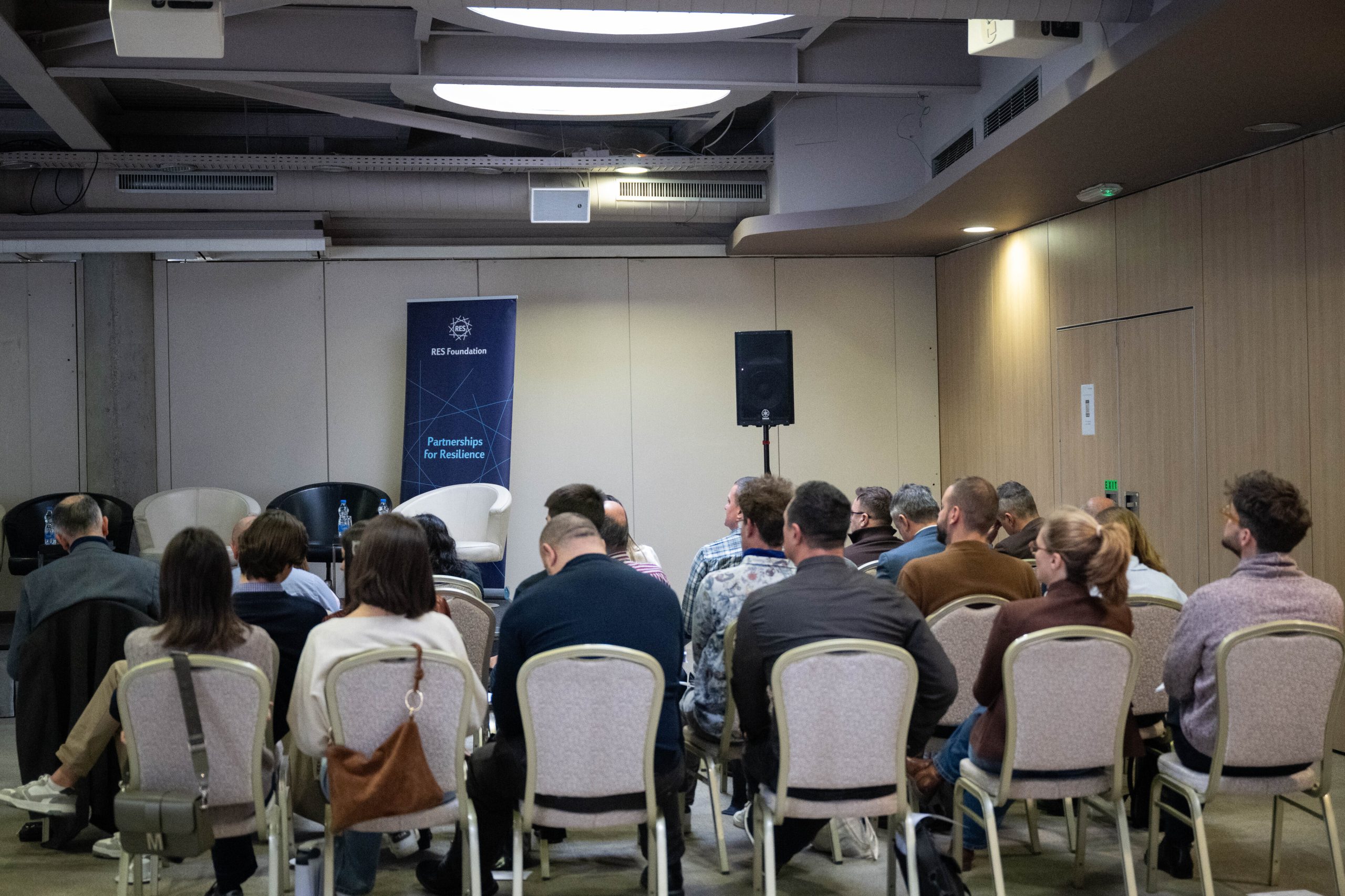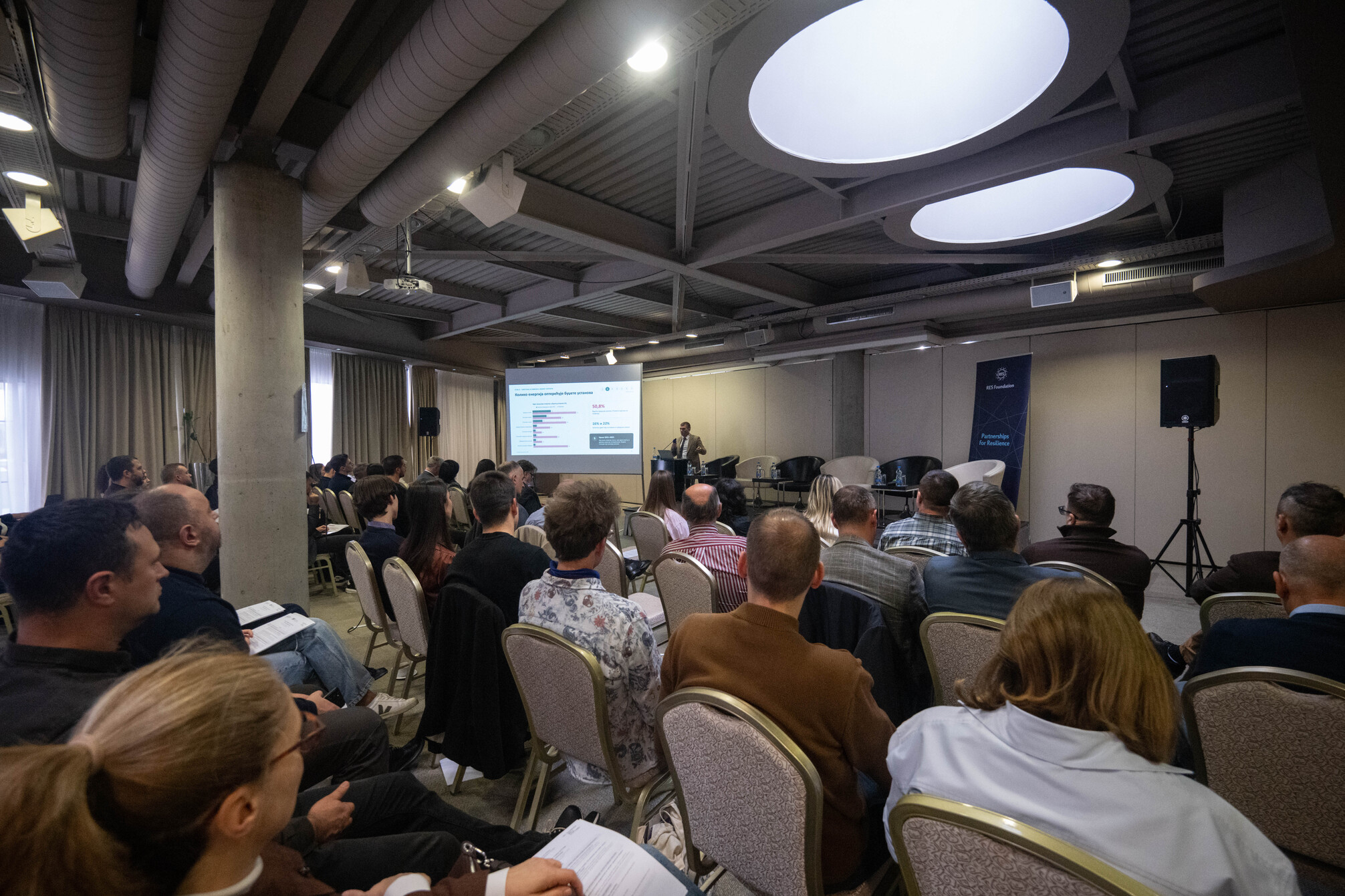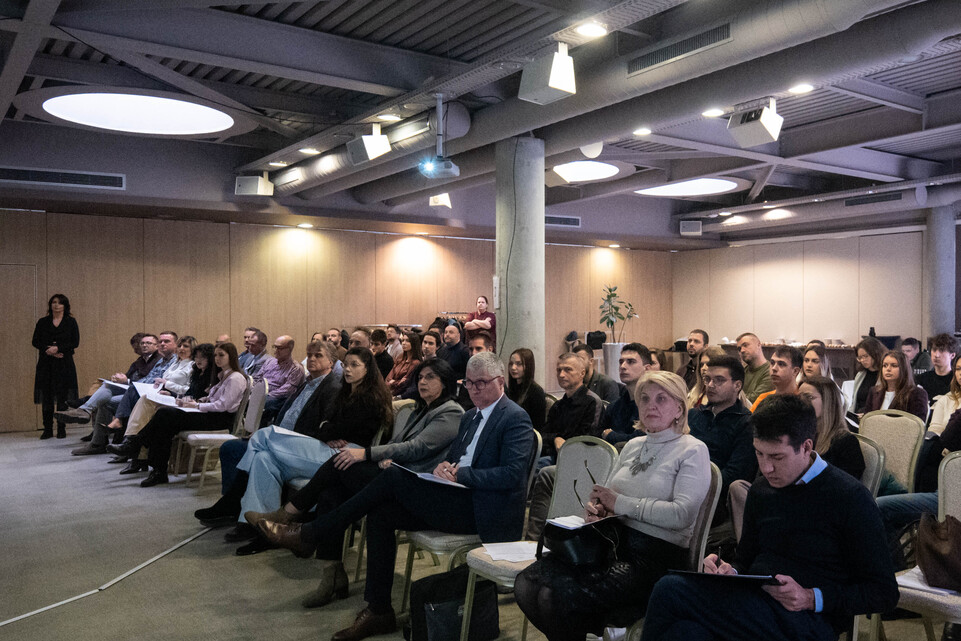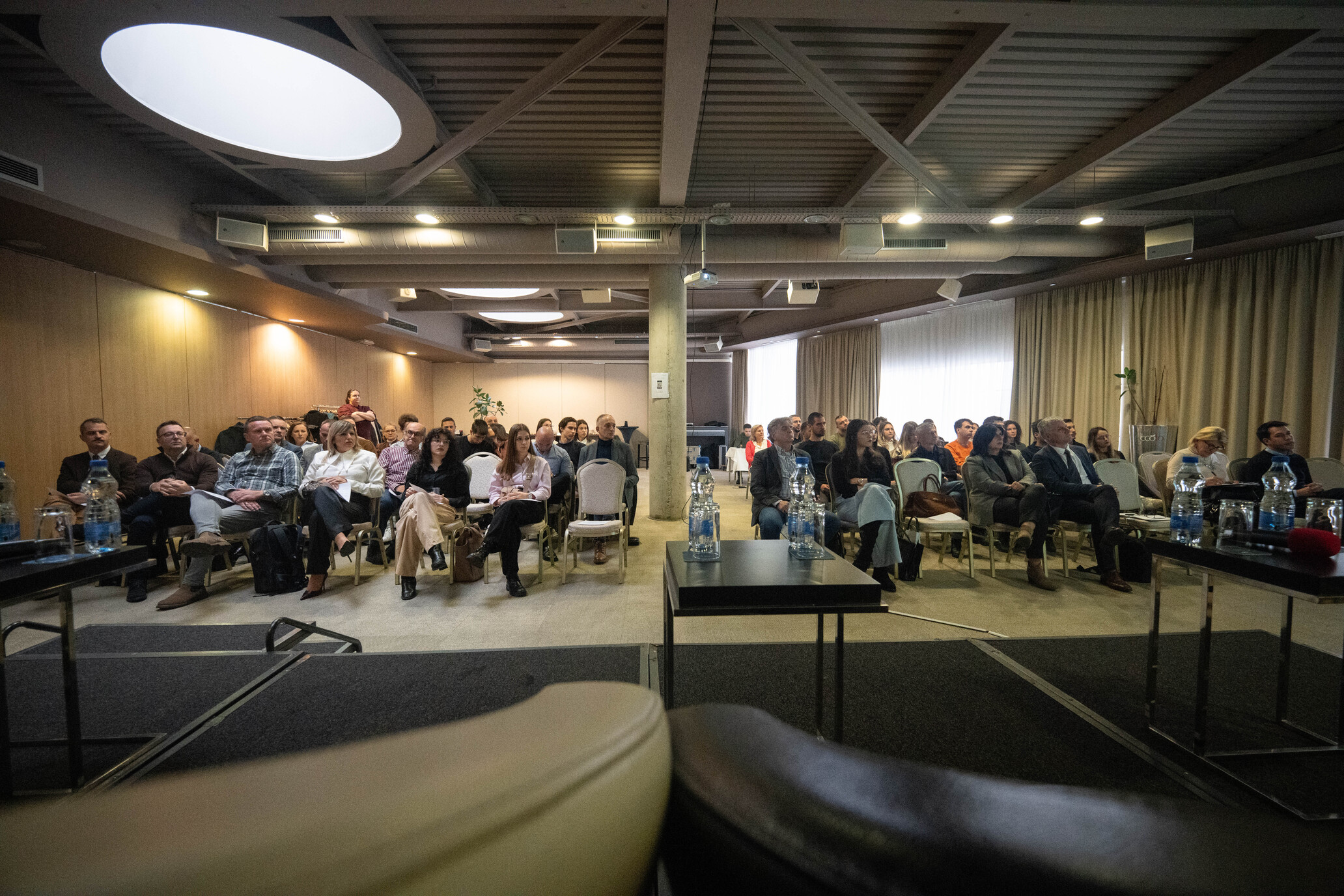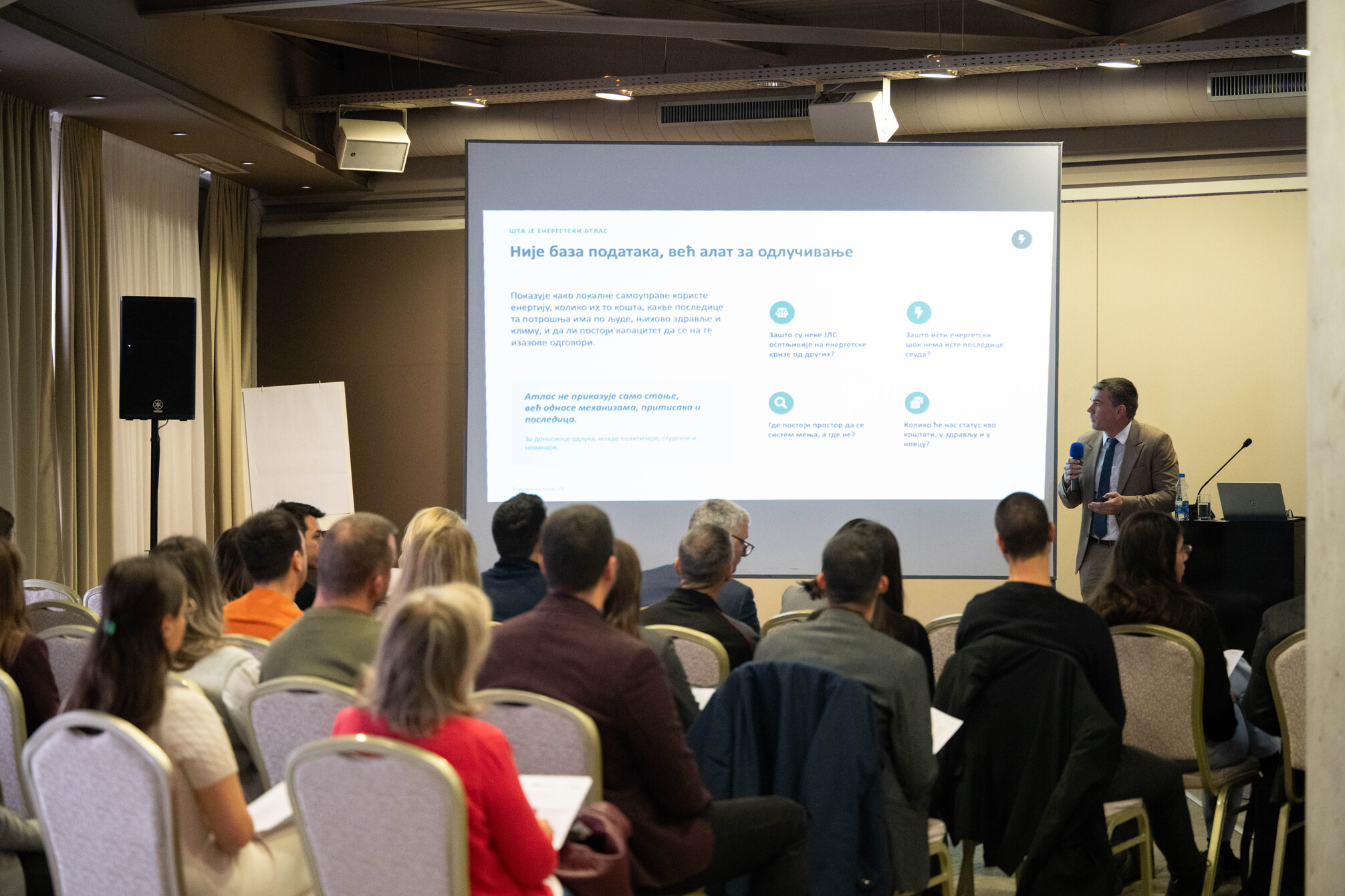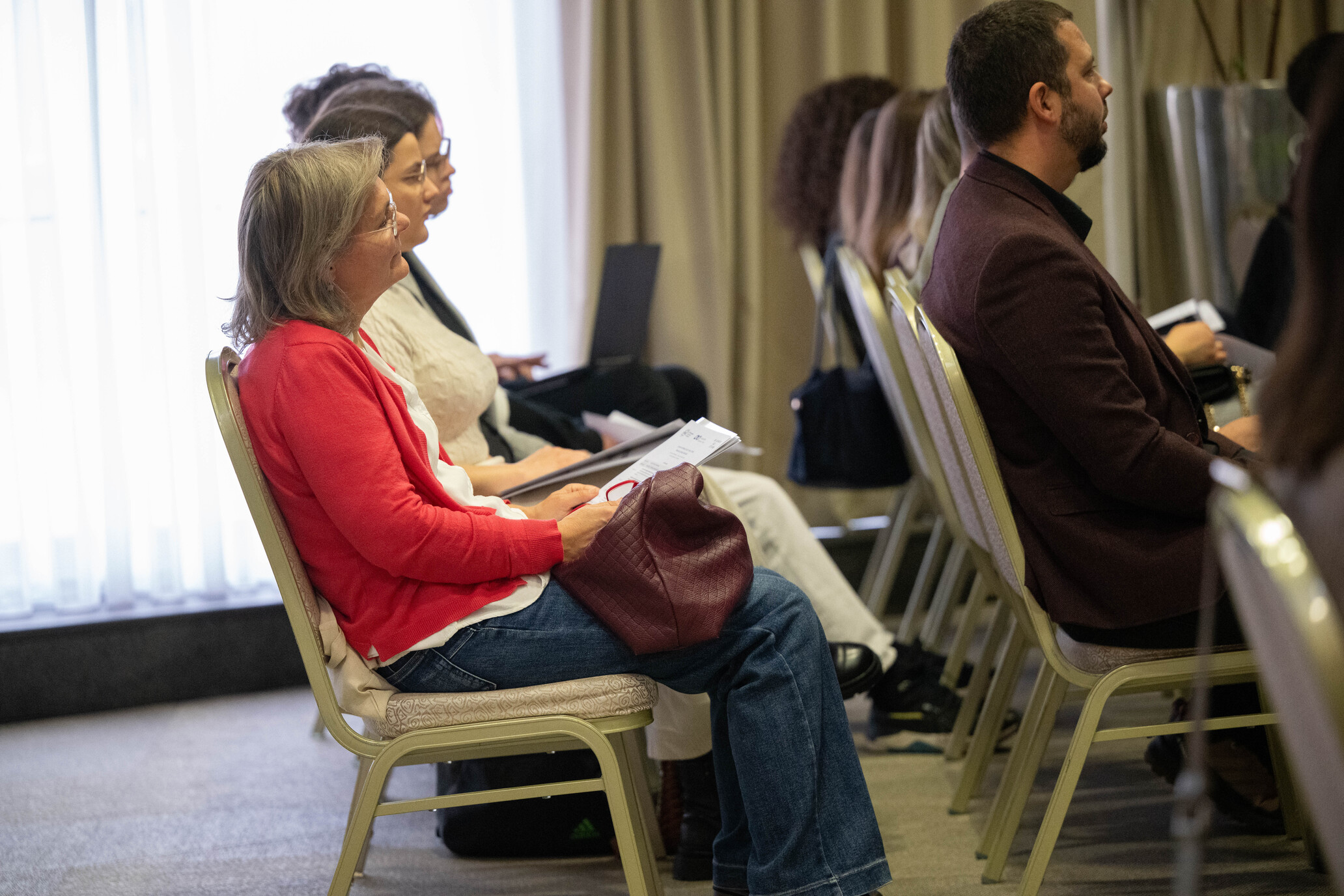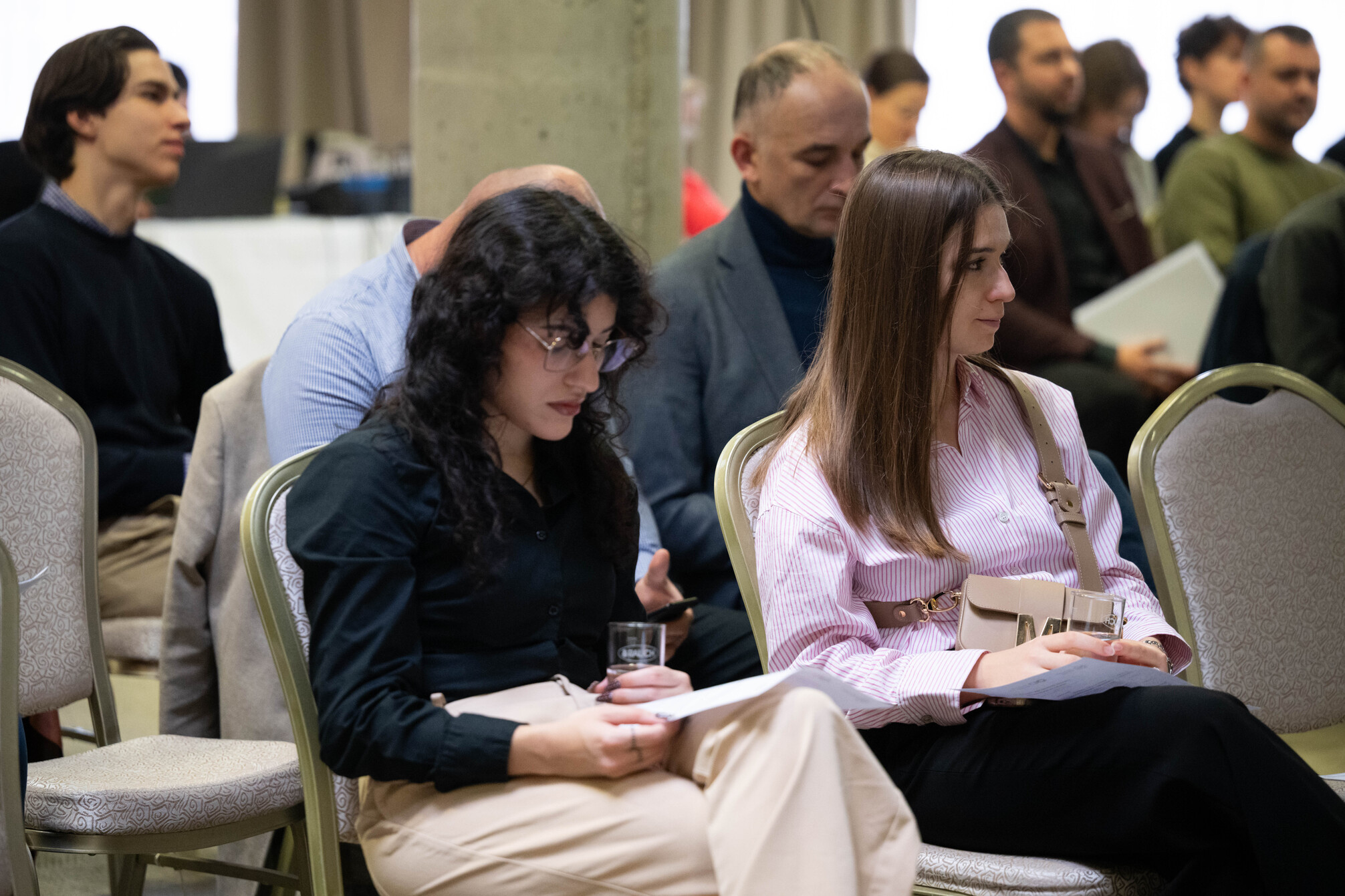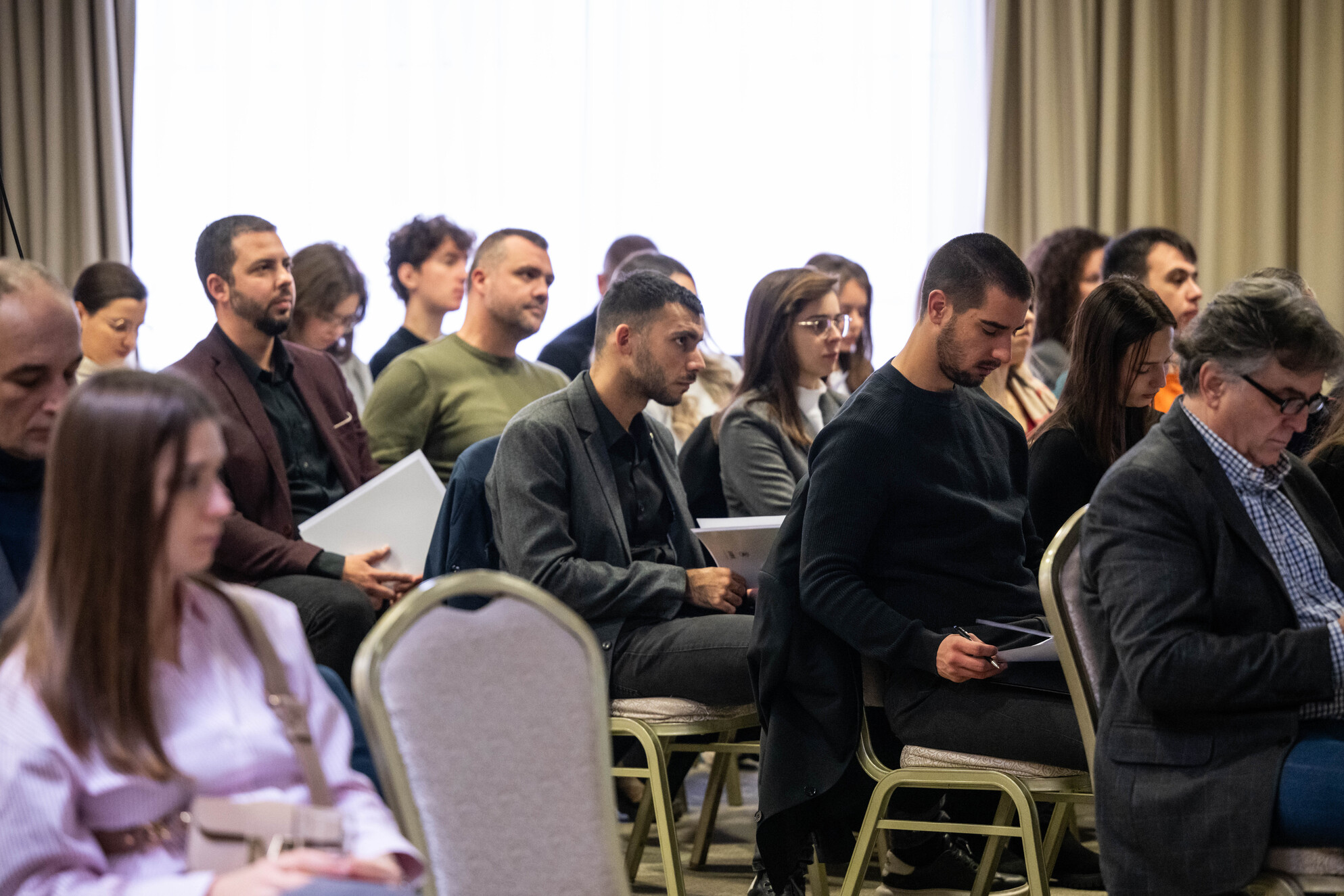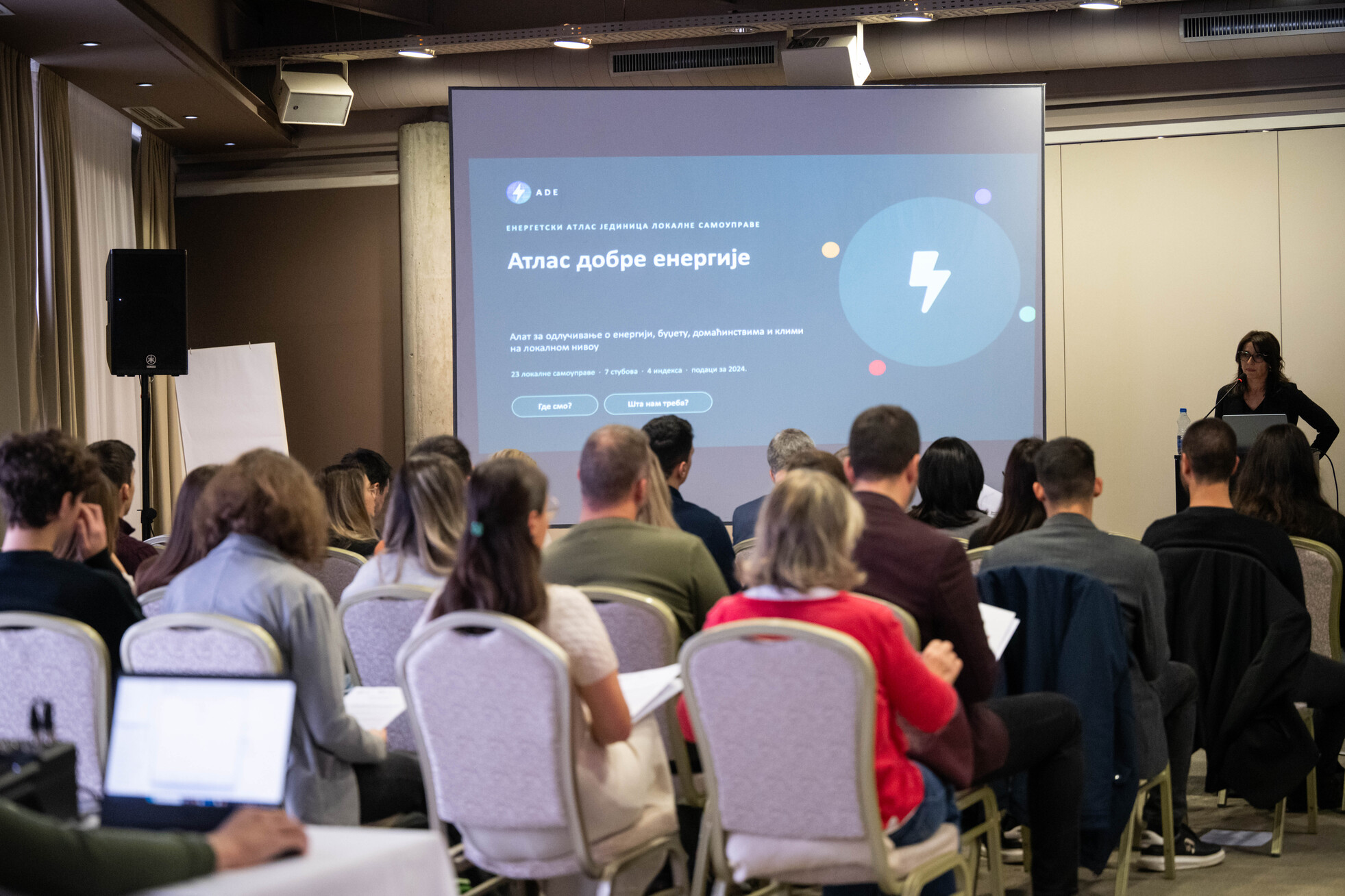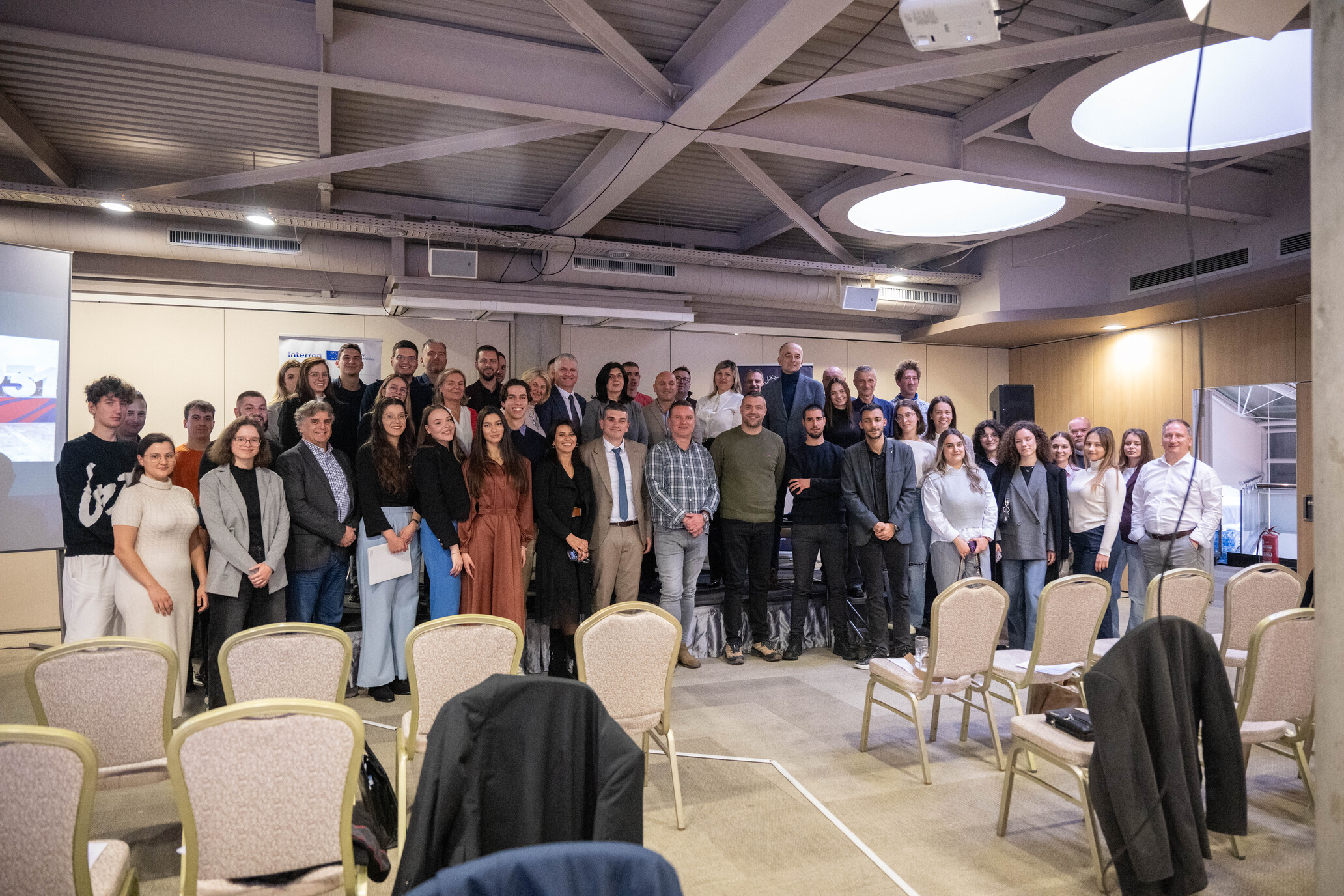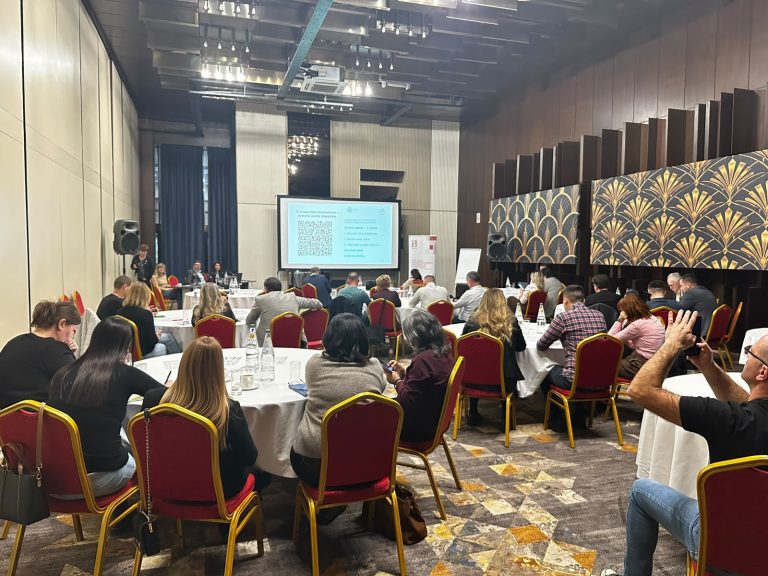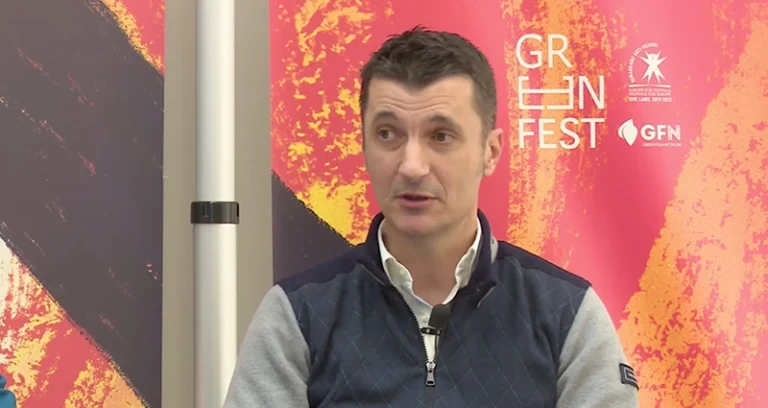
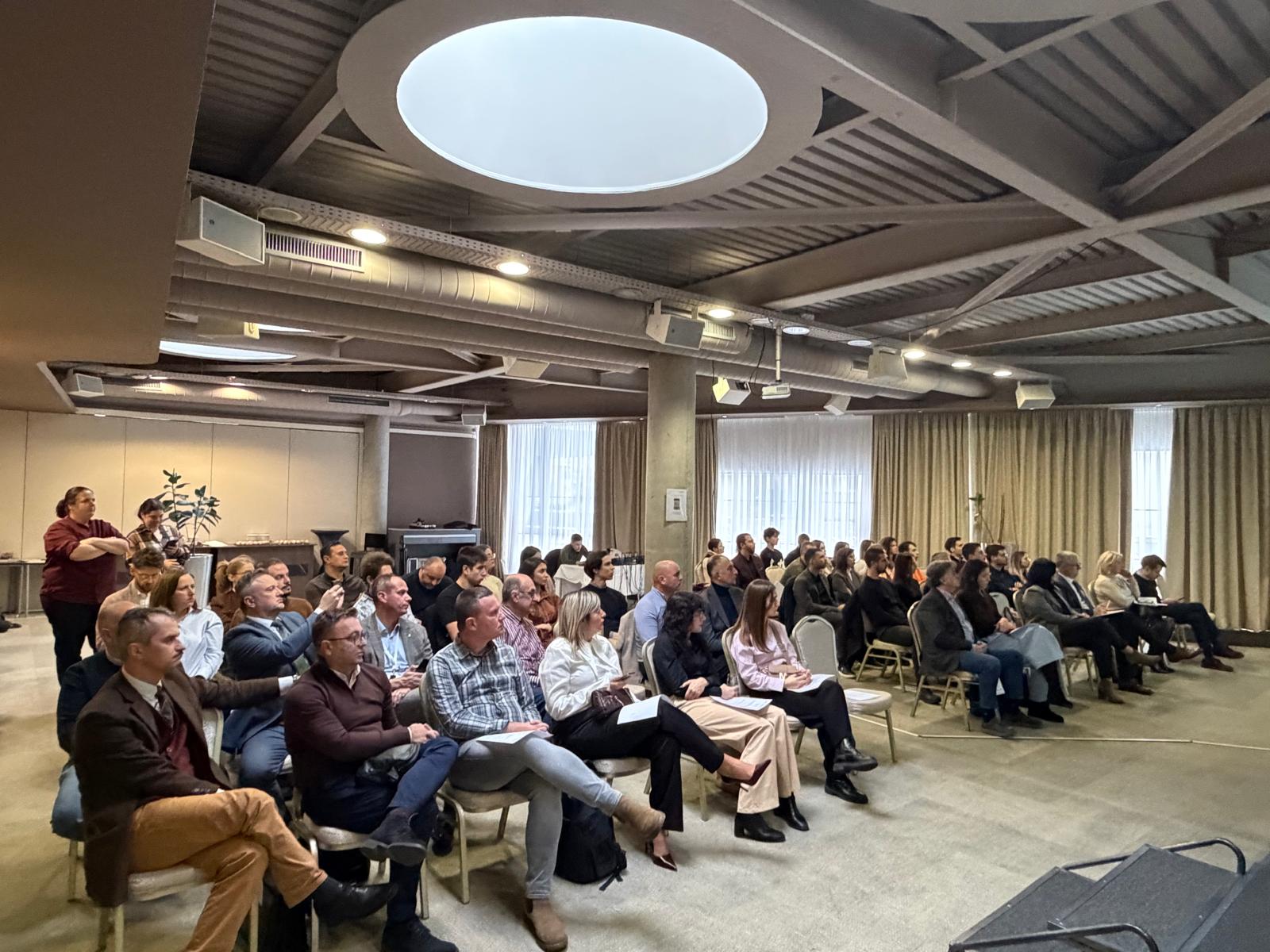
On November 27, 2026, RES Foundation held the conference “Local energy is not someone else’s business: An opportunity for better decisions” at the Zira Hotel in Belgrade, which was supported by the Heinrich Bell Foundation. The conference brought together 60 participants from local governments, development banks, the academic community, the Serbian Academy of Sciences and Arts, regional development agencies and civil society. Among those present were students of the Faculty of Geography, Economics, Civil Engineering, Mathematics, Biology, Mining and Geology and the Faculty of Political Sciences of the University of Belgrade, as well as the Academy of Vocational Studies in Western Serbia. The conference was led by Jasminka Young, Filip Blagojević and Damjan Rehm Bogunović from RES Foundation.
Atlas of good energy: from data to priorities
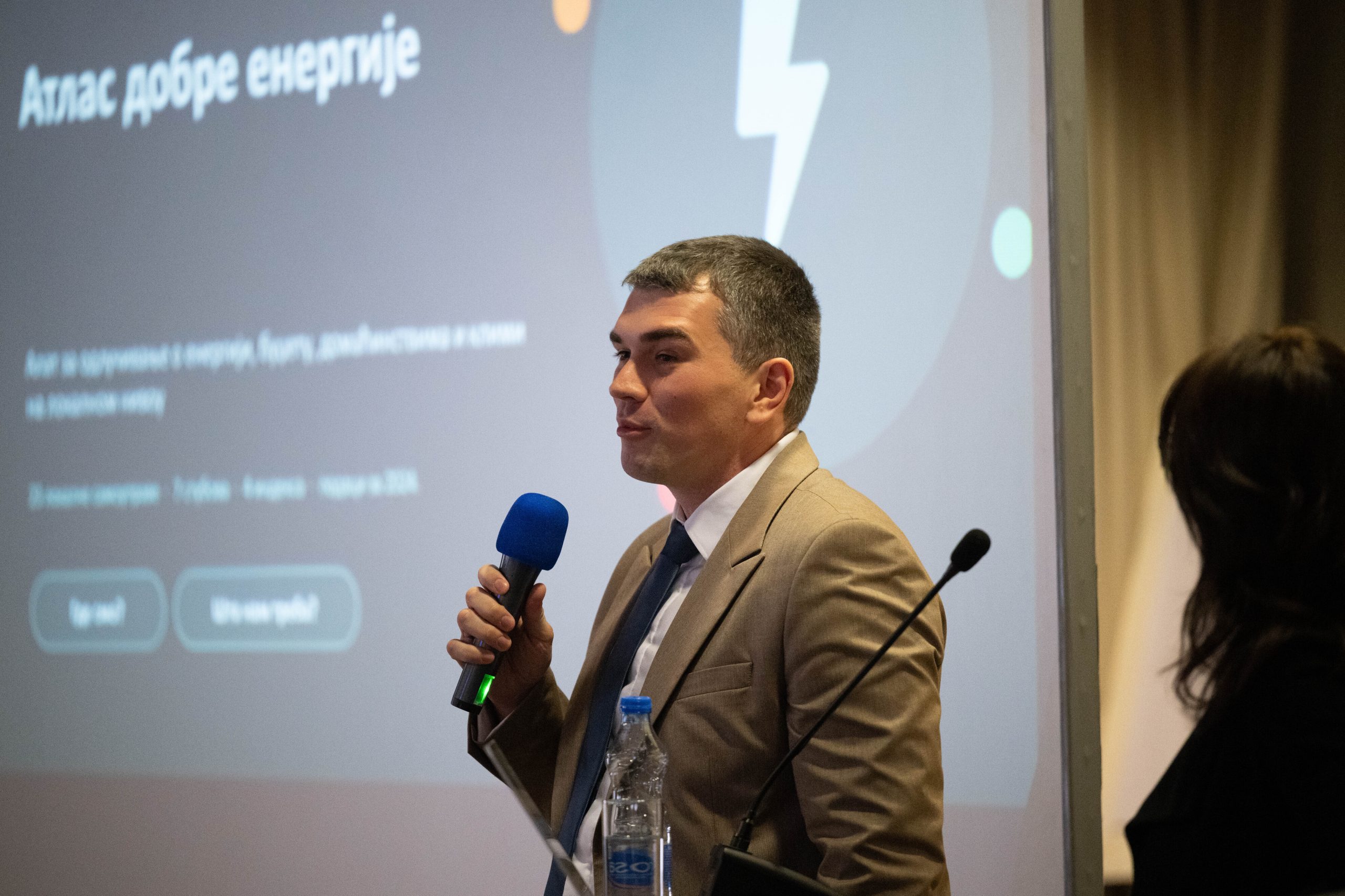
In the first session, the improved Atlas of Good Energy was presented with four indices that link data on energy consumption and costs, energy and social vulnerability, climate challenges and institutional capacities. It currently includes 50 local governments and enables comparison of available indicators, recognition of priorities and consideration of opportunities for more responsible public investments.
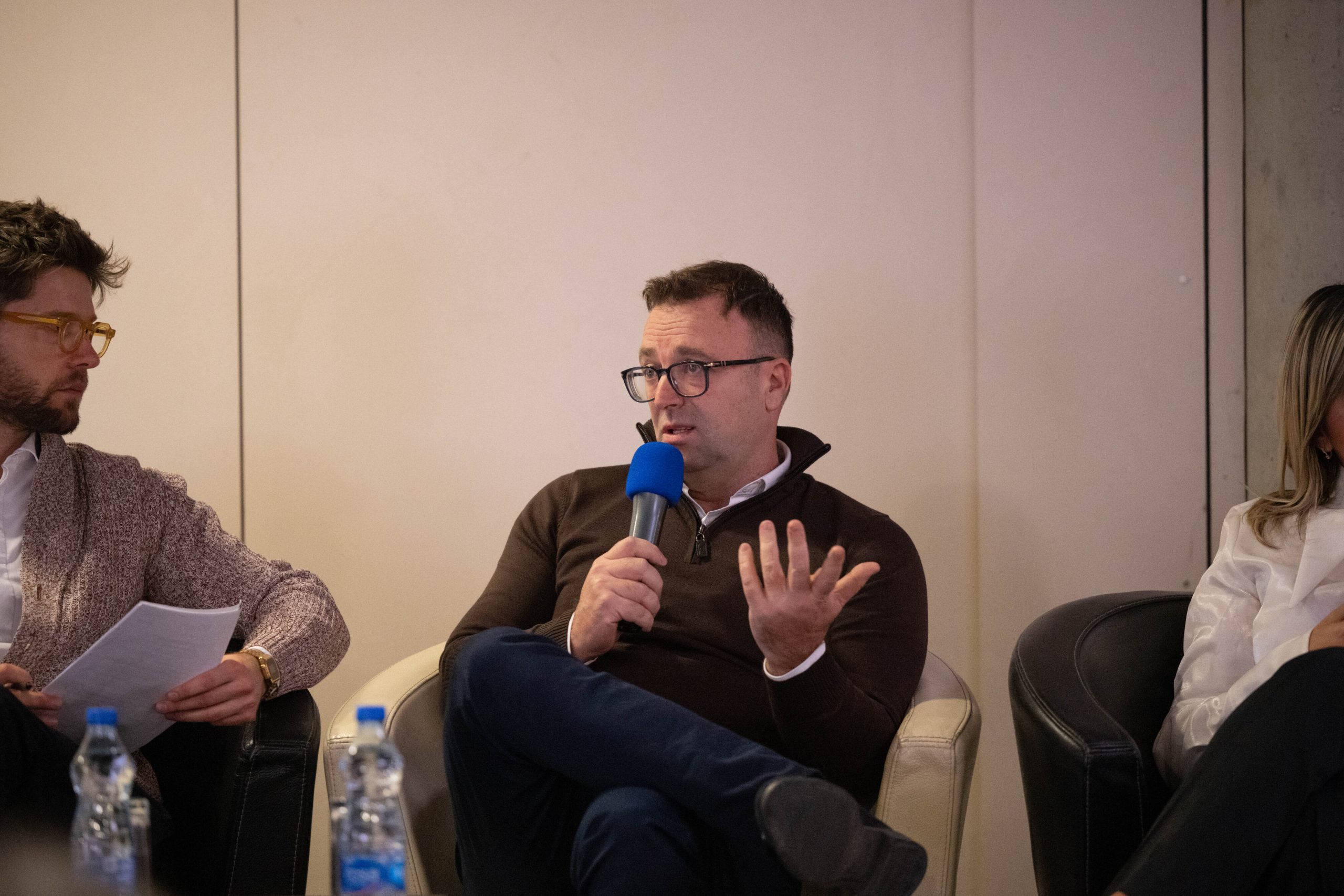
After the presentation of the Atlas, there was a conversation with representatives of the City of Niš, the City of Užice, Vrbas and the Regional development agency Zlatibor about the obstacles and perspectives of local energy, the needs of local communities and ways to translate data into better decisions and mechanisms for implementing public policies at the local level.
KOMPAS and SECAP: practical tools for savings
The second session was dedicated to KOMPAS, RES Foundation’s energy savings calculator, and its application in planning measures, including SECAP – local governments’ sustainable energy and climate action plans. Starting from the local energy balance, the calculator enables selection and comparison of measures, assessment of expected energy and money savings, reduction of emissions, required investments and payback period.
Atlas shows us where we are, what challenges we face and where our priorities are, while KOMPAS helps us see which path we can take, what measures we can take and what results we can expect. Together, these two tools should make it possible to significantly shorten the path from data and analysis to concrete decisions.
Atlas and KOMPAS aroused great interest from the audience precisely because of the possibility to facilitate and speed up planning, scenario comparison and data-based decision-making for local institutions.
The young: from training in Belgrade and Užice, through the energy profile of Kraljevo to COP31 in Antalya
Data and tools alone are not enough for quality decisions. We also need people who know how to understand and use them, to recognize problems, ask the right questions and devise concrete steps to solve them. This is precisely why the RES Foundation pays special attention to working with young people and developing their practical and analytical skills.
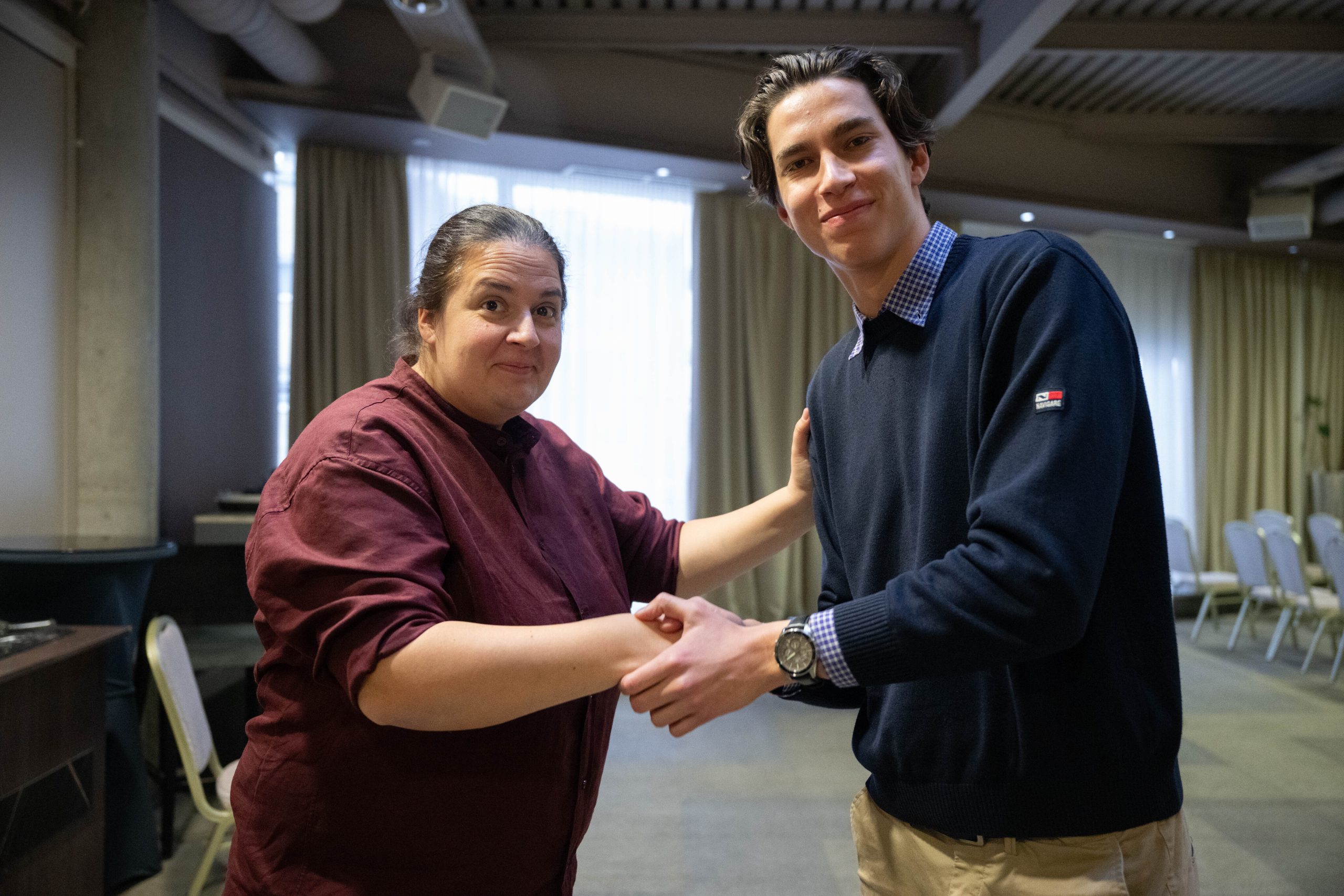
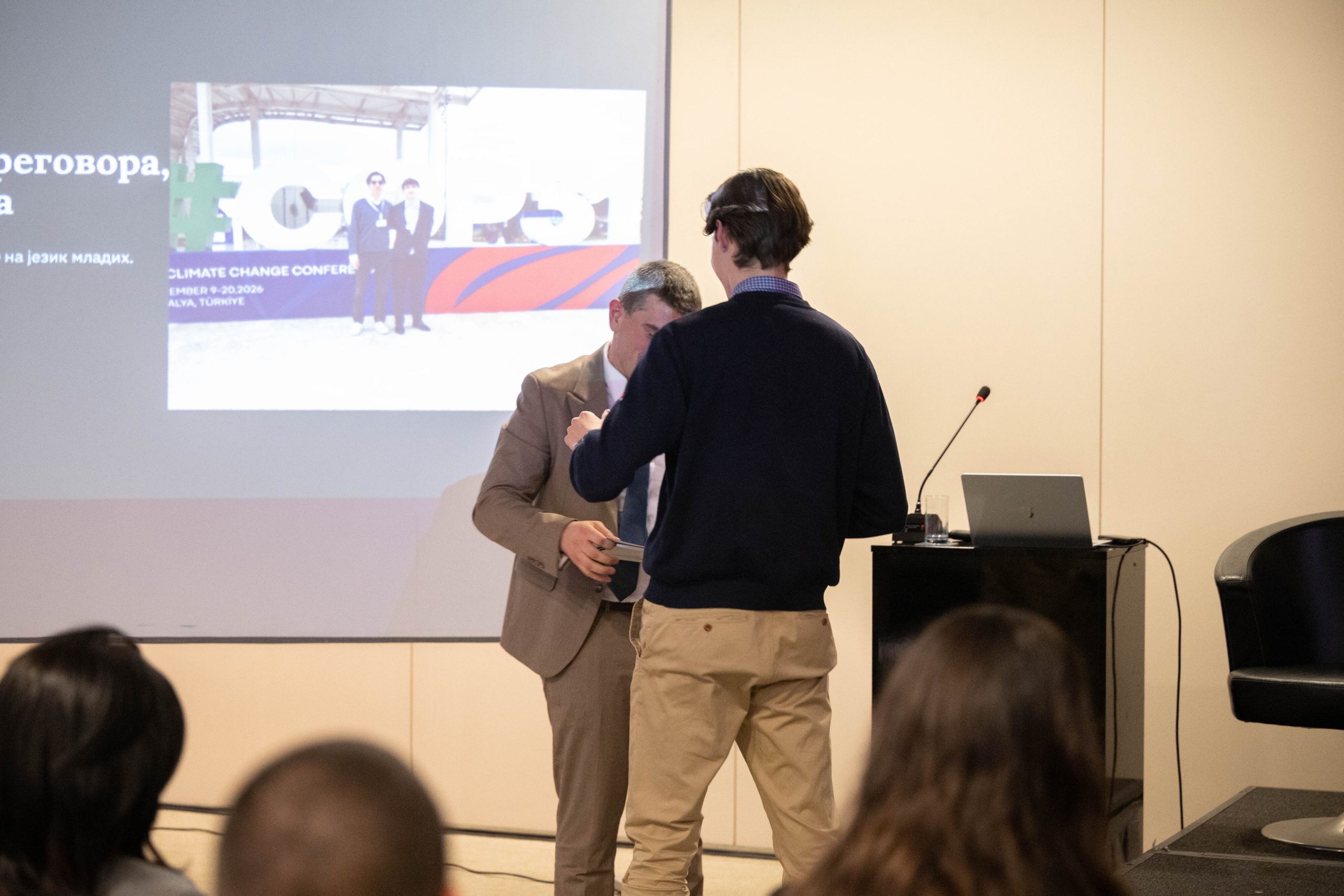
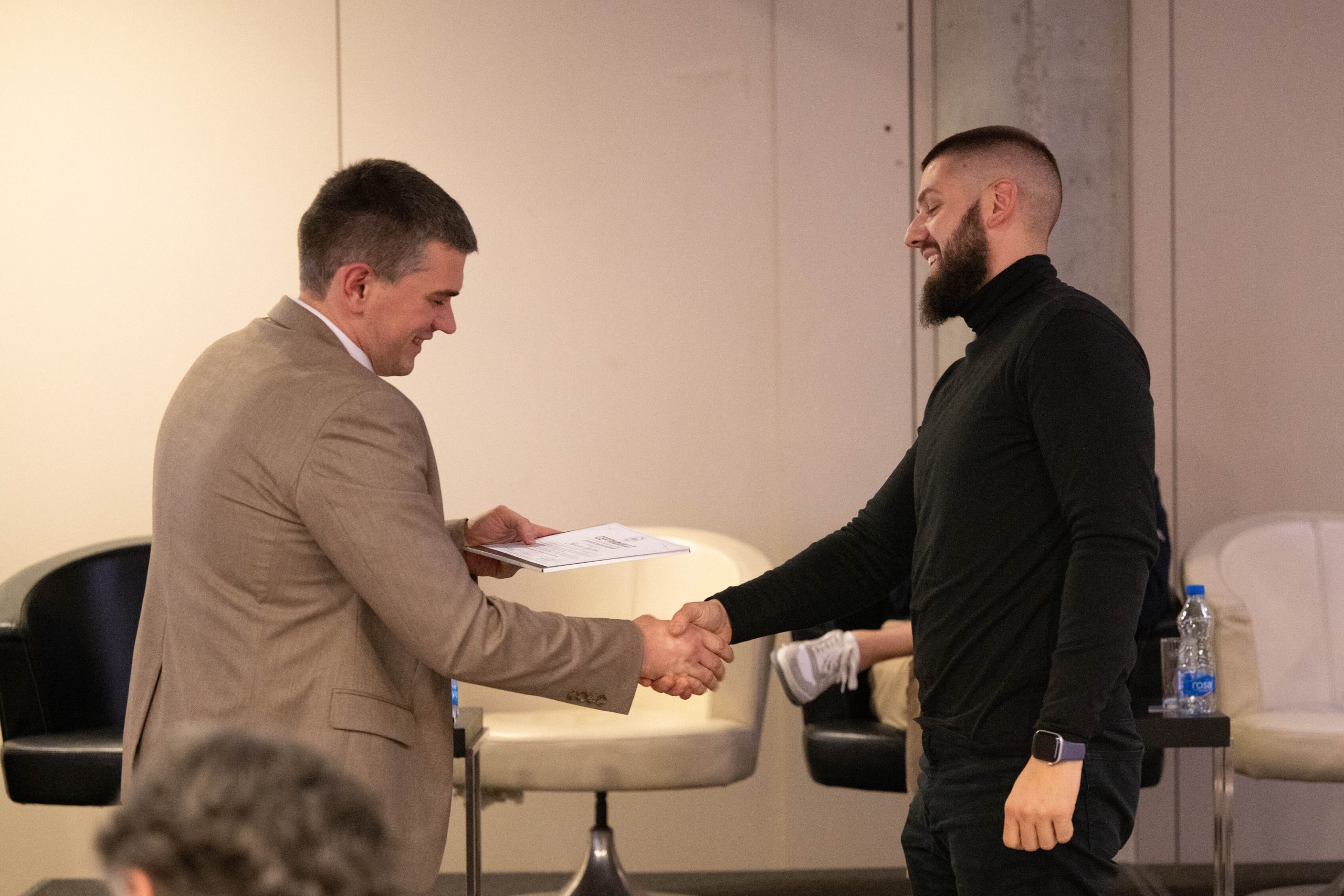
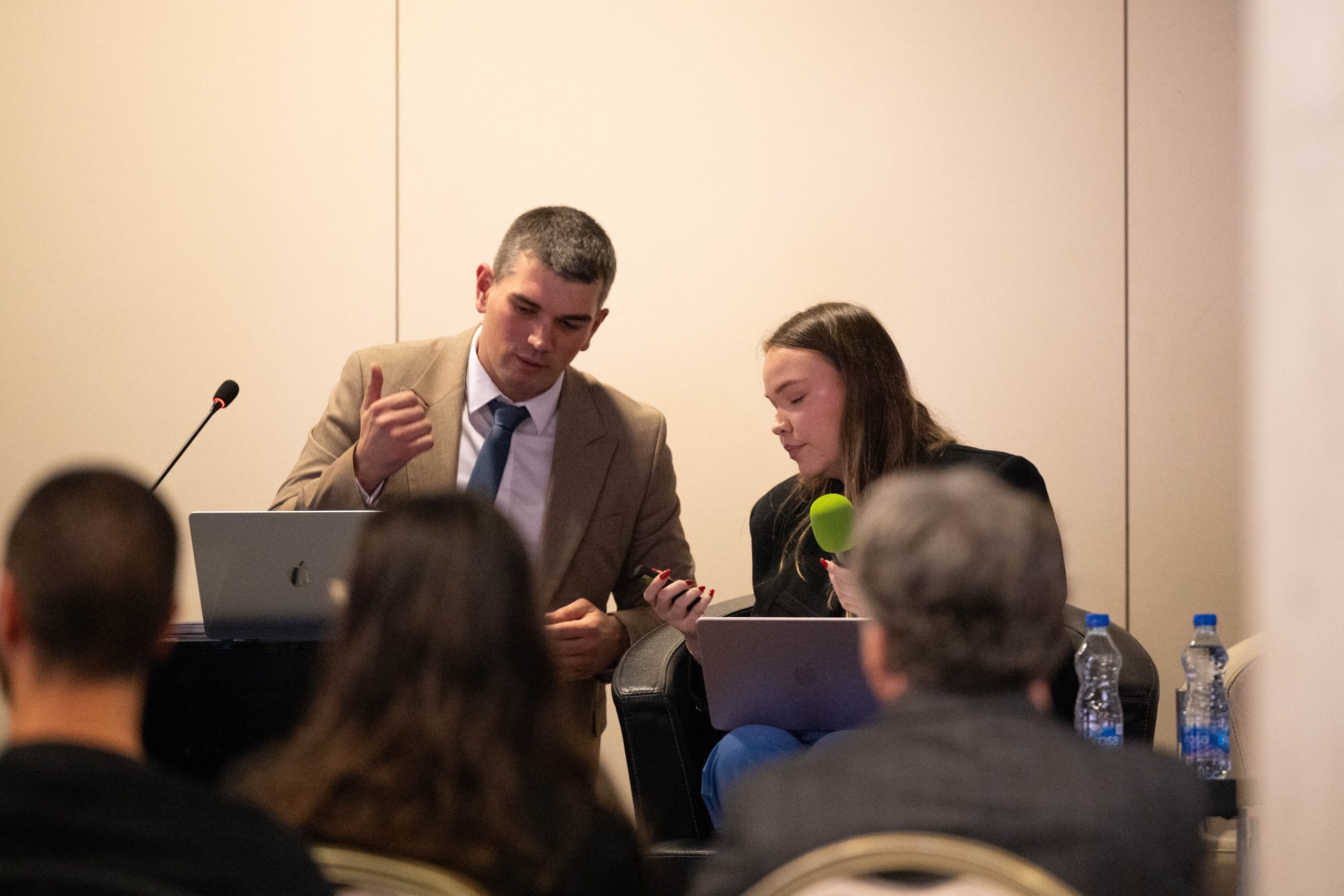
As part of the RES Foundation’s programme “Agents of good energy”, students in the final years of undergraduate and master’s studies underwent training in Belgrade and Užice, and then, with the mentoring support of the RES Foundation, created energy profiles of local governments. The participants presented their experiences and a concrete example of the energy profile of Kraljevo, after which they were presented with certificates.
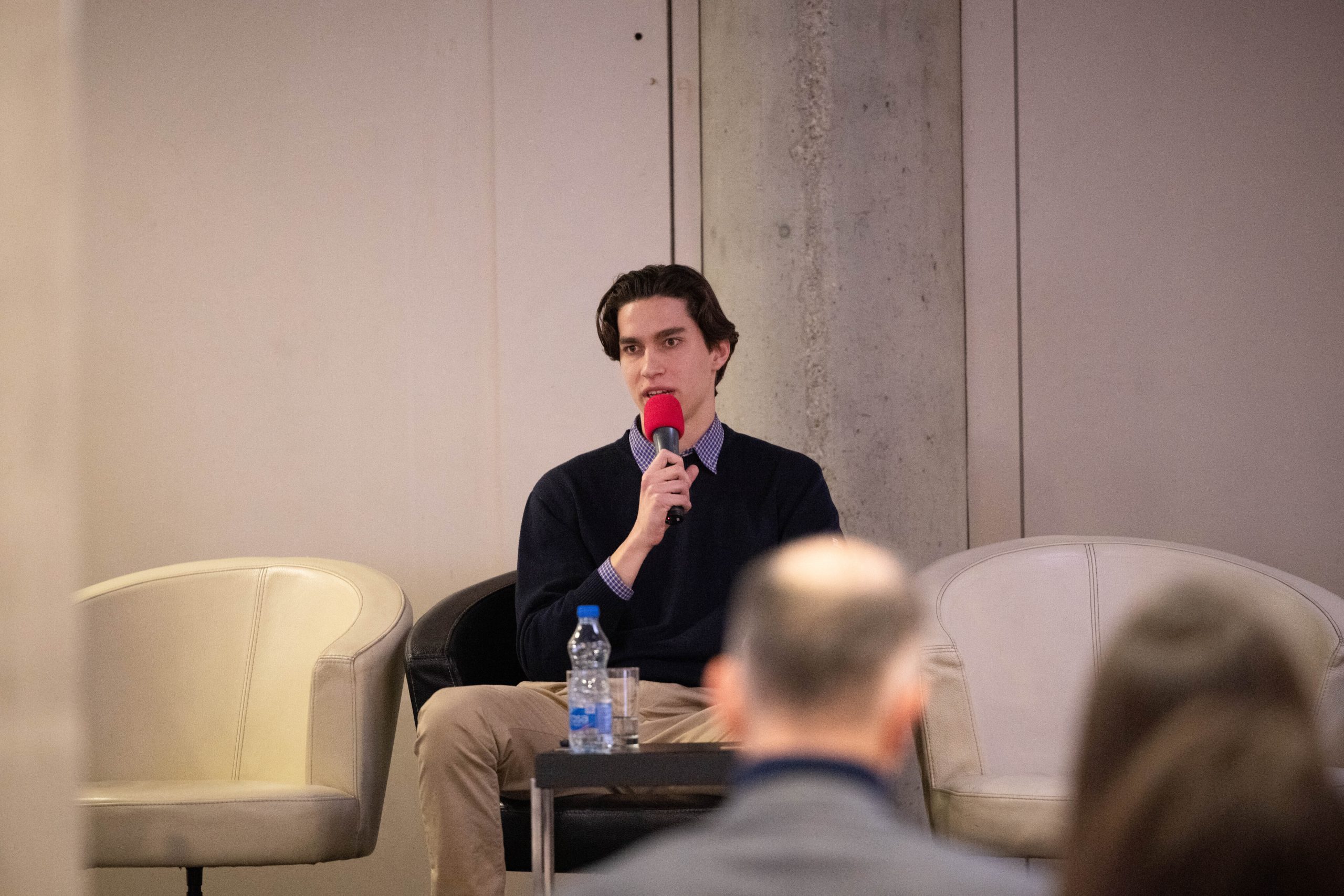
The programme was concluded by a presentation by a youth delegate of RES Foundation, a participant of COP31 in Antalya, about the experiences of international climate negotiations and their connection with local climate action in our country.
The great interest and active exchange of opinions and questions from the audience confirmed the need for accessible and practical tools for local energy planning. RES Foundation plans to continue the development and improvement of the Atlas of Good Energy and KOMPAS and to include local governments, experts, the academic community and students in that process.
Photos: RES Foundation