Author: Perun Prodanović
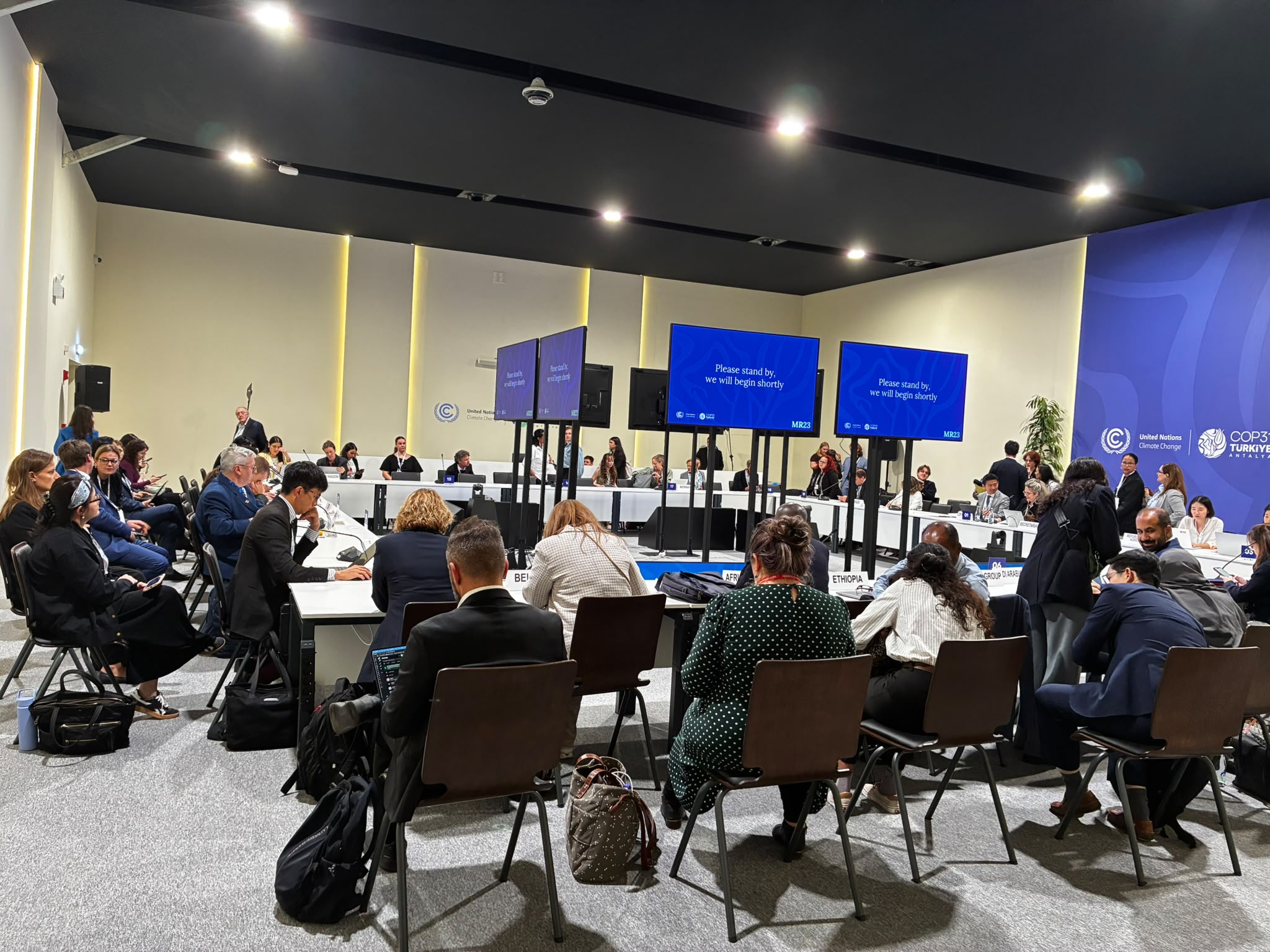
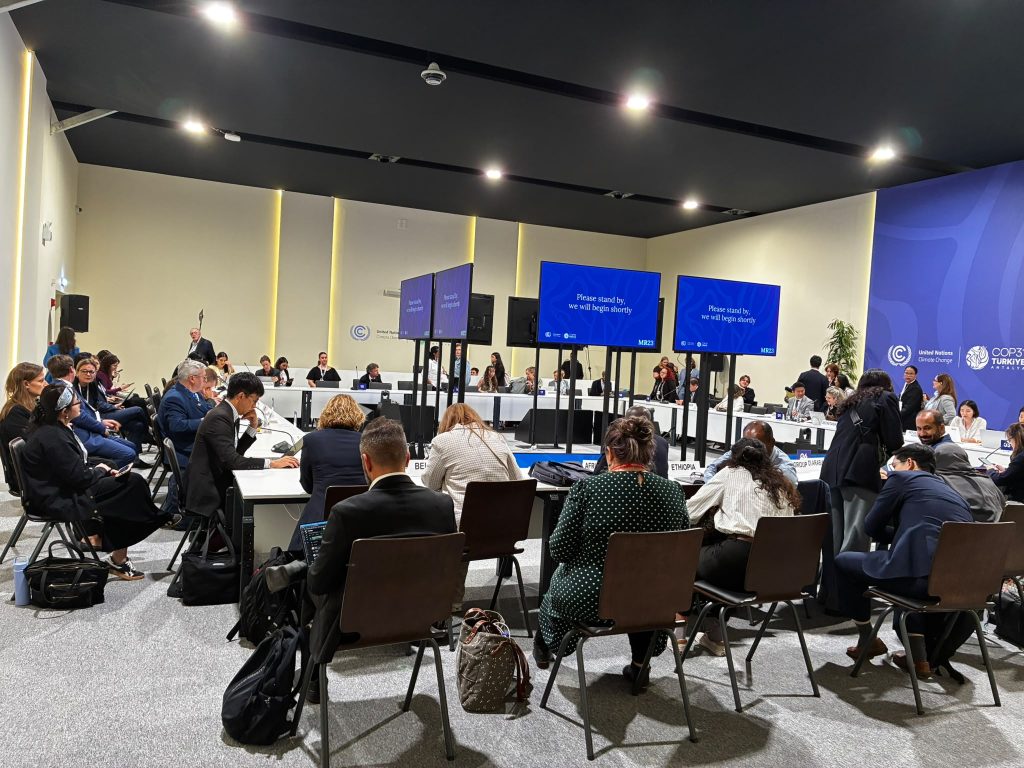
On Thursday, November 12, 2026, Day 4 of COP 31 at the Expo Center in Antalya, Türkiye, conference programming centred on the thematic focus of Resilient Cities and Built Environment, coinciding with the second day of the Antalya Leaders’ Summit. At the same time as these high-level dialogues in the Blue Zone, technical and procedural work continued in parallel, including a Presidency consultation held from 15:00 to 16:00. And unlike closed-door drafting sessions, this afternoon gathering was open to accredited observer organizations like us from RES Foundation. The room was primarily populated by senior legal advisers, procedural specialists, and Heads of Delegation representing national governments and major negotiating blocs, including the European Union, the Arab Group, the African Group, and the Russian Federation alongside UNFCCC Secretariat legal officers.
At the core of the consultation were two linked agenda items that have divided Parties for years: sub-item 2(b) on the adoption of the rules of procedure, and sub-item 17(b) on decision-making in the UNFCCC process. The core issue lies in sub-item 2(b), which dates back to COP 1 in 1995 and COP 2 in 1996, when Parties failed to agree on draft Rule 42 regarding voting mechanisms. Because draft Rule 42 remains unadopted, specifically due to opposition to Option A, which would allow substantive decisions to be taken by a two-thirds majority vote when consensus fails, the COP operates under provisional rules that require every decision to be made by consensus. Sub-item 17(b), introduced by the Russian Federation at COP 19 in 2013, emerged directly from this legal ambiguity. Proponents of 17(b), primarily Russia, Belarus, and several like-minded countries, argue that COP Presidents have occasionally misused their power to end discussion despite explicit objections on the floor, and by bundling unrelated issues into take-it-or-leave-it packages. Conversely, the European Union, small island states, and climate-vulnerable nations warn that defining consensus as an absolute single-country veto paralyzes global climate action, favouring instead practical, non-binding improvements to transparency and plenary management rather than rigid legal restrictions.
During the one-hour gathering, these positions produced two contrasting outcomes across the two agenda items. When the floor opened on sub-item 2(b), representatives from the Arab Group, the African Group, and several other states reiterated their firm rejection of Option A, signaling that there was no willingness to introduce majority voting into the UNFCCC. Recognizing the deadlock, the COP President concluded the discussion on 2(b) and announced that the item would be deferred to next year’s session, preserving the provisional status quo. However, the atmosphere shifted significantly when the consultation turned to sub-item 17(b). The Russian Federation requested an official email address through which Parties could submit formal documents and written complaints regarding procedural conduct, leading to an extended exchange that consumed valuable session time. Frustrated by what it characterized as wasted time on procedural wrangling, the European Union intervened to request that sub-item 17(b) also be closed and deferred to next year. Although the COP President initially agreed to this proposal, the Russian Federation formally objected to ending the item prematurely, prompting the European Union to concede and resulting in an agreement to reconvene consultations on sub-item 17(b) in the coming days.
The contrasting results of the consultation show both the distinct diplomatic strategies employed by key actors and the inherent structural limitations of the United Nations’ bureaucratic architecture. For the Arab and African Groups, maintaining a unified front against Option A in sub-item 2(b) serves as a defensive shield against majority-imposed mandates, while Russia’s tactic in sub-item 17(b), demanding a formal submission channel and refusing early closure, keeps procedural pressure on the Presidency ahead of high-stakes closing plenaries. Conversely, the European Union’s push for early deferral reflects an effort to protect limited negotiation bandwidth, though its rapid concession shows how easily process can overtake substance. Viewed more broadly, the session showed a system designed to prioritize sovereign protection over institutional agility, because amending the rules of procedure requires the very consensus that Parties cannot achieve, the UN framework institutionalizes its own paralysis. By requiring delegations to revisit unresolved procedural rituals year after year, the bureaucracy provides a diplomatic safety valve for airing grievances yet simultaneously consumes valuable time and momentum that could otherwise be directed toward urgent climate action. Consequently, while sub-item 17(b) will reconvene in the coming days, both items remain trapped in a self-perpetuating procedural loop and are virtually certain to be deferred once again at the closing plenary.
Photo credits: Perun Prodanović and Marko Macura