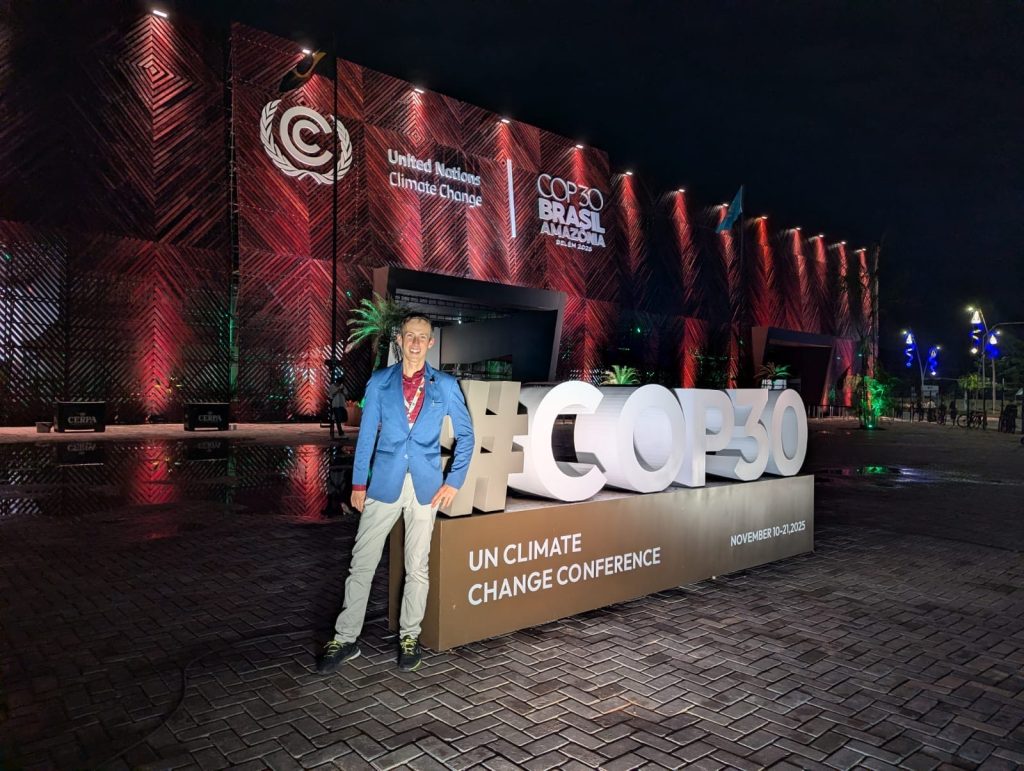
#RESTalksCOP is a COP30 interview series created to bring people closer to the United Nations Framework Convention on Climate Change (UNFCCC) process. Through conversations with negotiators, experts, and civil society, we explore diverse perspectives and behind-the-scenes insights. Recorded on the ground at the 30th Conference of the Parties (COP30), these interviews offer a time-capsule look at the people and stories shaping today’s climate negotiations.
We spoke with Niklas Wagner, a postdoctoral researcher at the German Institute for Development and Sustainability and the University of Geneva, whose work focuses on the Global Stocktake (GST) of the Paris Agreement. Drawing on eight years of experience in the UNFCCC process and extensive research on GST design, inclusivity, and political dynamics, Niklas reflects on lessons from the first GST, the shifting geopolitical landscape, and what the “COP of Truth” means for the future of international climate governance.
Niklas Wagner: Thank you so much for the invite! My name is Niklas Wagner. I’m a postdoctoral researcher at the German Institute for Development and Sustainability, as well as the University of Geneva, working in both institutions on the Global Stocktake (GST) of the Paris Agreement.
Zvezdana Božović: How long have you been involved in the UNFCCC process?
Niklas: I think I started around eight years ago so a little bit before Fridays For Future. My first COP was the Fiji COP in Bonn in 2017. Since then, I have been involved quite a lot with youth engagement and transitioned at some point more and more towards research.
Zvezdana: What are you following this year at the COP?
Niklas: At COP30, I am following the Global Stocktake most of the time. The Global Stocktake is a process established in Article 14 of the Paris Agreement and it’s a process to take stock of how we’re doing in the implementation of the Paris Agreement in all its three objectives. It’s a very interesting process because it brings together political negotiators with civil society and scientists. We took stock the first time in 2023. The outcome there was the UAE Consensus. Right now, the negotiations are mostly on how we want to implement the first GST. There’s a negotiation happening in what is the UAE Dialogue, and then there are negotiations as well on the refinement of the GST. These are the negotiations on learning from the first GST and how we can improve the second GST.
Zvezdana: Are there any elements or best practices you have noticed in the first GST that you would potentially like to see continued into the second one?
Niklas: Yes. I think the first GST was, relative to other things we have seen in the UNFCCC, relatively innovative because there were two formats used which I think were quite helpful that I want to point out. The first format was a creative space. They kind of went: “actually, it’s nice to not only let scientific knowledge inform our conversations, but emotions as well have a role to play”, so they intended to have some art, some theater and videos informing the process. I think the intention behind this was very good, though I think it can still be much better implemented.
The second thing, which got quite some attention, was the World Café format. In these sessions, people did not come with their very long and prepared speeches, but it was an eye-level conversation happening between all kinds of actors. It was not important if you were a head of delegation or a civil society observer. Everyone was able to just speak and share their experience and perspectives. I think this was very helpful as we transition into an implementation phase of the Paris Agreement, and it’s important to learn about existing good practices and barriers. Unfortunately, this spirit of having an eye-level conversation did not transition into the political phase of the GST where we were back to the usual power game. The negotiations were really happening most of the time only between Parties. and at some stage only between certain Parties, leaving the most vulnerable behind among both civil society and Parties.
Zvezdana: You just mentioned that this is quite a political process. We have seen that some countries did not send their delegations to COP this year, and one of them was a major player before in the negotiation process. In the present geopolitical climate, do you see any shifts away from sustainability and climate policy and how do you see this playing out in the future?
Niklas: I think we can name the elephant who is not in the room, and this elephant is the United States. Their silence is very noticeable, and it’s very important to mention as well that they are not only historically the biggest emitter, but also in terms of per capita emissions. Them not being there is a really horrible signal because they have so much historical debt they need to pay up for. I think because they are not here in the process, a lot of trust into international climate governance, but also multilateralism more generally is eroding. I think this trust is something which is really needed and I think there are some very big divides between Parties, so I would say the absence of the United States is one noticeable thing I observed. Another thing I noticed this year is that the Chinese delegation is very present and China is stepping up. They are very visible with their pavilion here. If you look around the city, there are quite some BYD vehicles around and even President Lula himself came to the Leader’s Summit in a BYD vehicle. They are much more vocal in the negotiations right now and they are happy to have bridging proposals.
Zvezdana: To go back to the theme of this year, this COP has been dubbed the “COP of Truth”. You have mentioned this loss of trust in the process, the power vacuum in climate leadership, the shift from deliberation to implementation, and it all begs the question of whether the process as such is robust enough or if there is a need to reform it. This is more of an abstract question, but how important is this COP for the future outlook of the process in the upcoming years?
Niklas: This framing of this COP being the “COP of Truth” is very interesting for me as a researcher. There are different interpretations of this. One of them is that right now we are at a tipping point, a scientific tipping point where we need to take action in order for certain biomes like the Amazon rainforest to be saved, for example, but there is also the political tipping point with regards to multilateralism. I think it’s also the more general impression of “if we don’t get this done right now, then it is not going to be possible”. You mentioned implementation, and I think implementing Paris and climate action is key and I think many countries are still stuck in negotiation mode. It’s like a mode of negotiating against each other because the people here are trained as negotiators to win a negotiation battle of sorts, but not to implement jointly. I think it is really much needed to implement more and I am aware that there needs to be means of implementation for this. I think the Global North – the EU, the US really need to get more money into the process to pay for all the damage they have done in order to enable the implementation, which is urgently needed.
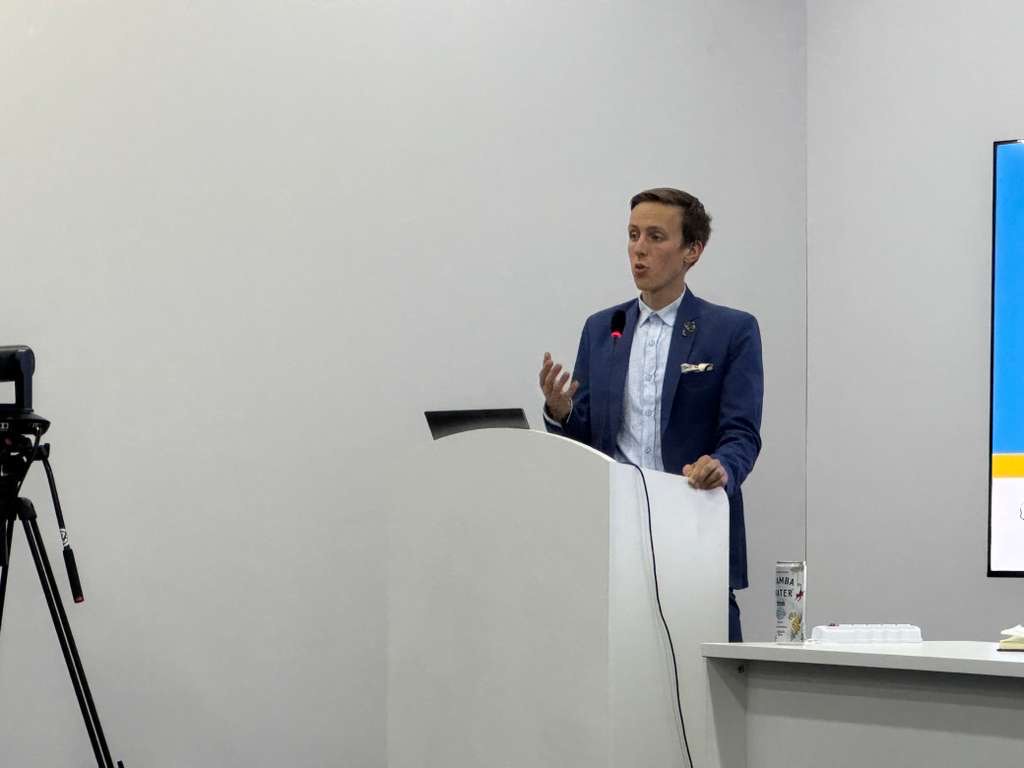
Zvezdana: Since you mentioned this kind of competitive approach to the negotiations, there’s also been a lot of talk on how much power a host country has in determining the agenda and even determining the outcomes. Right now there is a big ongoing negotiation on who will host the COP between Australia and Türkiye. How do you interpret this?
Niklas: The power of the presidency is an interesting question. I think that it is very relevant because the COPs, and maybe I can link this to your previous question about reform, I think there is a need for reform for sure because these COPs are getting too big and too expensive. It’s not only a logistical challenge, but it’s also a challenge that many countries in the world are not able to host a fifty- to eighty-thousand-person event. This is leading to a privileged position of oil-exporting countries which are rich countries who can host these kinds of events. I think it’s very important that we reform this process and rethink the power of these presidencies. In the UAE, for example, I followed the first GST, and the research shows that the presidency was very powerful in determining the outcome of the GST.
Zvezdana: What are you working on now in terms of projects?
Niklas: There are three concrete research questions I’m trying to tackle. One is on the inclusivity of the GST and trying to understand power dynamics there. One is on how relevant the GST is for adaptation governance more generally. The third one is on the follow-up of the GST in the negotiations here, as well in Nationally Determined Contributions (NDCs).
Zvezdana: Very cool! Thank you so much for taking the time to talk to me.
Niklas: It was a pleasure!
Zvezdana: If people want to know more about your work, where can they find you?
Niklas: On LinkedIn. I am at the moment quite active, but I’m also quite happy to be contacted via email, or they can find my contacts on the website of the institutions I’m working with.
Interview conducted on 17 November 2025