#RESTalksCOP is a COP30 interview series created to bring people closer to the United Nations Framework Convention on Climate Change (UNFCCC) process. Through conversations with negotiators, experts, and civil society, we explore diverse perspectives and behind-the-scenes insights. Recorded on the ground at the 30th Conference of the Parties (COP30), these interviews offer a time-capsule look at the people and stories shaping today’s climate negotiations.
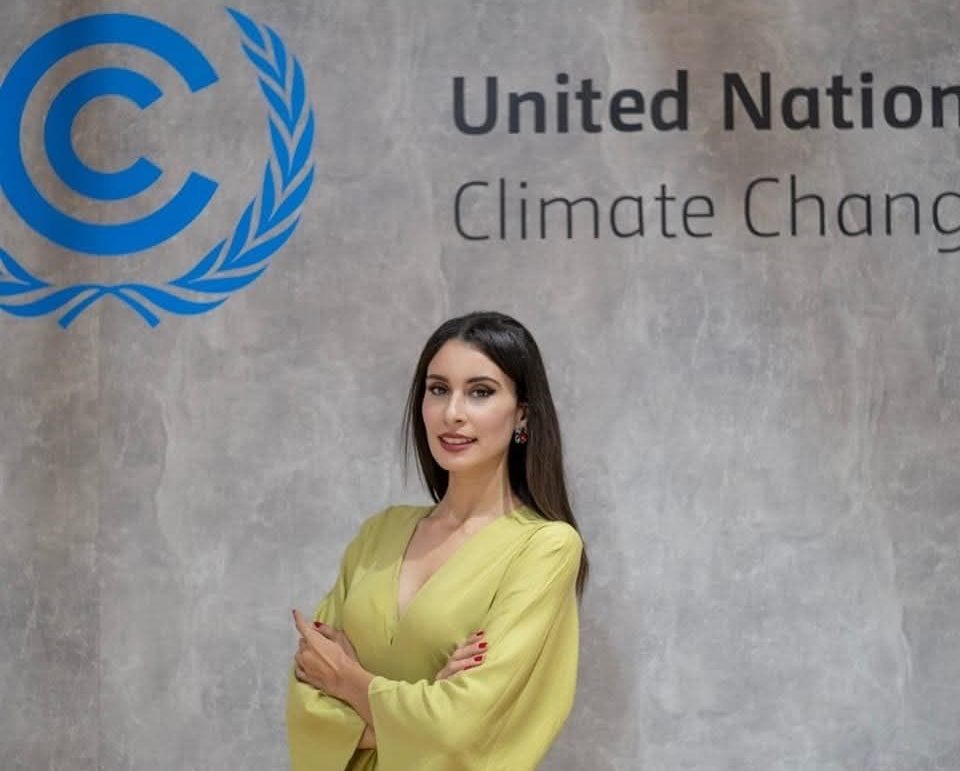
We spoke with Kenza Benmoussa, Gender and Climate Change Focal Point for Morocco with the WeCaN Network at the Food and Agriculture Organization of the United Nations (FAO), sustainability consultant, and entrepreneur. At COP30, Kenza reflects on the evolving role of gender in the UNFCCC process, the critical need to include women and girls from dryland regions, and the synergies between the United Nations Framework Convention on Climate Change (UNFCCC) and the United Nations Convention to Combat Desertification (UNCCD).
Kenza Benmoussa: Hi! I am Kenza Benmoussa. I am from Morocco and based in France. I am the Gender and Climate Change Focal Point for Morocco for the WeCaN Network at FAO. I also follow gender negotiations, and I am an entrepreneur.
Zvezdana Božović: How long have you been engaged in the UNFCCC process?
Kenza: This is my seventh COP. I’ve been growing from one COP to another, discovering the negotiation process step by step. At the beginning, I was more involved in technology issues, and now my work is centered around gender.
Zvezdana: What are you focusing on this year at COP30?
Kenza: This year, with the FAO’s WeCaN Network, we had a dedicated training two months before COP to prepare our gender negotiation strategy. We wanted to push for the inclusion of women and girls from dryland regions in the negotiation text, because their realities and solutions matter deeply.
We haven’t succeeded yet this year, but we are strongly recommending this for the next negotiation cycles. These women must be visible both in the UNFCCC and the UNCCD.
Zvezdana: There’s often talk about silos between UNFCCC and UNCCD. Where do you see the synergies between these two processes, specifically when talking about gender?
Kenza: For me, if women are not at the negotiation table, we will be on the menu. UNFCCC and UNCCD must reinforce each other, especially on gender. Both conventions discuss gender issues, and both aim to protect people who are directly affected by climate and land degradation. Women and girls in dryland areas are exactly at that intersection. The two processes absolutely complement one another.
Zvezdana: If you can pinpoint what the main obstacles to the meaningful inclusion of women and girls are, especially those from dryland regions in the process, what would those obstacles be?
Kenza: This year, lack of time was a big issue. The texts were not finalized, and the Presidency introduced some red lines. The African Group needed more time to discuss key wording, for example, the mention of “African descendants.” For the African Group, if you are African, you are African, no matter where you were born. Some parts of the text simply didn’t feel right, and that slowed progress.
Zvezdana: There are also differing views on how to define gender, right?
Kenza: Absolutely. For some countries, gender only means men and women. For others, it’s broader. We all come with our culture, our laws, our values. Finding a common ground while respecting those realities is one of the biggest challenges of the negotiations.
Zvezdana: As you mentioned, you have been involved in the process for seven COPs now. How have you seen the theme of gender evolve throughout this time?
Kenza: It’s my first year focusing on gender negotiations, but even then I’ve seen that gender wasn’t even part of the process before and now it is. We must listen to women who are heavily affected by the climate crisis, but also to women in leadership, landowners, and knowledge holders. The topic is evolving, but we still need consensus on what “gender” means. For some countries, it remains sensitive.
Still, the goal is clear: push for women’s inclusion in decision-making.
Zvezdana: That brings me to the point of intersectionality because we know women are among the most at-risk categories of people when it comes to climate change impacts. How would you tie that perspective to the grassroots level of vulnerable regions?
Kenza: Through the WeCaN Network FAO, which is a Community of Knowledge and Practice for women in dryland forests and agrosilvopastoral systems. We have members from 25 countries across dryland regions. This network connects women from grassroots organizations, community groups, civil society, policymakers, researchers, and institutions across South–South Cooperation countries. What inspires me most is how much women on the ground already know and do. They manage water, protect seeds, safeguard local knowledge, and hold communities together during crises. They are essential actors of adaptation and this COP is a COP of Adaptation after all. What WeCaN does is that it helps them share best practices, strengthen advocacy and leadership skills, participate in trainings and webinars, learn from each other, and amplify their voices at local, regional, and global levels. It also supports communities to overcome common policy and advocacy challenges and accelerate action.
Zvezdana: That sounds amazing! Was there any particular experience during your time here that really brought this to life for you?
Kenza: We visited Combú Island in the Amazon to meet Indigenous women who are running their own cooperatives, and their work is expanding everywhere, supported by their partners and mentors, especially the University of Pará in Belém. I can mention Laeticia, who is working directly with them and playing an important role in their development. During our visit, I felt how proud these women were. Some of them even cried because, for the first time, they felt truly seen, heard, and valued. It was deeply moving. Supporting these women through green entrepreneurship, leadership training, policy knowledge, or negotiation skills is exactly the kind of support that all women need. And that’s precisely what the FAO’s WeCan platform does on a larger scale – a real space of support, learning, and solidarity.
Zvezdana: Thank you so much for taking the time to talk to me! What exciting projects are you working on now?
Kenza: From my first COP, I realised there was a huge gap between the private sector, negotiators, and youth. Everyone was speaking, but not connecting. From COP to COP, I asked myself: What can I bring to this ecosystem? Today, I am more involved in the business side, connecting investors with green entrepreneurs, especially women. I also offer my services as a sustainability consultant. With some partners, we are working on launching an investment fund to support innovators who work on the ground and need financing to scale their impact.
Zvezdana: That’s incredible, congratulations!
Kenza: Thank you!
Zvezdana: If people want to know more about your work, where can they find you?
Kenza: On LinkedIn. Thank you.
Interview conducted on 18 November 2025