Author: Perun Prodanović
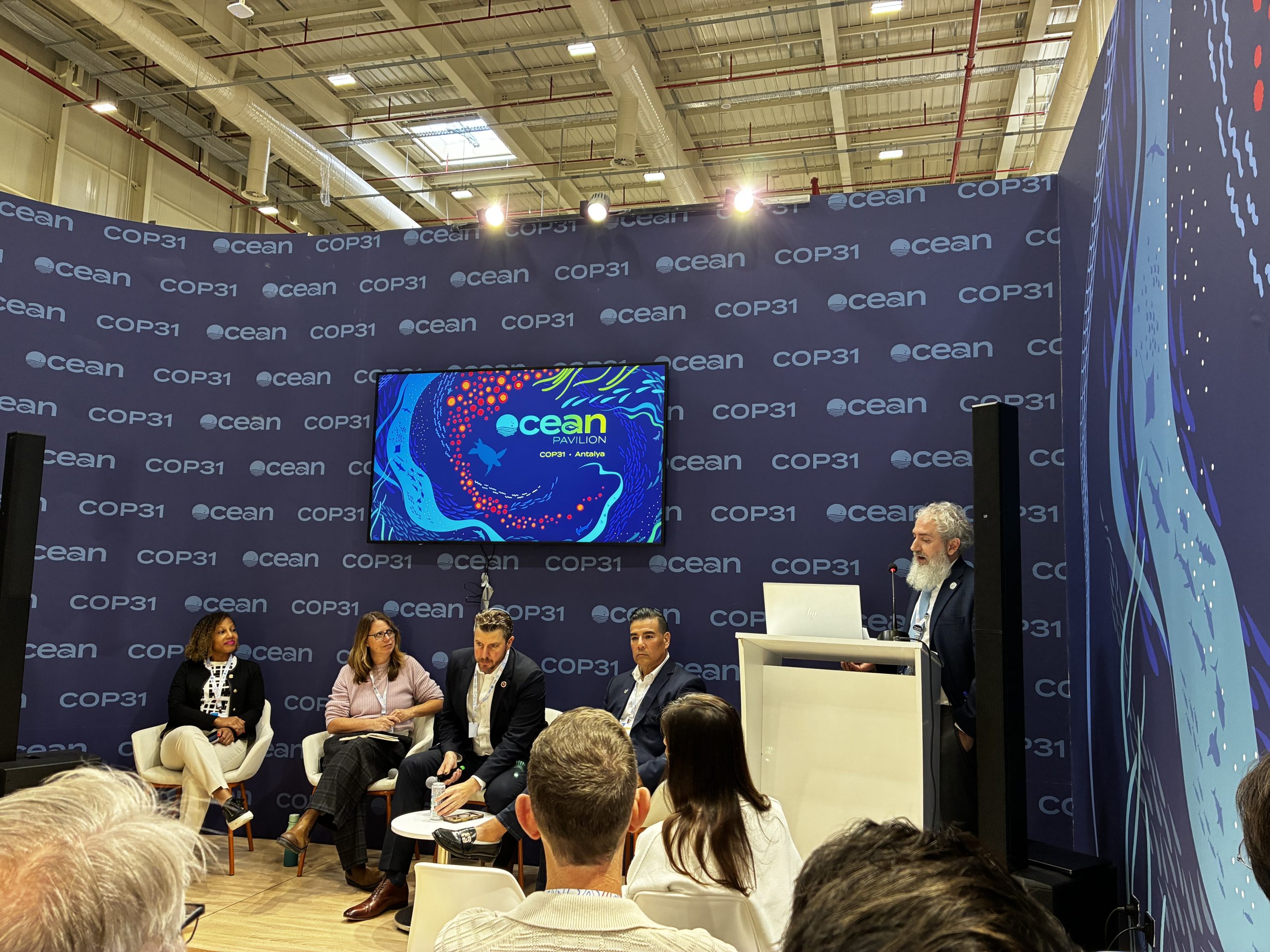
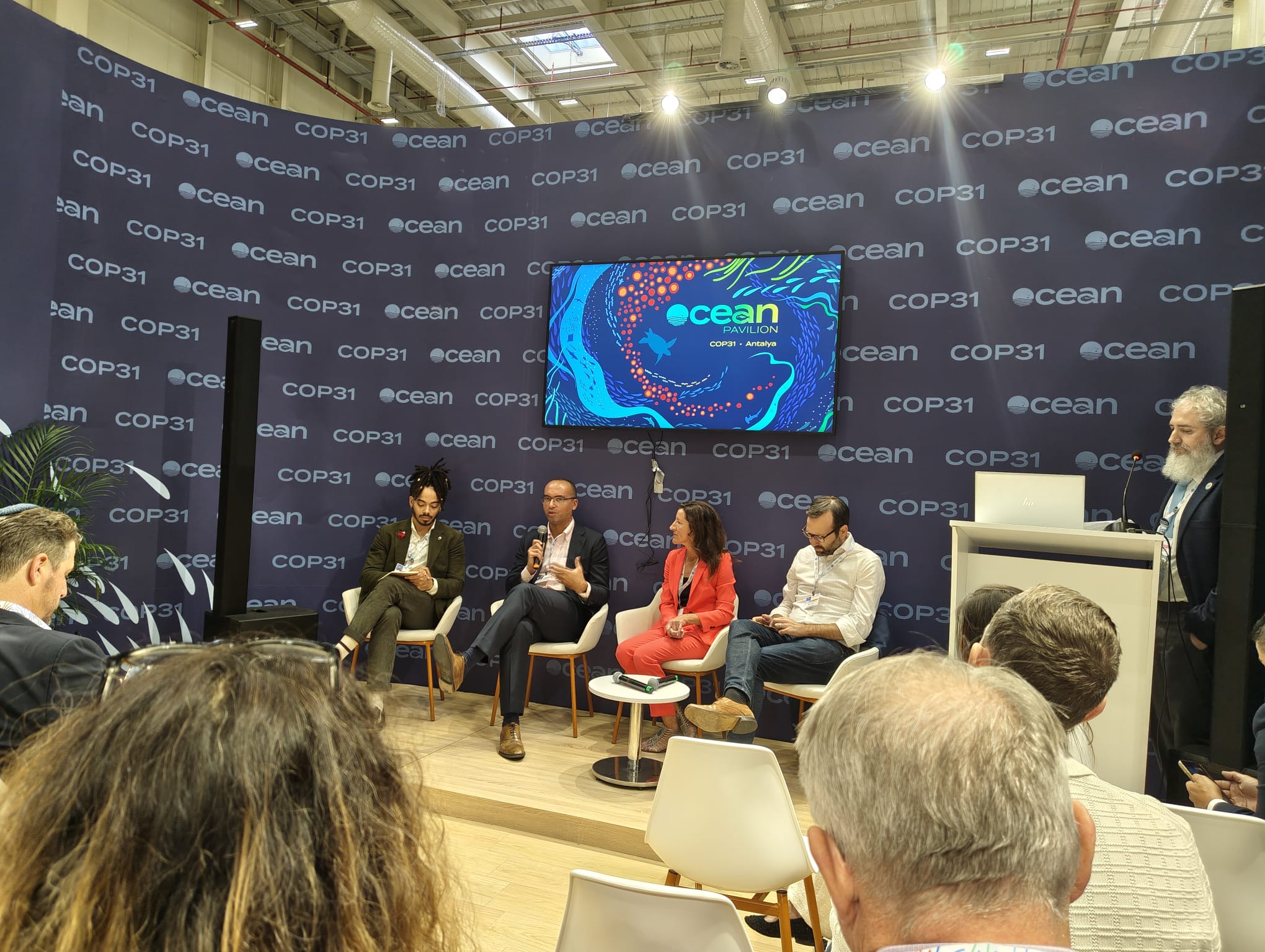
On Wednesday, November 11, 2026, Day 3 of the COP 31 in Antalya, Türkiye, the programming centered on the thematic focus of Zero Waste, alongside the opening of the two-day World Leaders Climate Action Summit. Personally, the most interesting panel today was at the Ocean Pavilion, co-organized by UC San Diego’s Scripps Institutions of Oceanography and the Woods Hole Oceanographic Institution, continued its theme of “Convergence,” which centers on connecting ocean science with policy and finance. From 14:00 to 14:50, the panel focused on “Turning Research into Resilience: California’s Response to a Destabilizing Climate.” The 50-minute session was organized to examine how California uses regional climate and oceanographic research to inform state-level adaptation policies, legislation, and financial regulation in the absence of a federal U.S. negotiating delegation at COP31.
The panel featured five speakers from California’s regulatory, academic, and legislative sectors. Representing state regulation was Ricardo Lara, California Insurance Commissioner. Representing academia and research were Thomas Corringham, Research Economist at UC San Diego’s Scripps Institution of Oceanography, and Cara Horowitz, Executive Director of the Emmett Institute on Climate Change and the Environment at the UCLA School of Law. Representing the California State Senate were Senator Ben Allen, Chair of the Senate Environmental Quality Committee, and Senator Henry Stern, who represents parts of Los Angeles and Ventura counties.
During the session, the speakers outlined how their respective institutions approach climate adaptation. Thomas Corringham discussed economic modeling of extreme weather events, coastal hazards, and sea-level rise. Ricardo Lara addressed updates to California’s insurance regulations, catastrophe modeling, and risk pricing. Senators Ben Allen and Henry Stern discussed state legislation, climate resilience funding, coastal protection, and wildfire defense. Cara Horowitz addressed subnational legal frameworks, regulatory tools, and cross-sector partnerships. Near the end, in a lighter moment during his remarks, Senator Allen noted that he had attended a TIME magazine dinner the previous evening honoring his recognition on the list of the world’s 100 most influential climate leaders, mentioning that he found himself sharing the distinction alongside Sesame Street’s Elmo, who was also named to the list.
In terms of session dynamics and delivery, they covered substantive policy mechanisms alongside broadly familiar points regarding the general need for climate action and institutional cooperation. Notably, the format was characterized by frequent mutual applause among the panelists following nearly every statement or claim, giving the exchange a distinctly self-congratulatory tone rather than a critical or investigative discussion.
To sum it all up, the session showed both the strengths and limitations of subnational climate diplomacy at COP31. Practically, it showed how California aligns scientific research, authority, and financial regulation to manage escalating climate risks independently of federal leadership. At the same time, the panel’s congratulatory dynamic underscored recurring tensions at these international climate conferences: while institutional alignment is well established, translating routine consensus into self-assessment and broader implementation is a challenge.
Photo credits: Perun Prodanović and Marko Macura