*verse from a Serbian pop song
Author: Marko Macura
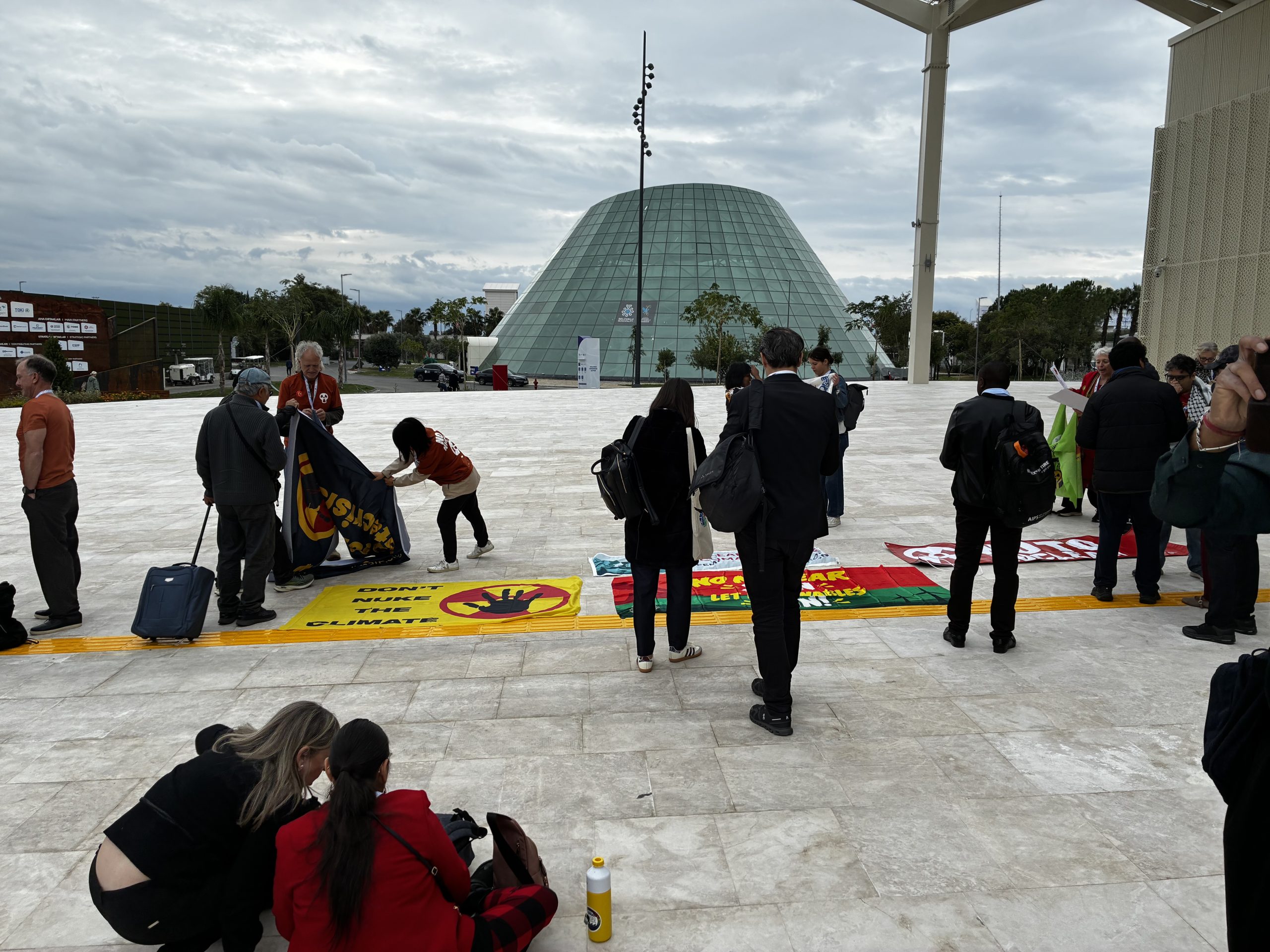
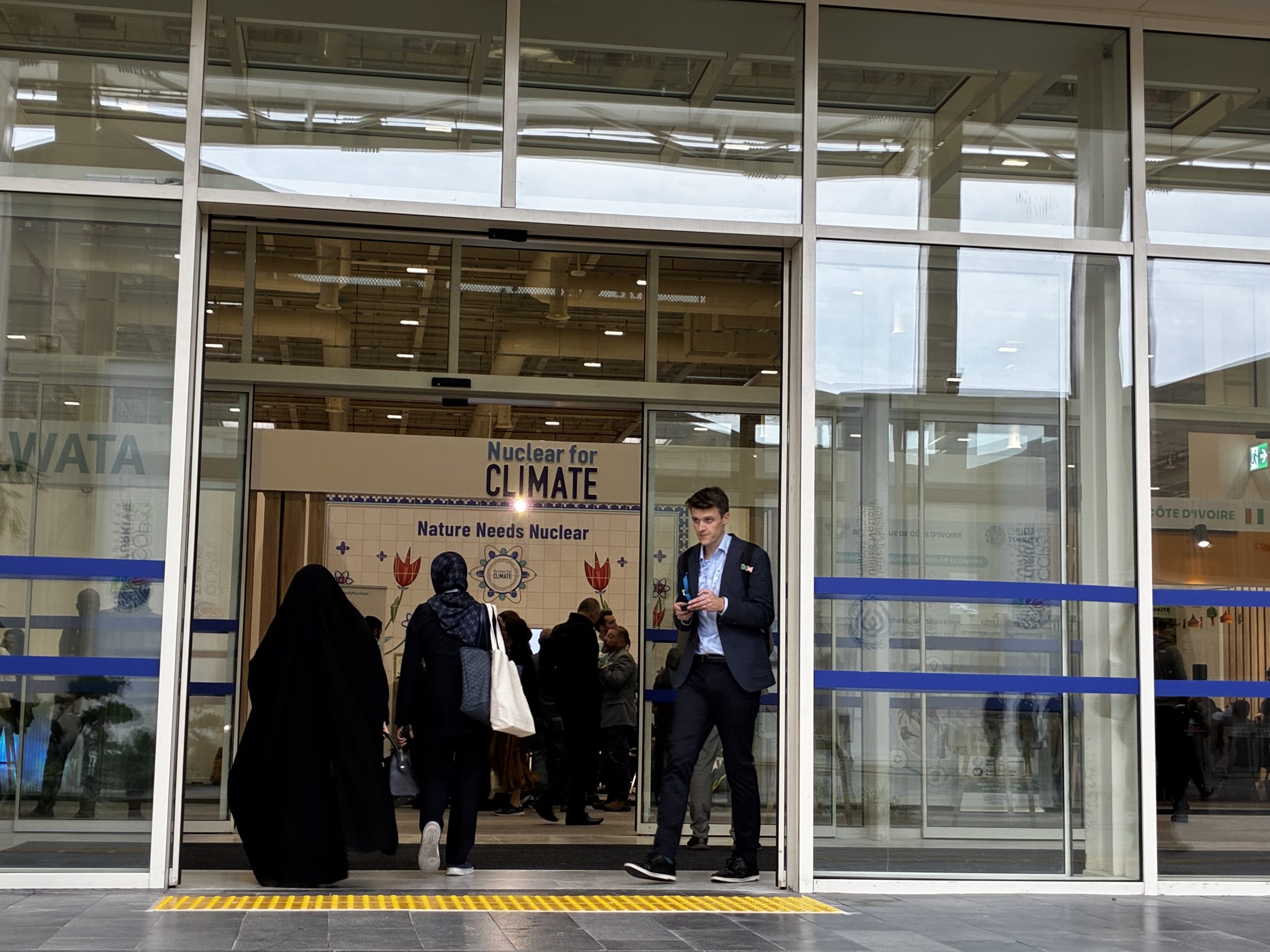
James Lovelock, an English environmentalist and futurist once said: “Nuclear energy is the only thing that can stop global warming.” On the second day of the COP, as soon as we entered, we encountered demonstrators protesting against nuclear energy. In the meantime, UN Secretary General Antonio Gutierrez spoke out and appealed that the world should move away from the use of fossil fuels. This statement does not coincide with any item on the final agenda of this year’s COP.
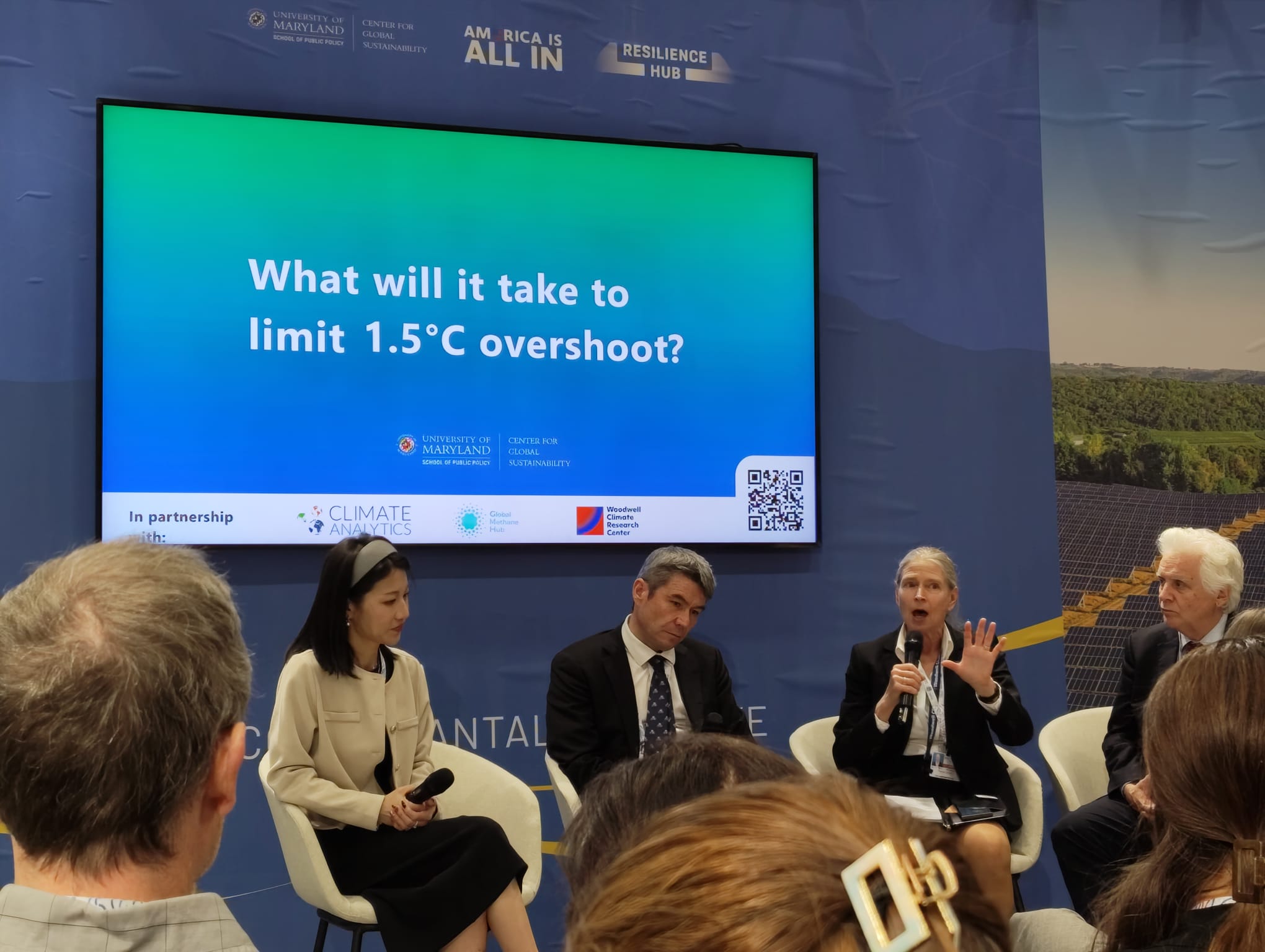
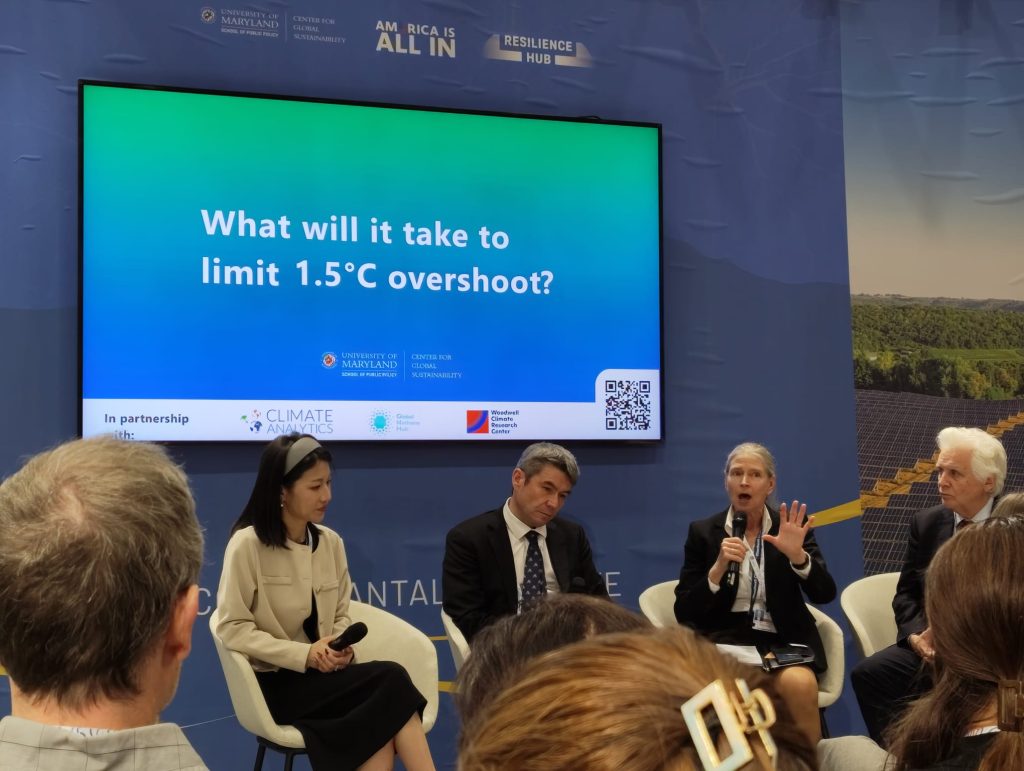
Not long after, we attended a lecture organized by the University of Maryland, which dealt with the next steps in limiting the overshoot of the 1.5 degree warming goal. This was held in pavilion called “America is all in”, which is the only pavilion representing the United States of America at this conference. The lecture began with the presentation of two studies from this university that looked at the results of climate models after calculating the latest predictions. The best scenario predicts a warming rate of 1.54 degrees in 2100. This would mean pulling all the levers, including: those that give results immediately (Fast SP), a focus on reducing the use of all energy sources and using slow-acting mechanisms and NETs (systems that remove CO2 from the atmosphere). The fastest way to slow warming this decade would be to accelerate the reduction and eventual elimination of SLCFs (short-lived climate factors), while combined with TAFFs (transition away from fossil fuels) would halve the rate of warming over the next decade. Later, the panel addressed various mitigation topics and educating people and organizations about what the next steps are. One problem that has been constantly repeated is the lack of will of politicians to make moves that do not have quick and concrete results and do not bring them political points. One solution is the “Methane Emergency Brake”, Mr. Marcelo Mena of the Global Methane Hub proposed this process as a solution for politicians. He predicts that by carefully choosing the origin of the gas, the emissions emitted by that gas can be drastically reduced, and the largest emissions are emitted by gases from Turkmenistan, Russia and Argentina. By some projections, this would reduce the rate of warming by 0.1 degrees almost instantly. Ms Frances Seymour, head of the Woodwell Climate Research Centre, suggests presenting the consequences of climate change to people in a way they will understand. Using the example of Brazil and the vast forest areas of the Amazon, she tells us that it is necessary to explain to the government and the Ministry of Agriculture that without those forests that provide some climate protection, there will not be enough rain for the current double sowing system in Brazil and that the consequences would be catastrophic for the entire population. In this way, they could show people from different spheres that climate change is a tangible thing and thus get the necessary financial resources. Communities that are already aware of these developments are preparing for potential drastic changes in their environment.
At the second panel, which dealt with the potential full utilization of existing buildings, the professor from the University of Aalto, Matti Kuittinen, answered the question from the audience whether new plans are being prepared to improve the energy efficiency of buildings due to potential pollution, and gave a concise and discouraging answer. Prof. Kuittinen said that all plans predict the disappearance of the warm current in the North Sea and a cooling of 20 degrees compared to today’s winter conditions. Oliver Raph, who is preparing a new study for the European Commission on the state of housing in Europe, also spoke on that panel. He presented to the audience an incredible number of 50 to 102 million potential apartments located in Europe that can be converted into residential units. Another study by the European Commission exposes the need for 2 million new apartments per year for the inhabitants of this continent. The entire panel emphasized that the best option for sustainable development would be to maintain the current apartments, then rearrange the empty spaces and change their purpose, while the worst option would be to build new buildings. We had the opportunity to see the first option in Serbia, where the government offered subsidies to increase the energy efficiency of apartments throughout the territory. The speakers also pointed out that the existing empty spaces are not in the best places, but that with the cooperation of the government ministries in charge of infrastructure, spatial planning, energy and finance, these spaces would easily become desirable and would serve in terms of sustainability.
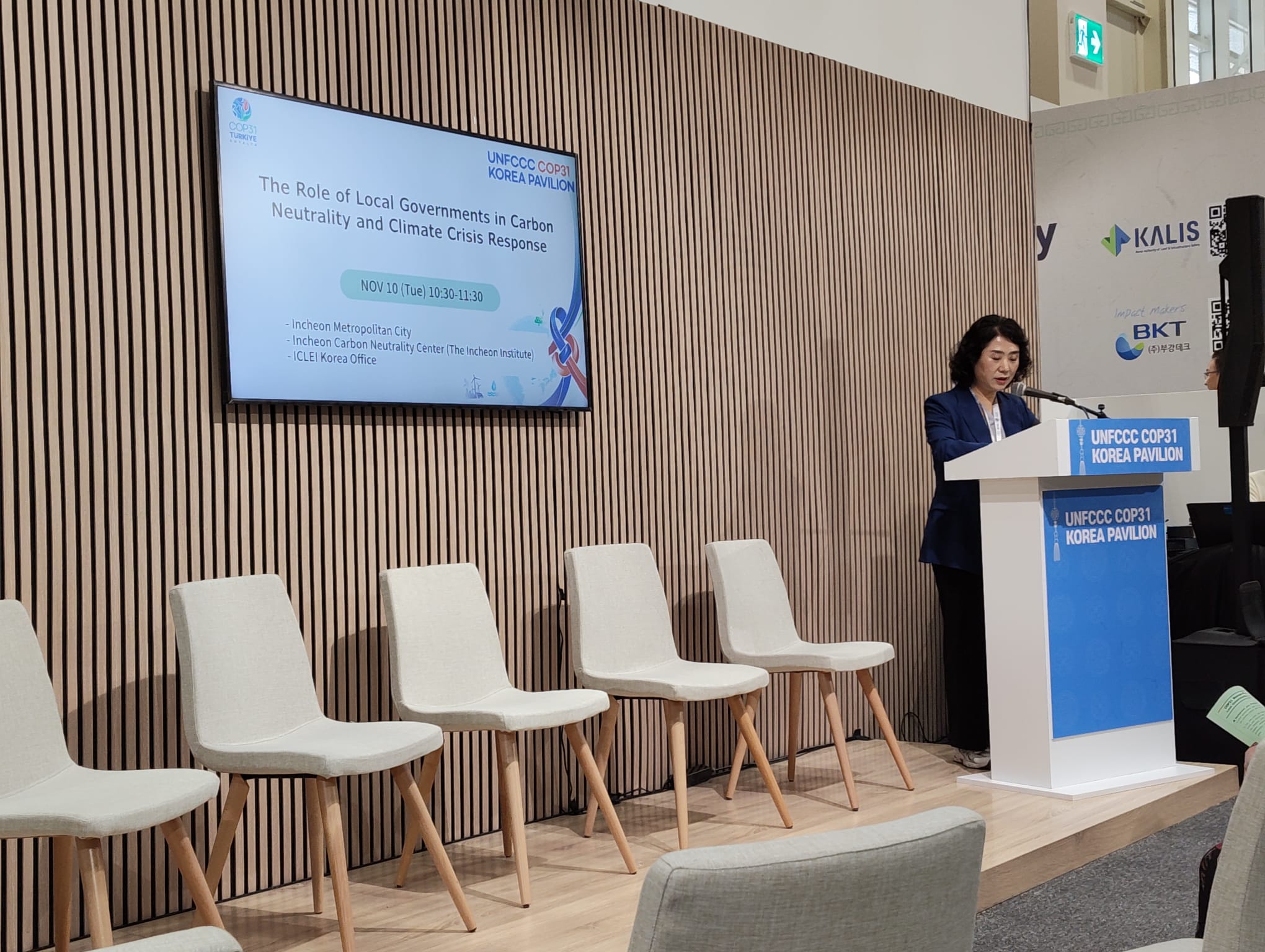
Today we also attended the event in the pavilion of the Republic of Korea, which dealt with the role of local self-government in responding to the climate crisis and establishing carbon neutrality. Representatives from the city of Incheon, which has over 3 million inhabitants and is projected to achieve net zero greenhouse gas emissions by 2045, spoke first. It was also indicated that although cities are the biggest polluters of the atmosphere, they are also coming up with ideas to combat climate change. One proposal of their local self-government is the organization of the so-called of Townhall Cop in the home states of this panel’s viewers. After the local self-government collects all the data on the biggest consequences of climate change in its territory, it presents these problems to its residents and all echelons of self-government. After them, the representative of Sonoma County spoke and pointed out that it is easiest to fight climate change by working with citizens, not for them. In her district, several actions have been established in both rural and urban areas. One of the urban actions is the complete electrification of the school bus fleet in Oakland. A rural action that wants to establish better energy efficiency in the homes of its residents offers a free boiler and with it a team of people who are ready to carry out various repairs in their homes.
Today’s lectures were very educational, but they mostly focused on one thing: opening the eyes of people who cannot see. Perhaps the participants listened to Chris Bowen, Australia’s climate minister, who suggested on the first day that the COP participants should show multilateralism and cooperation and prove to the world that the COP is not a waste of time. Although, perhaps these members of the professional and academic community saw the dire consequences of climate change this year and decided to take informing of general population into their own hands.
Photo credits: Marko Macura and Perun Prodanović