
#RESTalksCOP is a COP30 interview series created to bring people closer to the United Nations Framework Convention on Climate Change (UNFCCC) process. Through conversations with negotiators, experts, and civil society, we explore diverse perspectives and behind-the-scenes insights. Recorded on the ground at the 30th Conference of the Parties (COP30), these interviews offer a time-capsule look at the people and stories shaping today’s climate negotiations.
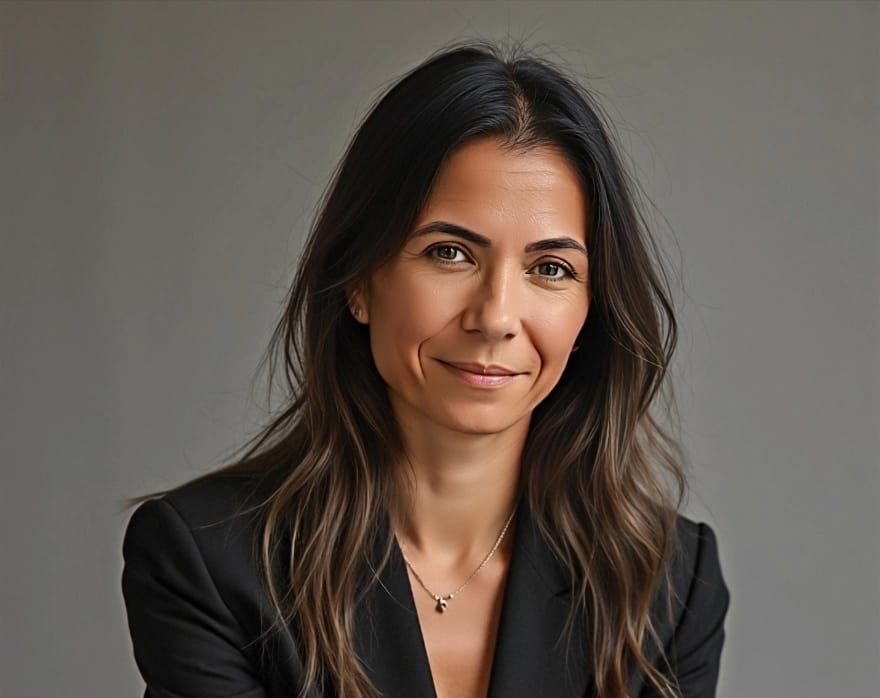
We spoke with Lela Mélon, a sustainability law and governance expert at Pompeu Fabra University in Barcelona, where she works across planetary health, international and European law, and corporate transition strategies. Involved in the UNFCCC process since 2019, Lela reflects on the shift from pledging to implementing finance for loss and damage, the Brazilian Presidency’s Mutirão approach, and the narrative and structural barriers that continue to slow progress. She discusses the political gaps in the negotiations, and why deeper systemic and value-based shifts are essential for a real sustainability transition.
Lela Mélon: My name is Lela Mélon. I am currently working in Barcelona at the Pompeu Fabra University. I’m a director of diverse programs, one of them being on planetary health, another one being an LLM in International and European law. I am also working on a lot of programs that are dealing with sustainability transition, and management, and the intersection between law and economics in terms of sustainability. But also I work a lot with companies, implementing strategies for transforming to sustainable business. I work in many places, from Spain, to France, to Slovenia, depending on where the opportunity arises and where they need me, so I am a bit all over the place, but based in Barcelona.
Zvezdana Božović: How long have you been involved in the UNFCCC process?
Lela: Since 2019. I was fresh out of my PhD and in that year, the COP was passed from Chile to Madrid due to security concerns at the last moment. Since I was living and working in Barcelona, all of a sudden, we were mobilized to contribute way more than we would have in Chile. I got familiarized with the process, what is happening in the Blue and Green Zone and in the negotiations themselves, so I’ve been deeply embedded in the process for six years now.
Zvezdana: What are you following this year at the COP?
Lela: I am trying to follow the switch from promising funds for loss and damage and to developing nations and for mitigation towards the implementation of those promises. I have been closely following the negotiations, and the information coming out of them. Some information has been leaked before the final draft tomorrow morning. Another thing particular to this year, which I love, is the concept of Mutirão. The Brazilian government put forward something we did not discuss enough in previous COPs, because we tend to look to political will to solve the problem. Well, not quite. Consensus may be brought to the table there, but the actual solving of the problem happens on the ground, which the Mutirão concept clearly highlights. I’ve been patiently waiting to see how this idea will translate into political promises, and later into legal obligations.
Zvezdana: How optimistic are you about the progress in the negotiations so far?
Lela: What I found encouraging was that they are bringing Parties to the table. They had a high-level event with the Research and Independent Non-Governmental Organizations constituency (RINGO), and other constituencies, trying to get their inputs. On the other hand, a discouraging fact is that the negotiations have been prolonged in the last ten days, three days in a row up until nine in the evening. We all know what that means. That means that the consensus is very difficult to reach. What I welcome is this focus on the narrative of implementation. What I am afraid of is that implementation is not really on the table.
There are some leaked draft documents that allow us to go a little bit closer to actually implementing solutions, but we are not there yet. What I welcome is that the Loss and Damage Fund can actually be accessed now, so it’s not just a promise anymore. It’s something that is actually implemented and that developing countries will be able to access. One thing I am afraid of is that we are still very far from the goal of 1.3 trillion dollars needed for the process of adaptation and mitigation at the same time. And even if that is achieved, the developing countries say it is still too small of an amount, right? My problem is that the solutions are not here and we are almost the end of the second week. So not much is agreed upon, yet the work is being done.
Zvezdana: An interesting thing that I have noticed while interviewing people is that we always end up on the topic of finance. Eventually, the discussion always comes to – who will pay for this? Will it be a loan? Will it be a grant? Going from COP29 where the New Quantified Goal on Climate Finance (NCQG) decision was largely controversial among many Parties and stakeholder groups into this ”implementation phase”, how optimistic are you that we will manage to scale up finance?
Lela: Well, if we change the narrative, I’m pretty optimistic. Why? The narrative right now is about how someone should finance this and that it needs be public finance, and that it needs to be decided at the COP. What we are forgetting about, and what is actually happening around the two of us right now in the Blue Zone, is that if you do the transition correctly, it’s an opportunity and not just a cost. There is a case to be made for businesses lowering their operating costs by implementing sustainability solutions.
I think the narrative is sometimes also a problem. This is something that I noticed at this COP as well. We are pointing fingers. I don’t like that. What we need to figure out is how to create cooperation, alliances, share knowledge, implement solutions that are actually saving costs. Then the finance will be less relevant. But right now, it remains highly relevant because we are not there yet. I think that’s part of the work to be done here, not only by the Parties negotiating, but also by industry and everyone else mobilized at the COP. To a certain extent, some solutions are actually cheaper than what we are doing right now. In the absence of that, then the finance is the important part.
First and foremost, finance is on the table because of the disparity between the developed or so-called developing countries. I don’t agree with the term, but that’s what it means. Obviously, for countries that have not managed to develop economically to a degree that they can satisfy the needs of their own inhabitants, how can they carry out the transition without help? There’s this responsibility of developed countries who have built their wealth on material and resources that come from developing countries. We owe them also. This is the discussion, right? It’s more political. So finance is the focus because of the inequality on the one hand, and on the other hand, due to the absence of realization that some solutions can actually be cheaper. The transition can in some aspects prove mid-term to be cheaper than continuing what we are doing.
Zvezdana: Within the negotiation process, have you noticed any obstacles to achieving these partnerships? What would you say are the gaps in the system?
Lela: We’re obsessed with numbers and with systems, so we’re obsessed with Article 6, and everybody wants to talk about Article 6. We want carbon markets, right? There are solutions beyond carbon markets, obviously. So the European Union has gone its own way with the EU Emissions trading systems (ETS) and the Carbon Border Adjustment Mechanism (CBAM). But it’s not just about carbon and carbon trading. It’s also about finding solutions that are more circular, stopping throwing away resources that we can actually reuse, and start living in line with nature and what we can replenish. Biodiversity is not just a resource, but something that can provide services.
Article 6 is really big this year. Everyone is speaking just about that. But I want to also talk a bit about how to mobilize within Mutirão, and mobilize the rest of society beyond carbon markets and not only at the national level, but regional and local as well. Something that we started speaking about now that I didn’t find in other COPs is the responsibility of regional and local governments.
Zvezdana: Attending a lot of side events here, I hear people speaking about payments for ecosystem services and nature-based solutions. There’s a lot of talk on how we can translate nature in a way that is understandable and where business can also thrive. What is your opinion on that?
Lela: There’s a logic behind that. That’s something that consultants like myself have been doing for the last decade or so already. If you can’t put it in money, nobody’s going to listen to you. I’m sorry, that’s the reality of business. I think there is now this attempt to put it into money so that people start listening. What I’m afraid of is that being that focused on adaptation makes you feel sometimes that we gave up on mitigation which is not exactly true.
But at least when you start quantifying it, industries and businesses are listening. I think there is an attempt to actually mobilize entities beyond the COP to do something because you are putting value on something that we didn’t know how to value before. It may feel a bit absurd because we fundamentally need biodiversity to survive, but this quantification is an attempt to put a number on it so that it’s taken more seriously and incorporated into different strategies, whether in public governance or corporate governance at any level.
Zvezdana: Would you say that this quantification has already existed for some time?
Lela: Sure, but it was always like an exercise at that. There was not one methodology or framework. If it existed in any shape or form similar to what we are trying to do right now, it was always translated in financial risk. So it was explained as a financial risk if you don’t take care of particular resources.
But on a holistic level, yes. Some scientific papers did this, for instance the inception of the planetary boundaries framework, which aimed to understand and quantify what we are doing, not necessarily in numerical terms at first, and then evolved into a full framework. But beyond that, a comprehensive overview was not really there.
Zvezdana: Would you say that you have now noticed this way of thinking or method of approaching adaptation being mainstreamed across the negotiations?
Lela: Yes, because it’s the only thing that actually works in capitalism. I’m not absolutely sure that this is the best way to go or the final way we should go, but it makes capitalism speak the same language as nature preservation. It’s kind of this intersection between the two. For the initial inception of transition that’s long-term, I don’t think it is that great because what needs to change actually is the system of values and morals that are underpinning all of our theories and all our business and policymaking. We’re not changing that. We are just kind of trying to reframe ecosystems and biodiversity in terms of the services they provide to us, but it’s not really changing the underlying mentality which you need if we want to transition.
Zvezdana: Thank you so much for taking the time to talk to me. Would you like to spotlight any project that you are working on now?
Lela: We are launching an independent consultancy, born out of academia and our work on transition schemes for companies, whether SMEs or large-scale firms, because what I’ve noticed in my recent work is that the bird’s-eye view is missing. You have experts on taxonomy inside companies, you have experts on reporting, but nobody has the bird’s eye-view of what is happening politically and legally to be able to create a strategy. So if anybody is curious about that or needs help, they can always reach out to me.
Zvezdana: That brings me to my last question. If people want to know more about your work, where can they find you?
Lela: On LinkedIn, “Lela Mélon”. Thank you!
Interview conducted on 18 November 2025