
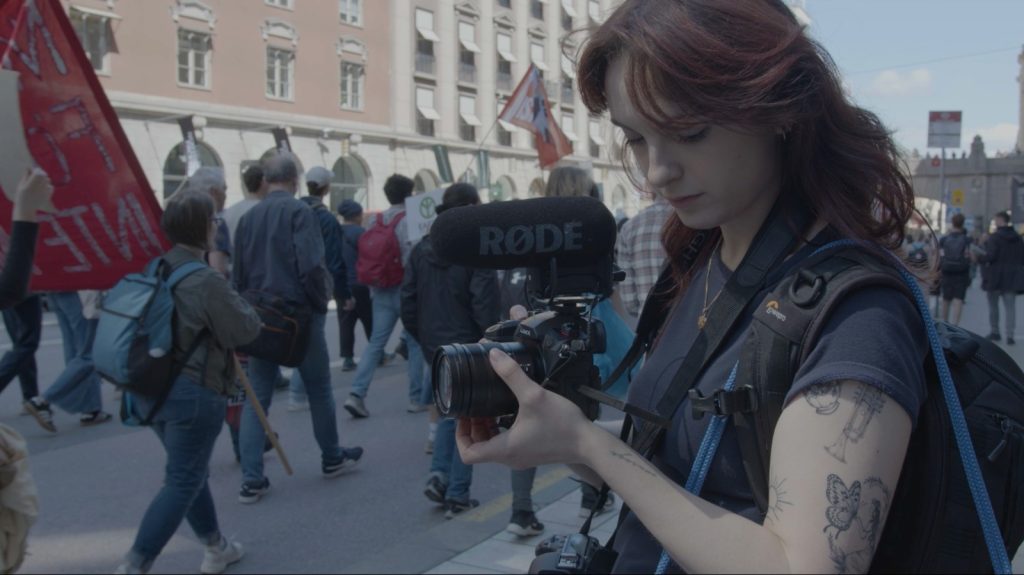
#RESTalksCOP is a COP30 interview series created to bring people closer to the United Nations Framework Convention on Climate Change (UNFCCC) process. Through conversations with negotiators, experts, storytellers, and civil society, we explore diverse perspectives and behind-the-scenes insights. Recorded on the ground at the 30th Conference of the Parties (COP30), these interviews offer a time-capsule look at the people and stories shaping today’s climate negotiations.
We spoke with filmmaker and activist Kasha Sequoia Slavner, director of 1.5 Degrees of Peace and founder of the Global Sunrise Project. Kasha shares reflections on the intersections of militarization and climate collapse, the emotional dimensions of loss and resistance, and the role of storytelling in shaping climate narratives and community resilience.
Kasha Slavner: My name is Kasha Sequoia Slavner. I am the director of a film called “1.5 Degrees of Peace”, and the founder of a nonprofit organization called the Global Sunrise Project.
Zvezdana Božović: Could you tell me a bit more about the project you are currently working on?
Kasha: The feature documentary I am working on follows two young activists from Hawai’i and Sudan as they fight to protect their homelands and their futures from the intertwined forces of militarization and climate collapse. Throughout the film, both participants really grapple with the question of not just how do we protect the land, but how do we preserve the cultural and emotional ties that make it home. As a generation, we are faced with a lot of potential loss. We need to connect to what that feels like, and also see examples of resistance that sustain at the community level. It’s really just a tribute to my generation. We are doing everything that we can do.
Zvezdana: If I’m not mistaken, this film has been a years-long project. How long have you been shooting and how have you noticed yourself and your perception of this international climate space change over this period?
Kasha: It’s a great question. This is my fifth year working on the film. I came up with the idea in the beginning stages of the pandemic and of course, we couldn’t go anywhere, so I really sat with the idea. Coming from peace and disarmament advocacy, but also the environmental movement, I could see the connections between the issues, as lived by my peers, but they just weren’t being talked about in mainstream conversations. So at COP26, I was looking for where it was in the conversation, is it really happening at the UN level? I could hardly find any mention of conflict or peace and security in any of the official agenda, no people-led movements. I’ve always talked about these connections, but this needs to be common knowledge. I’ve watched as world events had shifted, the stories of my participants shifted, and really how that’s brought to life these connections.
When I started the film with Nisreen from Sudan, she was living at home in Khartoum. She was not in a country that was at war. She had just participated in the Revolution to have democracy, and that was really hopeful. Then everything changed, and with the recent election in the US, the militarization only escalated. Military budgets are going up at a time where the climate crisis is really coming to a head. We are seeing this contradictory force, which is conflict, militarization and systemic violence taking away from what we really need, because we seek security and justice for all.
Zvezdana: We think climate change is a universal issue, but we see now there are some actors who frame it as something disputable or problematic. As you also mentioned, we are seeing a rise in defense spending worldwide and somewhat of a trend towards militarization. At the same time, we see people equally fleeing their home countries due to conflict and due to climate change, sometimes both at the same time. Now we are at COP30, a landmark moment for the climate movement ten years after Paris. What are your hopes? What do you think it can bring us in the current political context?
Kasha: I have definitely seen a movement towards ensuring that militaries are reporting their emissions and are held accountable under the Paris Agreement. It’s only voluntary that they report their emissions, and under the Kyoto Protocol, they were examined altogether, and being one of the biggest industrial polluters and the greatest contributors to greenhouse gas emissions, they really need to be held accountable for their contribution. You are right to point out that climate change and conflict and violence are both drivers of displacement.
The way that the story takes place is that these are two case studies of what is a global phenomenon, that we can all be climate refugees or refugees from conflict if things continue the way they are going. My hope is that people-led movements really hold the UN’s feet to the fire and say “we really can’t have climate justice if we are not addressing this systemic form of violence that is hurting our people and our planet “.
Zvezdana: Throughout the filmmaking process, what was the most impactful moment or moments that served as perhaps a catalyst for you or helped you understand something important?
Kasha: I think the process of really building relationships with these two activists. I’ve gotten the immense pleasure to immerse myself in their communities as well. To have this very reciprocal relationship with us working together in solidarity to amplify the issues that are happening in their communities, but also this film is really a testament to the friendship that emerged when we unite our fights, when we realise that we’re all experiencing different manifestations of the same causes. Banding together, because there are so many forces that divide us, but it’s our strength and our unity that really makes it possible to dream and to imagine what the future we want looks like. Because if we believe things will always just be the way they are, we lost and if we don’t have a community, we also lost because we don’t have that resilience to the obstacles that are immense.
Zvezdana: In the current climate (no pun intended), what would you say the role of a filmmaker, and specifically a documentary filmmaker is? What does cinema as an art form have to offer in this effort?
Kasha: Filmmaking is not just stories. Stories are not just stories. They’re a mirror to our collective experiences, but we also have a key opportunity to shape the narrative, because the way climate stories are told is there is this big bad thing and the tiny people against it. We have to give ourselves some more power than we are giving ourselves credit for. If we position our fight as against this ginormous beast, we won’t achieve what we need to. We will be immobilized. It’s also about is climate change really this far-off thing? No, it’s happening now, so what does it look like to feel the loss of our lands now? How do we stop that from happening? We all have something we love. Our lands may not be at risk, depending on where you’re living, but you know what it is to love something, you know what it is to lose something. So connecting that feeling and really feeling that connection to activists who are fighting to conserve what we all hold sacred is so important. Also film is just an incredible tool to open conversations. There are so many documentaries that lay out the issues in a very fact-heavy way and they’re informative, but sometimes stories that connect to the heart are just the doorway to somebody getting more engaged. That’s when we expose them to the opportunities to learn. We want them to connect heart-to-heart first, and then we can give them these great resources like workshops, panels, educational curricula, grief circles. These are the ways of really holistically taking care of people and it’s also equipping them with tools to seek action and join these activist movements.
Zvezdana: What’s the next step for you in the making of the film?
Kasha: We are finally going into post-production. We are almost done shooting the film. We’ll have it edited, then we’re going to do the film festival circuit and open up to community screenings.
Zvezdana: Thank you so much for taking the time to talk to me. If people want to know more about your work and follow it, where can they find you?
Kasha: Currently at theglobalsunriseproject.com where you can find my work. Soon, the 1.5 Degrees of Peace website will be launched.
Interview conducted on 14 November 2025